After the shock of the Oct. 7, 2023, massacre, many Jews around the world felt the need to contribute to the war effort, whether through monetary donations or by traveling to Israel to help in a physical way. Israelis and visitors alike have been volunteering in agriculture, helping women whose husbands were fighting in Gaza, preparing food for soldiers and more.
The Israeli nonprofit Livnot U’Lehibanot—Hebrew for “To build and to be built”—offers a unique experience, as reflected in its name. Over the years, volunteers have helped repair thousands of homes for the elderly, disabled and terror victims, and they have renovated hundreds of bomb shelters throughout the country.
Since Oct. 7, Livnot has focused on restoring homes damaged in border communities in the north and south. An estimated 70,000 people were evacuated from homes near the Lebanese border and about 75,000 from the Gaza periphery. With the help of volunteers, Livnot has completed more than 320 projects in dozens of these communities, with many more underway.
“Our volunteers also worked during the 12-day war with Iran in June,” Ishay Levy, the organization’s director of community renewal for the northern and Gaza envelope border regions, told JNS. “We got a permit. They were the only volunteers helping in hard-hit kibbutzim in the Upper Galilee, where they also restored a kindergarten in Dafna and a children’s house [for elementary-school students] in Malkia.”
“In the south, our volunteers went from community to community to Kibbutz Zikim, Netiv Ha’asarah and others,” Levy continued. “It was very difficult, with tasks such as cleaning off blood and other evidence [of the atrocities.]”
However, Livnot is essentially an educational organization. The one- and two-week programs, geared primarily but not solely toward English-speaking Jews in their 20s and early 30s with minimal Jewish education, combine hands-on community service with seminars, hikes and social gatherings to connect participants with the land of Israel, the people of Israel and Jewish heritage.
A nondenominational organization, Livnot was established in 1980, and its goal has not changed since its inception. “It’s not to make people religious, but to strengthen the connection between Diaspora Jews and Israel,” Levy explained. “For example, when they spend a Shabbat in Tzfat (Safed), it’s not to bring them to pray in the synagogue, but to experience the spirituality and values.”
“Also, when they meet people from the Gaza periphery or the north for the first time, it strengthens the bond on both sides,” he said. “It was very emotional for people who returned to Kibbutz Erez (one kilometer north of Gaza) and found clean homes. It’s very heartwarming to meet people who come from other countries, leaving everything behind to help. It’s a very special connection that is hard to put into words.”

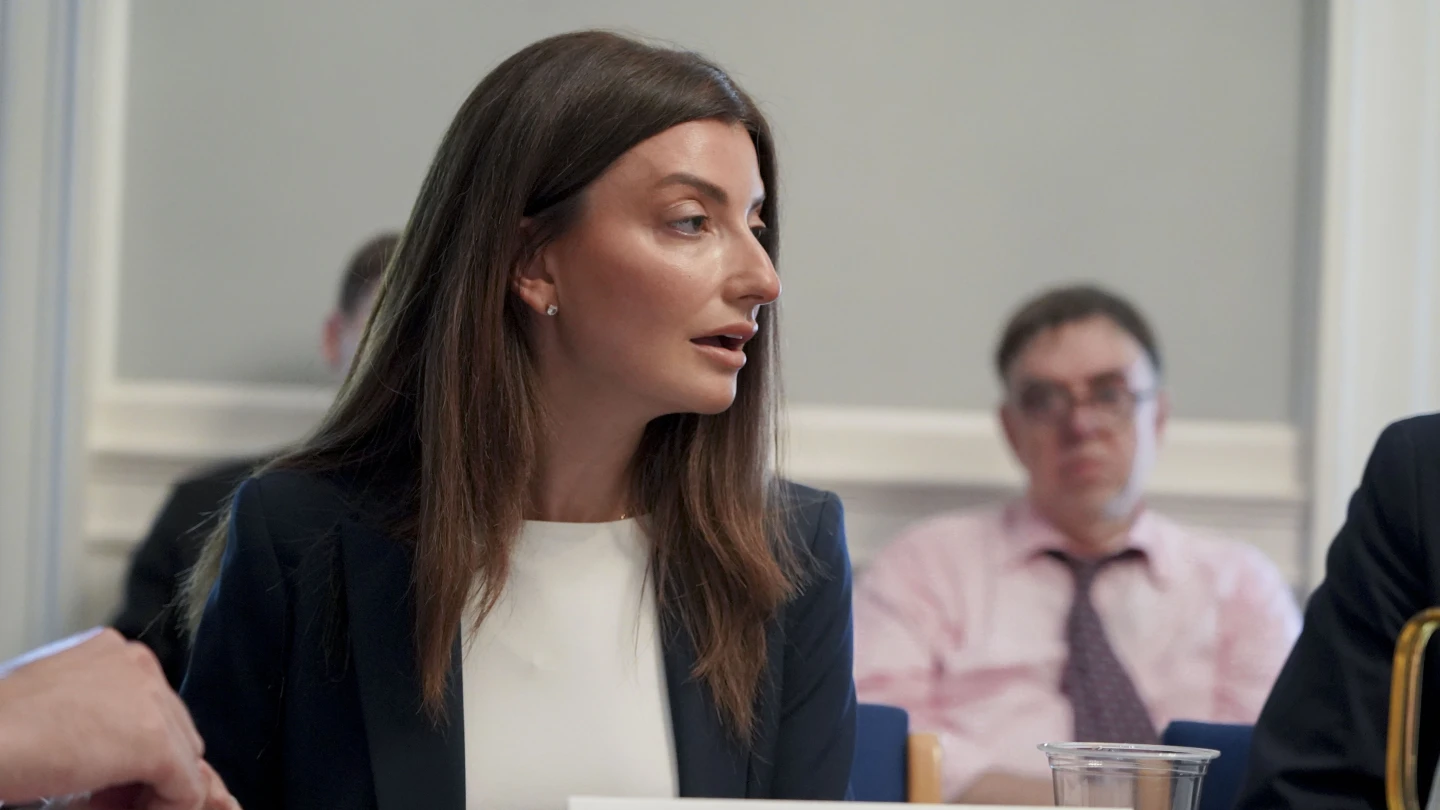
Anna Schuman, 28, a native of Princeton, N.J., has been involved in Israel activism since high school, including trips to Washington, D.C., to speak with members of Congress.
“After Oct. 7, I felt that I really had to do something. I saw a lot of volunteer trips, but they didn’t match up with my schedule because I was also in school. I read about someone who volunteered with Livnot and started looking into it, and I decided that I wanted to do this.”
She made aliyah from New York in September 2024 and has since completed several more rounds of volunteering with Livnot.
“I come from a very Zionist background,” she said in an interview with JNS. “I grew up in a traditional family, and in my adult years, I became more religious.”
“It’s one thing to see everything on the news or on Instagram and social media, even in Israel, and I think many people’s experiences in the south are from tours and volunteering,” she added. “But it’s a different experience going into someone’s home that hasn’t been lived in for over a year, seeing a bullet hole through a child’s window, fixing it and making the home livable again. And to see that despite everything that happened, people still call that place home. They deserve to live in dignity and peace and to feel safe in their homes.”

As for the others she met on the program, “there were adults, young adults, retirees. It was amazing. Someone on my program lived on a homestead and already knew how to build everything because he had built his own home.”
She added, “There were professors, retired police officers—some of the coolest people I have ever met and from all over the world.”
Schuman, a speech therapist, knew she would make aliyah, but Livnot “gave me the confidence I needed because I saw that I could go to Israel and do something that makes a difference. It gave me the confidence to quit my job, leave my life behind and know that I would be OK.”
Furthermore, “I met the love of my life here in Tel Aviv and am getting married this year. Because of my experience with Livnot, we’re thinking about moving to Sderot.”
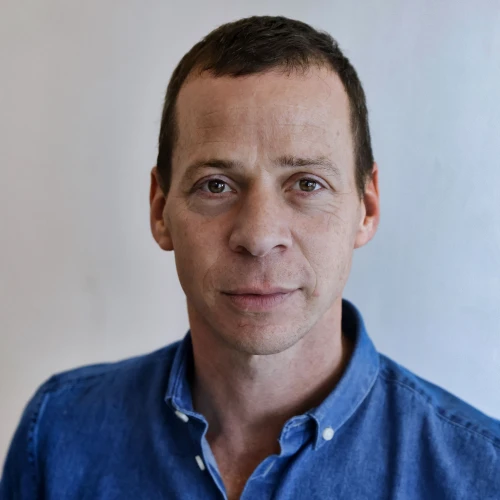
Andy Rapoport, 31, lives in Chicago and works in public health research. He took time off in May to join a one-week Livnot program.
Born and raised in Skokie, Ill., he visited Israel twice during childhood and participated in Birthright in 2015.
“Israel is very important to me. It is the historical home for our people and currently houses about half of world Jewry on this tiny plot of land. People don’t really understand the history, the connection, and, frankly, the diversity of Jews in Israel,” he told JNS.
Rapoport did not attend Jewish day school. “I grew up going to a Conservative synagogue in Skokie and went to Hebrew school a few times a week,” he said.
Oct. 7 pushed him to return to Israel. “It was quite some time since I’d been there. I knew it was a troubling and intense time for the country. The idea of doing something physical and tangible in the land, meeting people, and playing a part in the repair and healing efforts was compelling.”
He added, “I didn’t know precisely what it would entail, but I was pleasantly surprised when we got there. Livnot does a really good job. In Tzfat, we experienced the old architecture and synagogues that are hundreds of years old—Sephardi, Ashkenazi, etc. We visited military sites; we made pita in a 500-year-old oven in a basement in Tzfat.”
Rapoport felt the most satisfaction from the volunteer work, which was done alongside professional construction workers. “I wasn’t expecting it to be that physically demanding. It was intense. We worked on kibbutzim directly harmed by rocket fire or, at the very least, neglected after being evacuated for so long. We met people who had to leave and then returned to these places. We worked hard, but it was a little sliver of what was needed.”
“There was a moving moment with a kibbutznik who lived there for generations,” he recounted. “She described what it was like in the early, more Socialist years. The woman who led the trip was Orthodox. There were Israeli girls doing national service. We had some interesting conversations about Judaism. The overall experience was very communal. We cooked meals on our own and were exposed to different perspectives and backgrounds from people leading the trip and on the trip.”
“It gave me things to talk about and to point out to non-Jews when I go home,” he said. “Giving people a new perspective on Israel—a strong, diverse and resilient people.”
“We packed in a lot,” he concluded. The experience “definitely exceeded my expectations.”