With a possible war with Iran looming, Israelis are living on edge. Discussions abound speculating when it may happen—within 24 hours, within days, within weeks or perhaps not at all.
Those with PTSD or similar war trauma could be feeling even more anxiety.

JNS spoke with Lavi Zamir, CEO of Bshvil Hamachar-Path for Tomorrow, which, as explained on its website, is an NGO “dedicated to supporting Israeli army combat reservists as they navigate the path to healing from the emotional and psychological toll of war. Our transformative multi-day programs help these brave
individuals regain their strength, resilience, and confidence to reintegrate into society.”
According to Zamir, “the current security climate in Israel isn’t just a matter of geopolitics; for many of our veterans, it is a profound psychological challenge, and we see it daily with those we are working with. We often see that the ‘waiting period’ is even more taxing than whatever happens.
“For a veteran with PTSD or combat trauma, uncertainty is a force multiplier for anxiety. The constant headlines about Iran don’t just stay in the news; they seep into our subconscious, and for many, the threat of a looming war acts as a powerful ‘echo,’ forcing them once again to relive their past.”
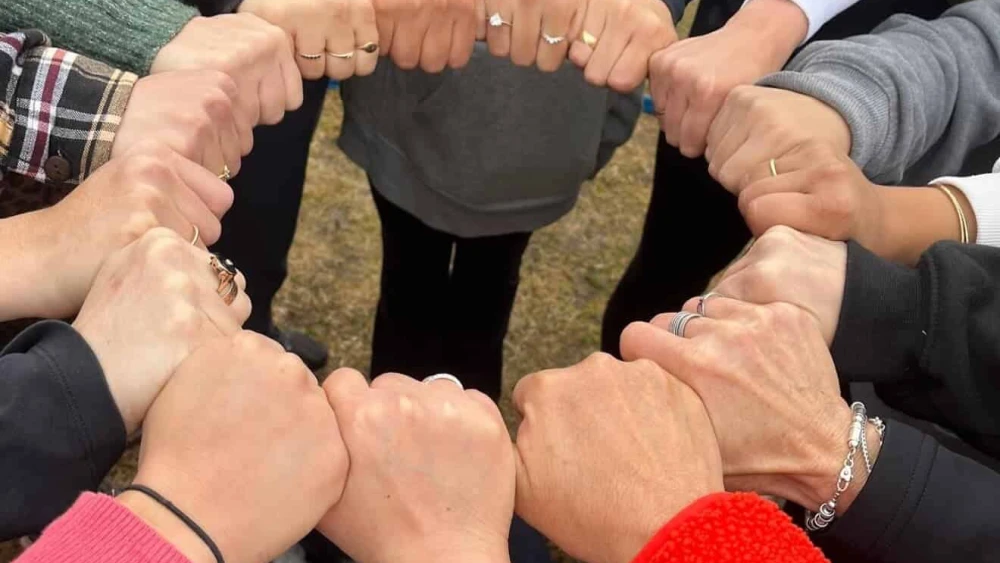
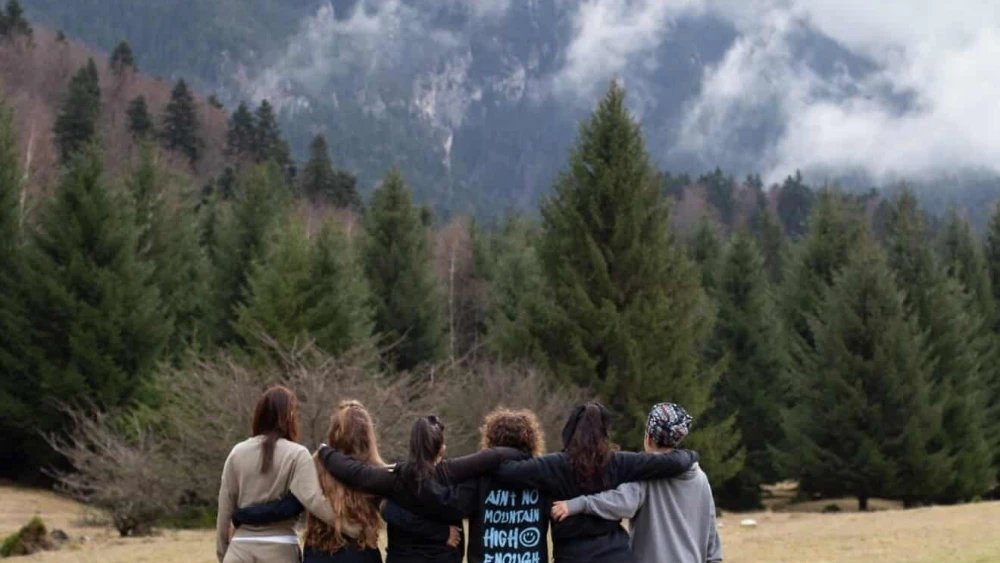
He explained: “One of the topics we cover in our healing journeys is that resilience is not the absence of fear, but the ability to navigate it. We also focus on the power of being part of a group to draw from its communal strength.
“In times like these, veterans lean on their brothers-in-arms. Some use the tools we provide in our journeys, including open dialogue with those who ‘get it’ without needing explanations, and the understanding that their heightened reactions are normal responses to an abnormal reality.
Many of them also find strength in action, whether through reserve duty or volunteering to regain a sense of agency and control over their environment.”
‘My story started in 1983’
Years before he began working for the nonprofit, Zamir himself was a participant in a B’shvil Hamachar healing program.
“My story started in 1983,” he said. I was a second lieutenant and very young. My unit was posted in southern Lebanon.
“I remember that day. It was a Saturday morning. I lost two of my soldiers, and I was injured in my left hand. I was evacuated by helicopter to Rambam Hospital. I lost a lot of blood and they operated on me.”
He continued, “In the morning, a mental health officer came to my room and asked how I was feeling. I was very young and stupid. We didn’t talk about feelings in those days. We were too tough to talk about feelings. In fact, we didn’t even know we had feelings. So, I told him I was the commander of an IDF platoon and needed to get back there right away. I told him I have a mission, and if he couldn’t help get me back there, then I don’t need him. I said I’m an officer, I have a mission, and that’s it.
“And to be honest, the first time I ever talked about it—about the feelings of a commander or officer who didn’t bring his soldiers back home, and the guilt and the shame that I felt—was four years ago at a Bshvil Hamachar healing retreat with another 14 commanders. They were about my age, and that was the first time I ever talked about it deeply. It was the first time I felt some relief and that I could deal with it.”
Still, every night, Zamir goes to sleep seeing those two soldiers. “I remember them every day. I can still feel it, but Bshvil Hamachar helped me a lot to process what I’ve been through.”
Asked if the trauma affected his own family, he said, “I’m sure it did. I am married, and I have four beautiful children. I went to university. I have a great career. I’m a lieutenant colonel in the IDF reserves. I did everything. It’s not about suffering from PTSD or something similar, but it’s a kind of trauma that I locked inside. I never spoke about it, but it affected me. I was sad from time to time.
“I don’t know exactly how, but I started talking and sharing my feelings in a much better way after the healing retreat. I acquired the tools to help me do it.”
A tremendous need
When approached to lead Bshvil Hamachar, Zamir was the CEO of Green Horizons, a youth organization that, according to its literature, “focuses on hiking to foster the development of interpersonal and leadership skills, social responsibility, whilst also promoting Zionist values and connection to the Land of Israel.”
“Two people from the board of Bshvil Hamachar approached me to ask if I would become the CEO. They knew me as a participant, my IDF rank, my personal story, my work with Green Horizons—details like that. Green Horizons was very active during the [Oct. 7] war.
“I initially said no. This was a year ago. I said I had just returned from 400 days of reserve duty in Gaza and I needed to spend time with my family and heal.”
However, “a week later, sitting in my office, I started thinking about it. Right now, there is a tremendous need in Israeli society. We must make Bshvil Hamachar bigger and stronger.
“The [Gaza] war is more or less over since [the last hostage] Ran Gvili’s body was brought home. That’s how we all felt. But it’s still very tense. It’s a tough neighborhood. We know how to send our soldiers to war, but we don’t know how to bring them back—to their families, to their wives, to their communities.
“Not just to bring them back physically, but to help them adjust. This is our mission, and it’s one of the most important missions in Israel right now. So many soldiers are suffering from PTSD and from what we call combat trauma. So many were killed, and so many were seriously injured, losing legs, arms and so on.”
Asked if he thought this would be a generation of “survivors,” Zamir replied, “I’m not sure we are there. Oct. 7 was the biggest trauma of our generation and, I believe, the biggest trauma for the Jewish people since the Holocaust. We all remember what we were doing and where we were when it happened.
“But we are looking to the future,” he stressed. “We are trying to help those soldiers to be the best citizens they can be because the reserve soldiers are our leaders. They are the people who left everything behind, no matter their age or their situation. They left their families, their studies, their work—they left everything to run and save their country.
“And they are the role models for the next generation. We must bring them home—mentally, emotionally. To give them the proper tools to process everything and to build a good future. This is the main focus of Bshvil Hamachar.”
Last year, the organization took 100 groups of about 15 reserve soldiers on retreats. It is aiming for 150 groups for the coming year and
Tthere is a waiting list of another 700 groups, Zamir said.
“We’re trying to expand so we can help many more,” he said. “There was a great need before Oct. 7 and now the need is at least 10 times greater. As a society, we’re going to have to deal with that for the next 10 years at least.”
‘You saved our marriage’
Zamir discussed some of the feedback about the retreats.
One soldier told him about his child, who, upon hearing about the healing retreat, said, “I think you should go there more often because now you’re a better father.”
Zamir got a call from the wife of a soldier to say, “Thank you. You saved our marriage. You saved our family.”
“There are a lot of stories like that,” he said. “By the way, we took a couple of groups of wives of reserve soldiers to a retreat. And it was amazing. They also went through a very difficult time.”
And it isn’t over.
“When sirens sound and missiles fly, trauma becomes sensory,” Zamir said. “For most civilians, a siren is a signal to seek cover; for a combat veteran, it’s a sensory bridge back to the front lines.
“During the 12-day war, the difficulty was compounded by the ‘Dual-Front’ challenge. Veterans found themselves in a position where they had to be the anchor for their families and children in bomb shelters, while internally, their minds were racing back to the battlefield. Trying to stay calm for your children while your body is screaming ‘combat mode’ is incredibly draining. It requires immense mental fortitude to bridge those two worlds.”
The IDF, as well as other organizations, also organize healing programs. How does Bshvil Hamachar differ?
“We have been around for a long time,” Zamir said. “We were the first organization to deal with the trauma, starting after the Second Lebanon War. There are now other organizations sprouting up, and we are very happy about it.
“This isn’t about a market. We don’t need to control any market. We are the biggest among them and are helping the smaller organizations that are doing the same thing. I established something like a round table, and we learn from each other. We’re also approaching the government to get more funding.
“We must do it together,” he said. “That’s the way it should be.”