


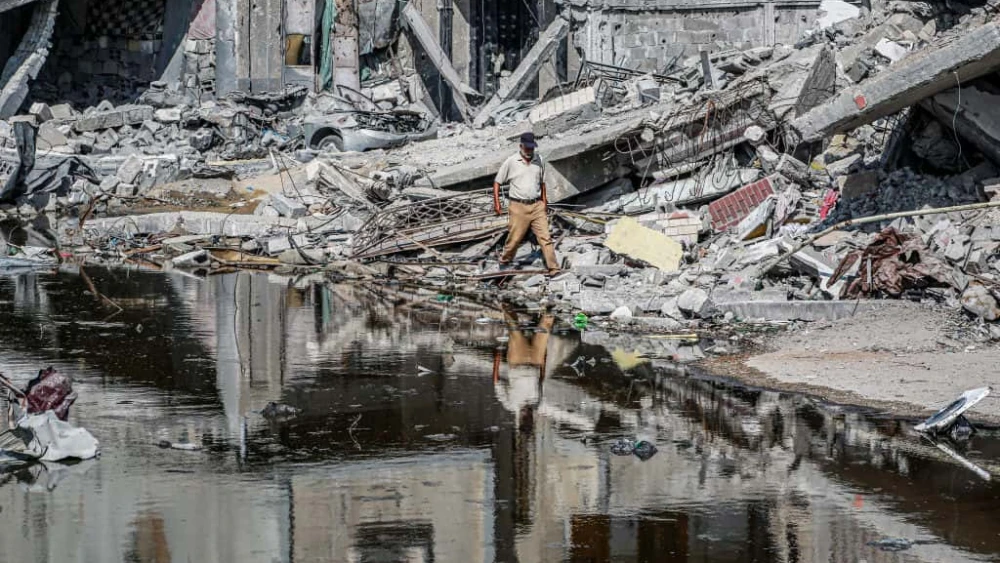
Israel’s nine-month offensive in response to Hamas’s attack on Oct. 7 has likely influenced the terrorist organization to ease its demands in ceasefire negotiations, according to several officials in the Middle East and the U.S., the Associated Press reports.
Over the weekend, Hamas appeared to drop its longstanding insistence that Israel commit to ending the war as part of any ceasefire agreement. This change has sparked renewed optimism for progress in internationally-mediated talks.
Recent internal communications viewed by AP reveal messages signed by several senior Hamas figures in Gaza urging the organization’s political leadership in Qatar, where Hamas’s top leader Ismail Haniyeh is based, to accept the ceasefire proposal put forward by President Joe Biden.
These messages, shared by a Middle Eastern official speaking anonymously, detail Hamas’s heavy losses and dire conditions in Gaza, possibly explaining its softened stance in ceasefire talks.
The intelligence official showed AP a transcript of the communications in Arabic from May and June but declined to share specific details about how the information was obtained or the raw form of the communications.
While it remains unclear whether this internal pressure influenced Hamas’s flexibility, the messages suggest divisions within the group and a readiness among top members to reach a deal quickly. This is despite the supposed reluctance of Yahya Sinwar, Hamas’s top official in Gaza, who has been in hiding since the war began and is believed to be sheltering in a tunnel.
Two U.S. officials, also speaking on condition of anonymity, said that Americans are aware of internal divisions within Hamas. They suggested that these divisions, the destruction in Gaza, and pressure from mediators Egypt and Qatar could have been factors in Hamas’s softening its demands for a deal.
Israeli Prime Minister Benjamin Netanyahu said on Sunday that military pressure, including the ongoing two-month offensive in the southern Gaza city of Rafah, “is what has led Hamas to enter negotiations.”
Hamas spokesperson Jihad Taha dismissed suggestions of divisions within the group, stating, “The movement’s position is unified and is crystallized through the organizational framework of the leadership.”
Originally published by Israel Hayom.



