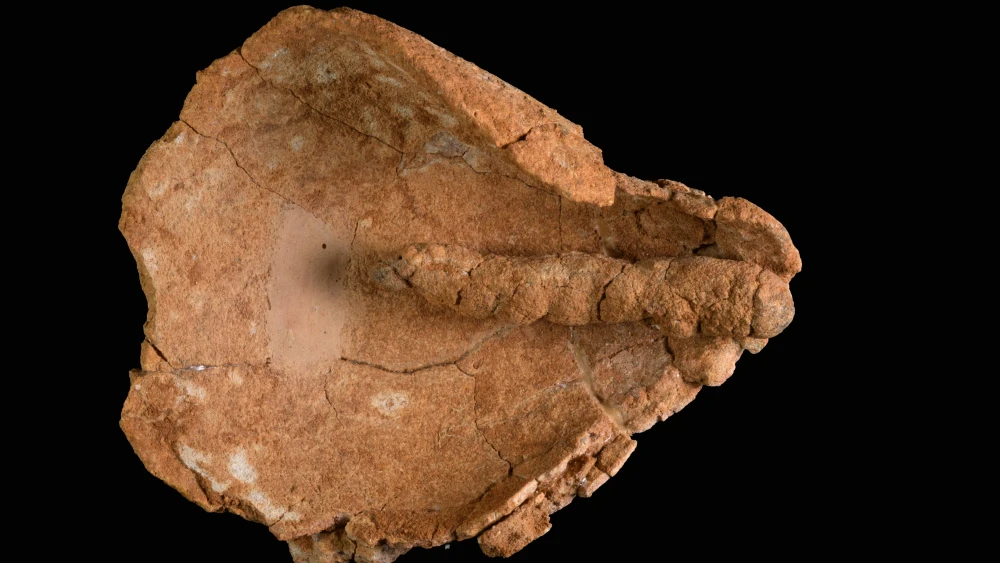
Oil-lamp wicks dating back four millennia, making them among the oldest ever discovered, have been unearthed in an archaeological dig in central Israel, the Israel Antiquities Authority announced on Sunday.
The ancient wicks were preserved inside clay lamps used for illumination in the Intermediate Bronze Age (c. 2500–2000 BCE), according to the IAA. They were uncovered two years ago near the central Israeli city of Yehud just north of Ben-Gurion International Airport during an excavation ahead of the establishment of a new neighborhood in the city.
The find was especially rare due to its location in the humid coastal plain; wicks are generally destroyed by use or decompose in the soil.
“This is a unique discovery that we did not expect could ever be found in the moist Mediterranean climate; these wicks are among the few of their era known to us in the world,” according to IAA researchers Naama Sukenik and Yonah Maor. “Although wicks were a common product for lighting in the ancient world, the fact that they are made of organic fibers makes it difficult to discover them in an archaeological dig,” they added.
The lamps were found in ancient graves, as was common practice at the time, alongside other burial offerings, including various types of pottery, animal bones, metal weapons and jewelry, according to excavation directors Gilad Itach, Yossi Elisha and Yaniv Agmon.
“While these lamps must have been used to illuminate the underground, dark burial space during the burial ceremony itself, it seems that this was not their only function,” they said. “Just like today, thousands of years ago, the fire burning in a lamp symbolized the human soul. The common term we use today, ‘ner neshama,’ the flame of the soul, probably originated thousands of years ago.”
This study was published in the IAA scientific journal Atiqot.