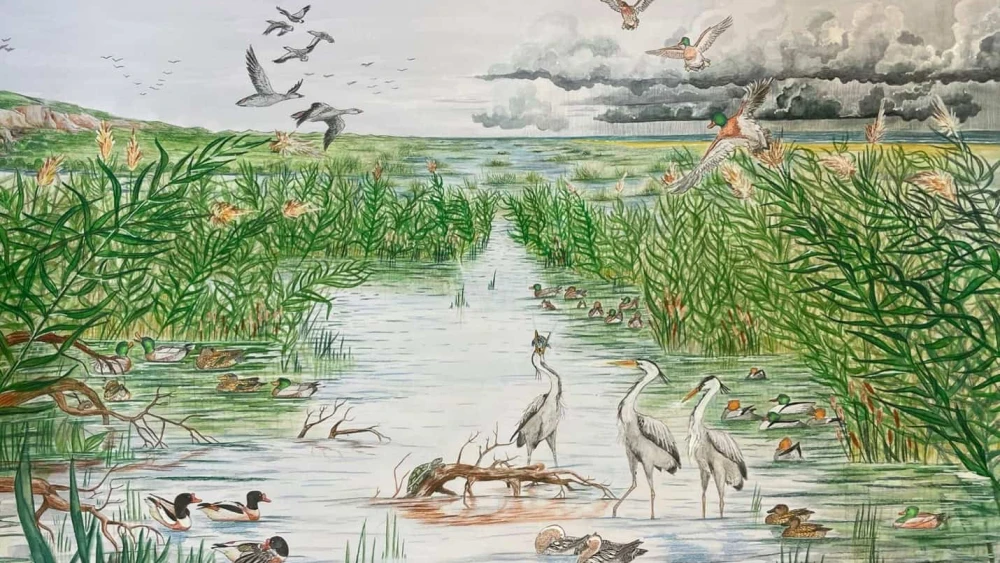
A new study by the University of Haifa has revealed that 15,000 years ago, the prehistoric residents of the Carmel Caves were not coastal fishermen but inland hunters who relied on ducks and geese from freshwater lakes and marshes at the end of the Ice Age.
The research, published in the International Journal of Osteoarchaeology, found that members of the Natufian culture—among the first to settle permanently in the region—made seasonal expeditions from the el-Wad Cave on Mount Carmel to hunt migratory waterfowl on the coastal plain below. The Carmel Caves are located on the western slopes of Mount Carmel.
“Our findings show for the first time that members of the Natufian culture systematically hunted in the coastal lakes that existed here at the end of the Ice Age,” said Professor Reuven Yeshurun of the University of Haifa, one of the study’s authors.
Located within the Nahal Me’arot Nature Reserve, the el-Wad Cave is a key archaeological site for understanding humanity’s shift from nomadic to settled life. Excavations have uncovered stone dwellings, burial sites, and tools dating from 15,000 to 11,700 years ago, revealing a sophisticated prehistoric community.
In the new study, Dr. Linda Amos, Prof. Mina Weinstein-Evron and Prof. Yeshurun of the University’s Zinman Institute of Archaeology examined hundreds of bird bones from el-Wad’s Natufian layers. They identified 43 species—including ducks, geese, quail, partridges and raptors—many showing signs of hunting, cooking, and ornament-making.
“The Carmel hunters lived at a time when sea levels were far lower, and the coastline was a broad plain dotted with lakes and marshes,” said Yeshurun. “Migrating waterfowl provided not only food but also raw materials for beads and ornaments. These findings give us a vivid picture of life on Mount Carmel at the dawn of human settlement.”