



Denmark’s government on Tuesday unveiled a five-year plan for fighting antisemitism, with a budget of $18 million and which includes the establishment of a new research institute focused on hate crimes and headed by a former leader of Danish Jews.
The new national plan, which extends and expands Denmark’s first national plan for fighting antisemitism from 2022, is needed because, “Following Hamas’s terrorist attack in Israel on Oct. 7, 2023, and the subsequent war in Gaza, there has been a flare-up in antisemitism in Denmark,” the Danish Justice Ministry said in its announcement.
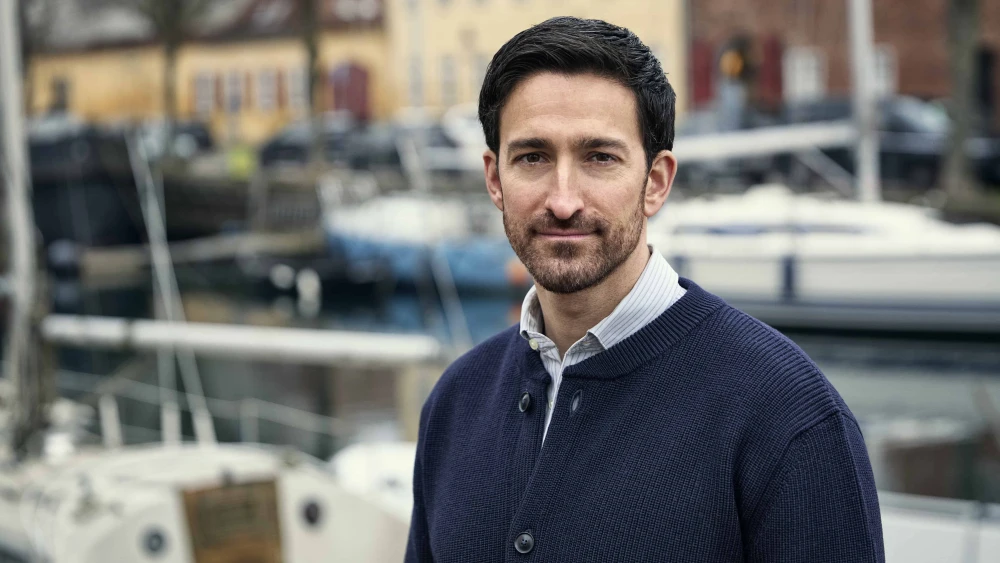
The newly-established Weinberger Institute will have a team of four to six researchers, led by Jonathan Fischer, a former vice president of the Jewish Community of Denmark.
Fischer told JNS that the new plan will be the first time that a European government has set up a research unit with the specific purpose of combating antisemitism.
“It is an extension and development of a proactive approach that has made Denmark a model in the fight against antisemitism,” he said.
The research institute is meant to “support the police in understanding what we’re looking at,” he told JNS, including by helping detectives decipher coded hate speech that may not appear to the average police officer as a violation of the penal code.
Fischer recalled cartoons published on social media on the second anniversary of the Oct. 7 Hamas massacre in Israel. One featured an AI-generated image of Hamas terrorists amid a flood washing over the Al-Aqsa Mosque in Jerusalem.
“To an average police officer, it may look like terrorists drowning in the sea,” Fischer added. “To understand this is an act of glorifying terrorism, which is illegal in Denmark, you have to know that Hamas called the Oct. 7 atrocities ‘the Al Aqsa Flood’. That’s an example of where the Weinberger Institute comes in, providing detectives with the tools to understand what they’re seeing.”
In the United Kingdom, France and elsewhere, Jewish community security organs cooperate with police and share information with them regularly. However, an institutionalized cooperation like the one envisaged in the 17-point plan is rare.
The plan’s other points include educational initiatives, including the appointment of an Education Ministry coordinator for fighting antisemitism.
Danish officials have kept a high level of alertness to antisemitism in recent years, Fischer said, especially after the 2015 murder of Dan Uzan, a volunteer guard at the Great Synagogue of Copenhagen, by an armed jihadist who stormed the building while a bat mitzvah party was underway inside. Police killed the attacker.
The number of antisemitic incidents in Denmark, which in 2020 was estimated to have some 6,400 Jews, skyrocketed in 2023, according to the Jewish community’s Department for Mapping and Reporting of Antisemitic Incidents (AKVAH). It documented 121 and 207 incidents in 2023 and 2024, respectively, compared to nine antisemitic incidents in 2022.
“Jews in Denmark should neither feel persecuted, harassed nor receive death threats,” said Danish Justice Minister Peter Hummelgaard regarding the new plan. Fighting antisemitism “must be done through education and prevention, as well as tough and firm consequences towards those who spread anti-Semitism and hatred against Jews,” the statement continued. “Jews in Denmark must be able to live and move freely and safely.”



