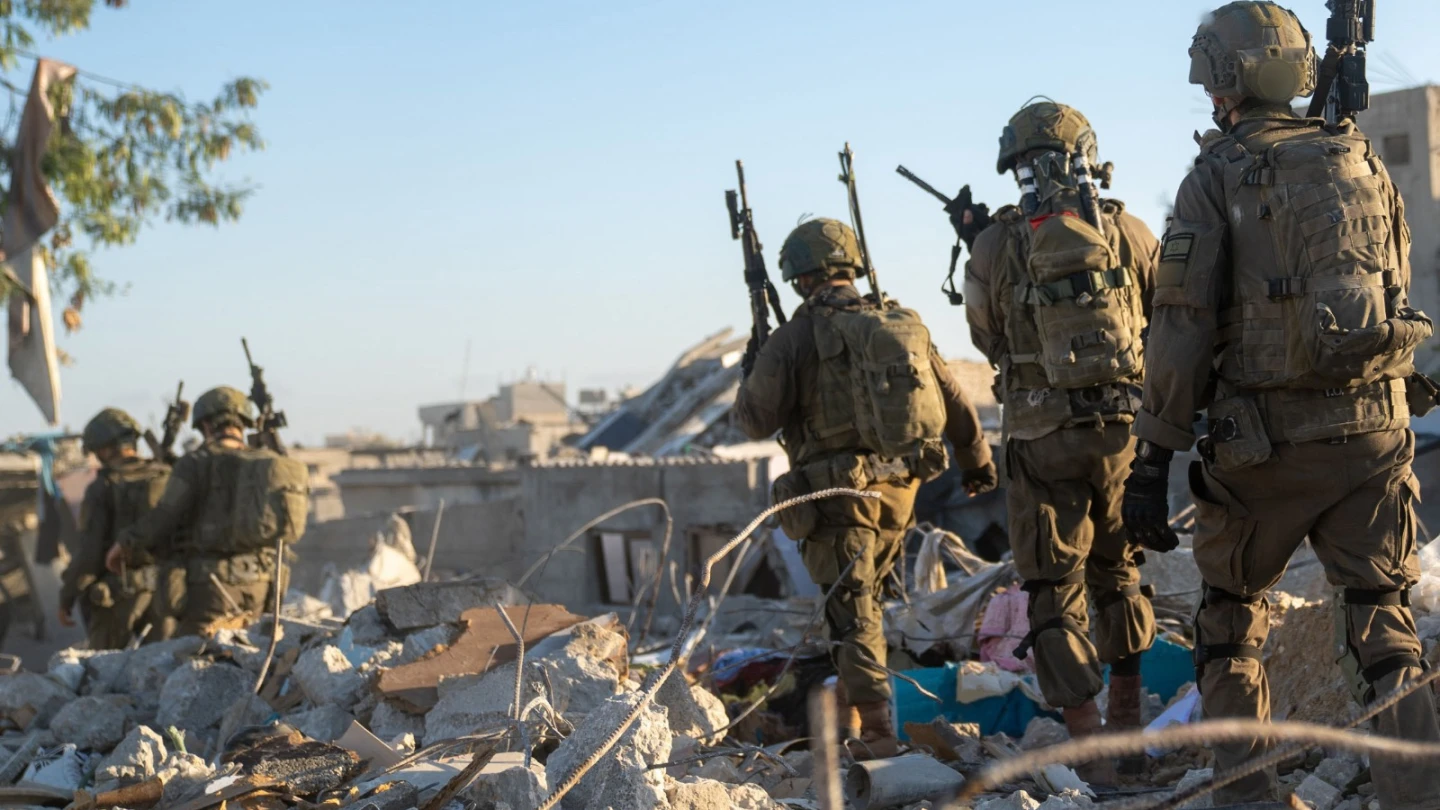
The commander of Hamas’s Eastern Rafah Battalion, as well as the deputy commander, were among four terrorists eliminated by Israeli forces on Sunday, the Israeli Defense Forces Spokesperson’s Unit said on Thursday.
The incident took place on Sunday, and the identities of the slain terrorists were confirmed following an intelligence analysis.
The battalion commander was identified as Muhammad Jawad Muhammad al-Bawab, “who oversaw the planning of the infiltration of the battalion’s terrorists into communities in the southern Negev during the [Oct. 7, 2023] massacre,” the military said.
His deputy commander, Ismail Kanaan Abd al-Hay Abu Labdeh, helped oversee the invasion, according to the IDF.
The third terrorist, Abdullah Azi Ahmed Hamad, operated as a security guard for the battalion’s senior commanders and was the son of Ghazi Hamad, a senior member of the Hamas political bureau.
The fourth and final terrorist was identified as Tawfiq Khaled Tawfiq Salem, a commander of a regional Hamas platoon.
The IDF noted that together with the Israel Security Agency (Shin Bet), it has eliminated more than 40 terrorists in the area of the underground terror infrastructure in eastern Rafah.
“IDF troops in the Southern Command remain deployed in accordance with the ceasefire agreement and will continue to operate to remove any immediate threat,” the military’s statement concluded.
Jerusalem has reportedly been facing U.S. pressure not to kill the dozens of terrorists barricaded inside the Rafah tunnel network, which falls within IDF-controlled territory under the U.S.-brokered ceasefire.
Ynet reported on Nov. 11 that Israel was considering a proposal under which the terrorists would surrender and lay down their weapons in return for amnesty or exile, while their tunnels would be destroyed.
However, Hamas spokesman Hazem Qassem told Qatar’s Al Araby Television Network on Nov. 10 that the gunmen would not surrender, while Turkey was reportedly working to secure their freedom.
Meanwhile, Israel’s military was preparing for the possibility that more terrorists could emerge from the tunnels and carry out attacks as their food and water run out.