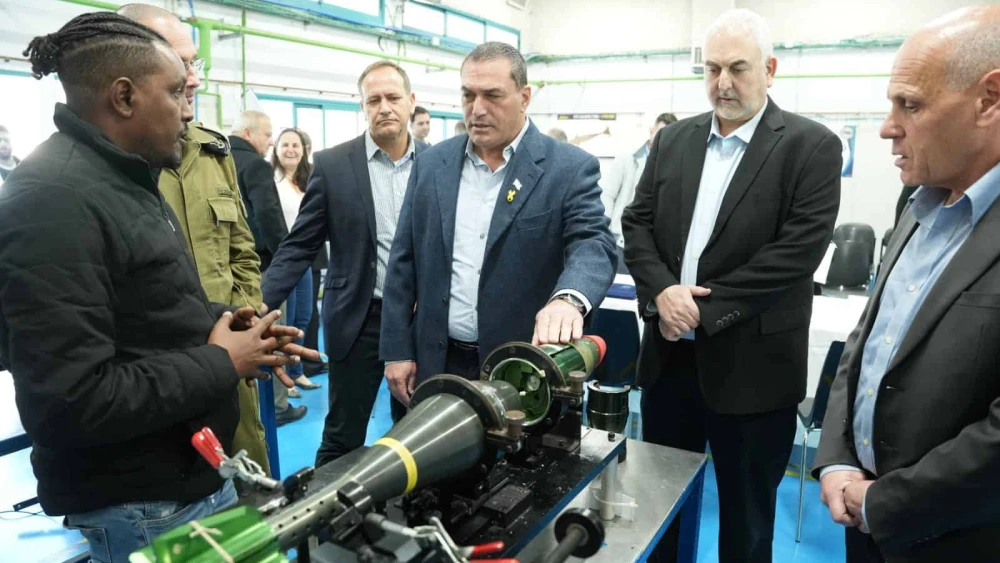
The Israeli Defense Ministry on Tuesday announced the signing of two significant agreements with Israeli defense contractor Elbit Systems, valued at $275 million. These deals aim to advance domestic manufacturing independence and enhance local defense production.
The first agreement focuses on the supply of thousands of munitions, while the second involves establishing a facility to produce critical raw materials for Israel’s defense industry.
The agreements were formalized in a signing ceremony with Defense Ministry Director General Maj. Gen. (res.) Eyal Zamir and Elbit Systems President and CEO Bezhalel Machlis.
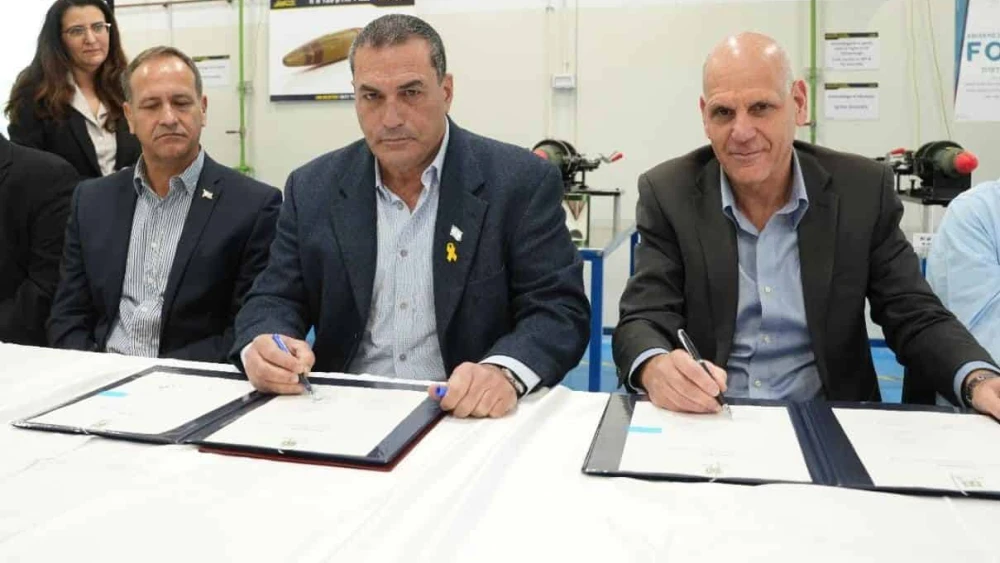
“We initiated this historic move before the war, but accelerated it during the conflict,” said Zamir. “Under both agreements, initial capabilities will soon expand, ultimately achieving full independence in both areas. This is a key lesson from the war that will empower the Israel Defense Forces to continue operating effectively in all theaters.”
Machlis stated, “Elbit Systems is a partner of the IDF and the Israeli Ministry of Defense in advancing the ‘Blue and White’ manufacturing policy and is committed to significantly contributing to the strengthening of the IDF’s munitions independence.”