BRAINE-L’ALLEUD, Belgium—What could drive a 16-year-old boy from an affluent home in Belgium to leave behind his doting family, a prestigious private high school and the captaincy of his soccer team, in favor of a boarding school in a faraway war zone?
For Raphael, a Jewish teen from the Brussels area, the answer was more than two years of antisemitic threats and intimidation, according to him and his family.
In January, he left his parents, his 7-year-old sister and the country where he had grown up to live and study in Israel alone.
The harassment began after he posted “I stand with Israel” on Facebook following the Hamas-led terrorist attacks in southern Israel on Oct. 7, 2023.
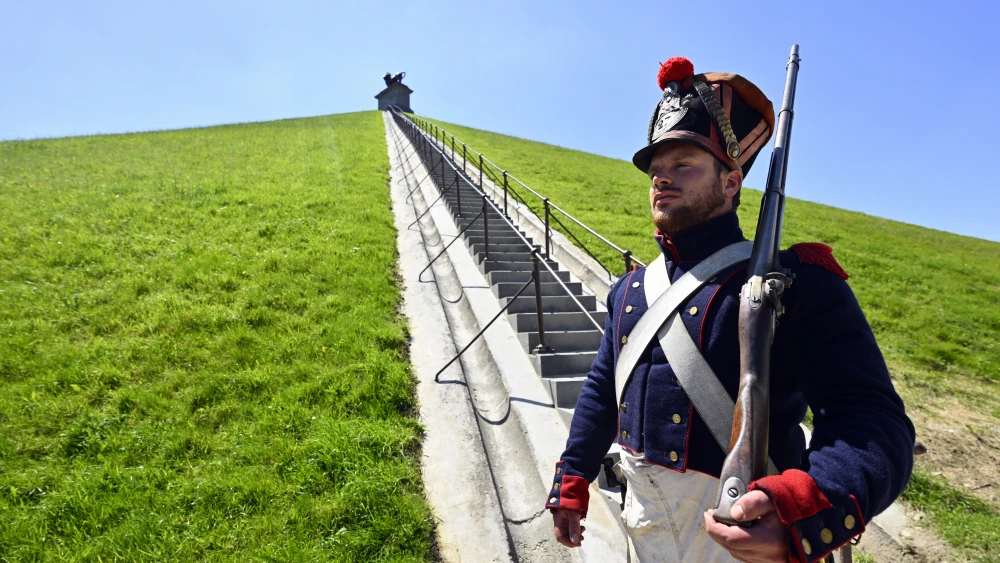
“From a mother’s perspective, it’s excruciating to see your child leave so young and for the wrong reason: because Jews are again threatened due to their identity. I cried. I still cry a lot,” his mother, Julie Waknine, told JNS last month at her home in Braine-l’Alleud, a town located near Waterloo, a place best known for the defeat that Napoleon Bonaparte’s army suffered there in 1815.
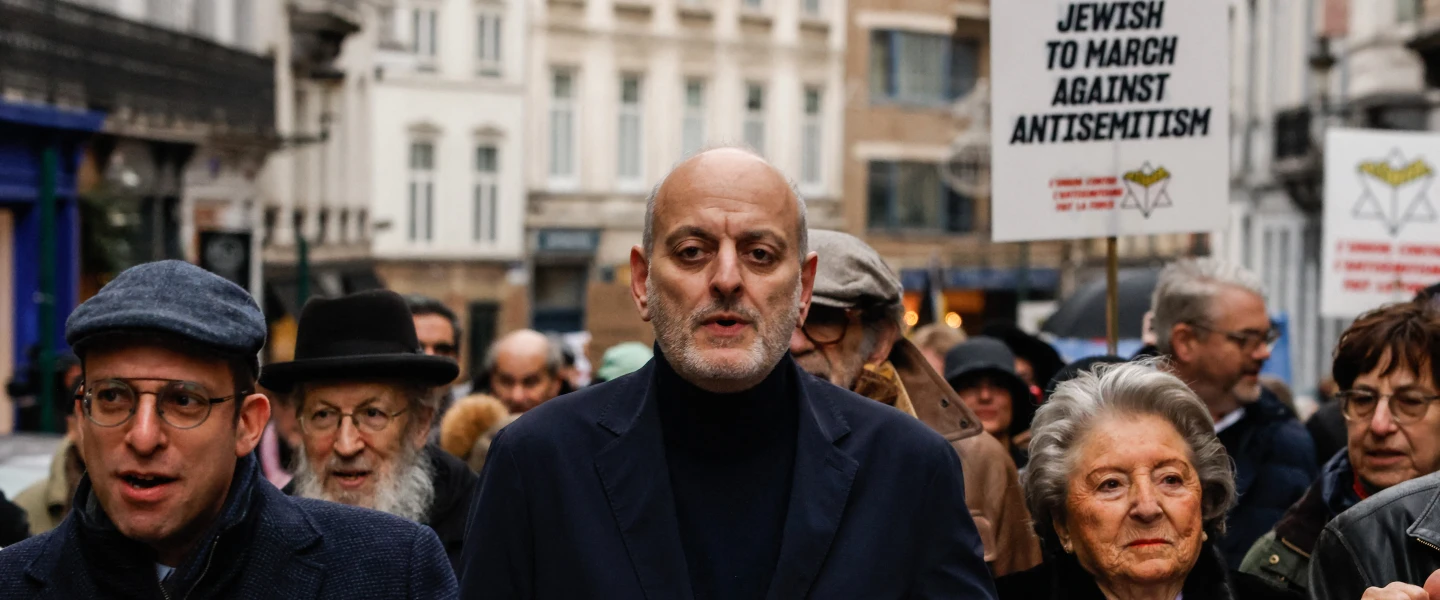
Raphael’s departure illustrates what Joël Rubinfeld, president of the Belgian League Against Antisemitism, calls a “silent exodus” of Jews from Belgium. Rubinfeld attributes the trend to rising antisemitism and what he describes as its increasing acceptance within Belgian institutions. “Increasingly, we have institutional antisemitism here,” he said.
The available figures show a long-term decline in Belgium’s Jewish population, which some community leaders attribute to a rise in expressions of antisemitism in a fractured and polarized society, where Jews are especially vulnerable.
Raphael, whose last name has been withheld from this article, said his first serious confrontation occurred on Oct. 9, 2023, two days after the Hamas attack. A large group of students surrounded him during lunch at Collège Cardinal Mercier, insulted him and grabbed him by the collar, he said.
“I was alone,” he recalled, describing the incident as his first experience of “antisemitism, pure and simple.”
Raphael fled the main campus and hid in a wooded area on the school grounds. He called his mother and told her: “They came looking for me, and I’m hiding.”
For Julie, the call evoked stories she had heard about her grandparents during the Holocaust.
“As a parent, the anguish is indescribable,” she said. “The hatred that affected my grandparents, I more or less escaped it. And now it is affecting my child.”
When the family reported the incident to a senior school administrator, Julie said, he responded that Jews had always been a “hypersensitive community” and advised them not to contact police. Julie and her husband disregarded that advice and filed a complaint based on Raphael’s account.
The high school’s current director, Marin Benoît, told JNS he was not yet in charge at the time of the incidents, and could therefore not comment on them. “Our school does not tolerate any form of racism, antisemitism, harassment or violence,” he added. “I can also assure you that we would certainly not discourage parents from filing a complaint or contacting the police; this falls under their fundamental rights,” he said.
The intimidation continued, the family said, culminating around 2025. Parents of Raphael’s schoolmates warned Julie and her husband that four males from a neighboring town were traveling to the school to attack him, following a soccer match that Raphael’s team won. Raphael, the captain of his team, left the school through a rear exit with his father while police searched for the four would-be attackers, Julie said.
“Before Oct. 7, I was Raphael at school,” he said. “After Oct. 7, overnight I became ‘the Jew.’”
That episode turned his disillusionment into a decision.
“I couldn’t be here anymore, with everything that had happened,” Raphael said. “And so I asked to go live in Israel.”
His maternal grandmother had recently moved there, and his parents found a program where he could continue his studies in French. He enrolled at Mikveh Israel, a boarding school on the outskirts of Holon, near Tel Aviv, where he lives with other young immigrants.
Raphael had already spoken to Belgian media about the harassment. He spoke to JNS about his aliyah “so that other people experiencing similar things know they’re not alone, and that they have options,” he said.
Julie said she is proud of his courage, but added: “The circumstances that led to it are just tragic.”
Life in Israel has not been simple. The war with Iran disrupted classroom studies, and Raphael is still deciding what he wants to do after school, including whether to serve in the Israel Defense Forces. Back in Belgium for the summer, he still sees friends, but he’s no longer fully part of their daily lives.
“I’m figuring things out,” he said.
A shrinking community
Belgium’s Jewish population has declined from slightly more than 41,000 in 1980 to an estimated 28,900 in 2021—a 20% drop—according to a 2022 report by the Institute for Jewish Policy Research (JPR). Belgium has fewer Jews now than it did in 1946, immediately after the Holocaust, the study showed. By comparison, the Jewish population of neighboring France also declined, according to a different JPR report from 2020, but less precipitously: French Jewry has shrunk by 15% from its estimated tally of 530,000 in 1970, according to the 2020 report.
Immigration to Israel accounts for only part of the decline. About 150 Belgian Jews per year have made aliyah on average since 2014, according to Israeli government figures. Rubinfeld, a former president of the CCOJB umbrella group of French-speaking Belgian Jews, said others have moved to other countries, though comprehensive figures for those destinations were not available.
The JPR report said antisemitism could not be discounted as a factor in Jewish emigration.
Belgium’s equality body, UNIA, received 192 reports concerning antisemitism in 2025. It recorded 277 reports in 2024 and 121 in 2023. The tallies in the two years before that were below 100.
Rubinfeld argues that the problem extends beyond street harassment and has entered public institutions. He cited restrictions on ritual slaughter, criminal proceedings involving Jewish circumcision and what he considers inconsistent enforcement of hate-speech laws.
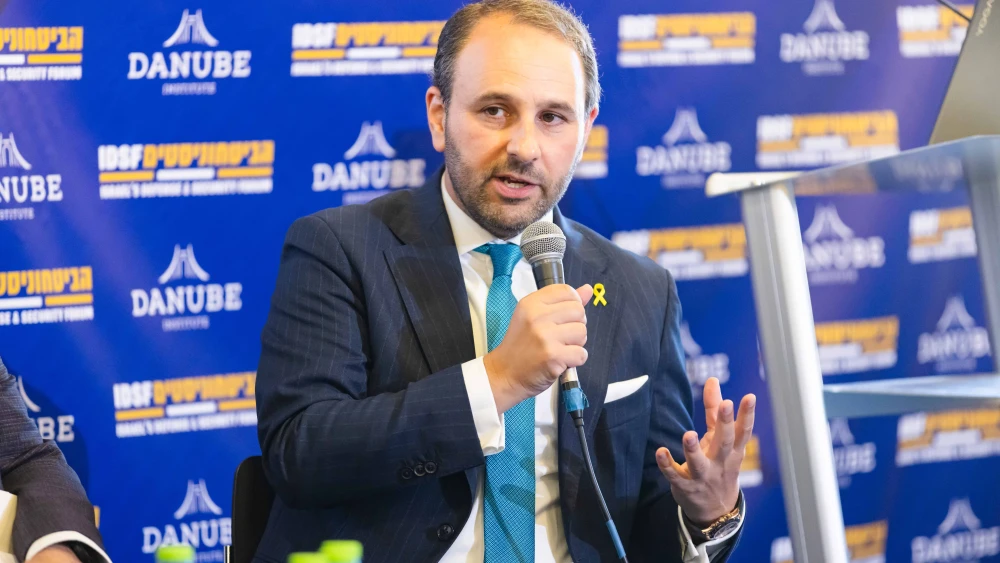
Michael Freilich, a Jewish member of Belgium’s federal parliament from Prime Minister Bart De Wever’s New Flemish Alliance, rejected Rubinfeld’s claim of institutional antisemitism.
“There are cases that go awry. The media is biased, but that’s not institutional antisemitism,” Freilich told the 21News website.
Belgium’s political and linguistic divisions complicate the debate. The country consists of three regions—Flanders, Wallonia and Brussels—and two main language communities. Jewish communal life is divided, too. Antwerp is home to a large and predominantly Orthodox population, while the largely French-speaking Jewish community in Brussels is generally more secular. The bodies representing the two groups have had disagreements and difficulties lobbying government together.
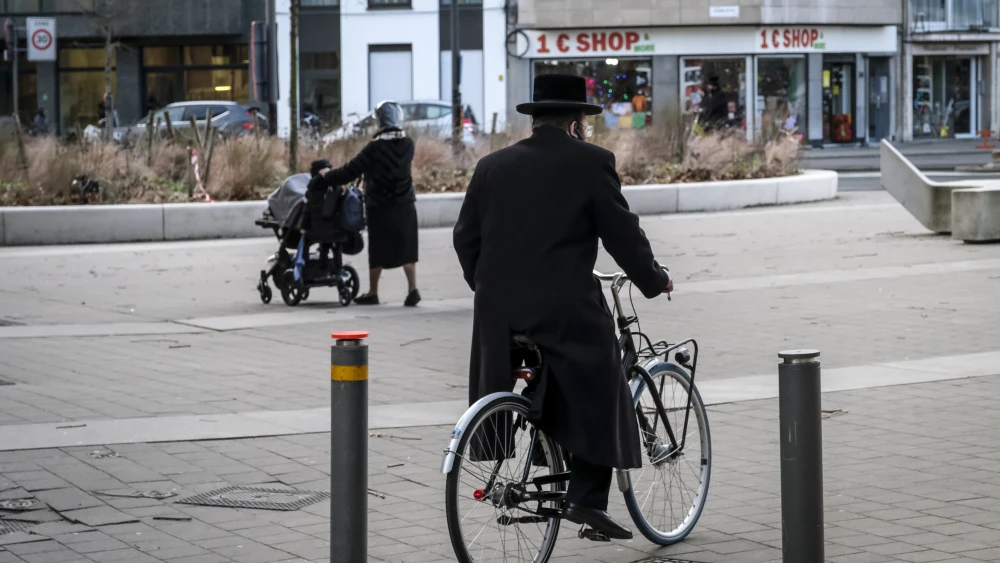
“The Jewish communities of Belgium are separated by only 40 kilometers [25 miles], but they operate very much like islands, inhabiting different political climates,” said Jenny Aharon, a Belgium-based advisory board member of the Jewish Information and Documentation Center, an antisemitism watchdog.
Disputes over Jewish religious life
Since 2019, Flanders and Wallonia have prohibited slaughter without prior stunning, preventing local production of kosher and halal meat. The practice remains legal in Brussels, where there are no major kosher slaughterhouses. Supporters of the restrictions invoke animal welfare; Jewish and Muslim organizations say they infringe religious freedom.
Rubinfeld also cited criminal proceedings involving three Antwerp Jews accused of illegally performing nonmedical circumcisions. Circumcision on the eighth day after birth, known as brit milah, is a foundational Jewish rite that’s performed by a trained practitioner known as a mohel.
Israeli Foreign Minister Gideon Sa’ar, U.S. Ambassador to Belgium Bill White and Rabbi Menachem Margolin, chairman of the European Jewish Association, have described the proceedings as antisemitic. Margolin has argued that restricting brit milah would make Jewish life in Belgium untenable. Belgian authorities have defended the case.
Muslims, who vastly outnumber Jews in Belgium, also perform circumcisions on boys, typically at a later age than eight days. Dr. Michael Privot, board member of the Muslim Council of Belgium (CMB), told The Brussels Times in June 2025 that Muslims typically have their boys circumcised in hospitals and “are satisfied with this arrangement.”
Another source of anger was the March 2025 acquittal of Belgian author Herman Brusselmans. In a column for Humo, Brusselmans wrote that he wanted to “drive a pointed knife through the throat of every Jew he encountered” due to Israel’s actions in Gaza. The court concluded that the passage was protected expression in its context.
Belgium has stringent laws on hate speech, Rubinfeld noted. The acquittal of Brusselmans means that, “in Belgium, it’s OK to say you want to murder Jews, but not others,” he said.
Michel Kotek, head of Belgium’s Jewish Information and Documentation Center in the Flemish Region, recently told JNS there is a feeling that it “is open season on Jews” in the country.
Relations between Jewish organizations and UNIA, the government watchdog on racism, have also been strained. In 2017, the Flemish Forum of Jewish Organizations said it had “lost all confidence” in the equality body after one of its lawyers challenged the hate-speech conviction of a Palestinian man who had publicly called for Jews to be slaughtered.
More recent disputes have concerned government policy toward Israel and Israelis living in disputed territory. Jewish leaders have criticized restrictions affecting consular services for Belgian citizens living in Israeli communities in Judea and Samaria. The Belgian Foreign Ministry has said they would receive no consular service anywhere, including passport renewals, as long as they are registered as living in those communities.
Other measures concern products originating in Jewish communities in Judea and Samaria and eastern Jerusalem. Belgium banned their import into Belgium in June.
Aharon said such policies single out Jewish citizens. Belgian officials maintain that their measures concern “settlement” activity they regard as illegal.
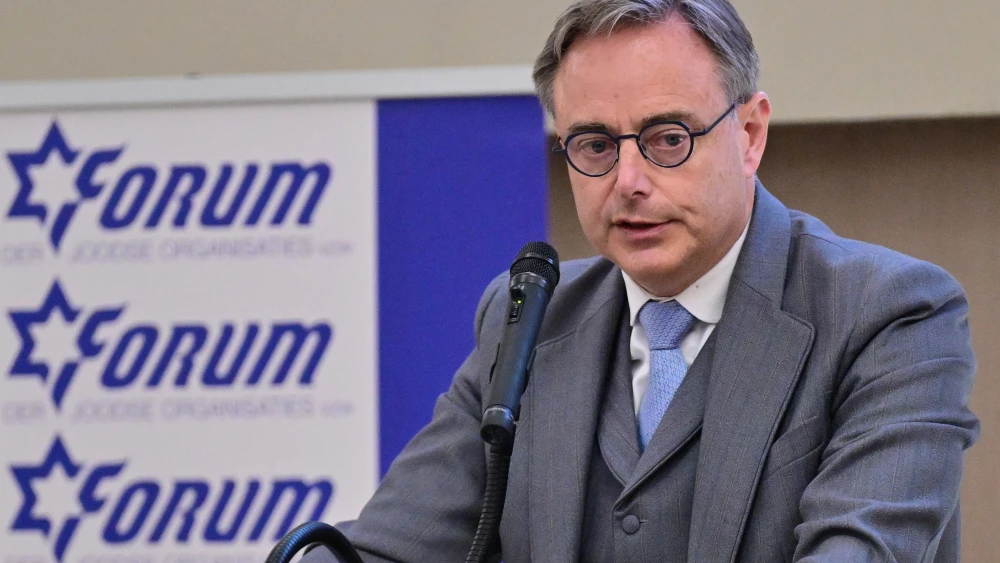
Belgium’s Jewish community still has allies, including Prime Minister De Wever, a right-wing politician who served for years as Antwerp’s mayor. He said last year that neither Belgium nor “any other E.U. country” would arrest his Israeli counterpart, Benjamin Netanyahu, regardless of the International Criminal Court warrant against Netanyahu. De Wever also opposed a push for Belgium to recognize Palestinian statehood.
“But that’s about all he did,” said Aharon. Belgium’s binational society, among other factors, means that elected politicians depend on brittle and awkward coalitions. Policies concerning faraway Israel and Jews, who make up 0.25% of Belgium’s population, are “easy sacrifices,” she said. De Wever’s left-of-center allies demanded anti-Israel action to satisfy their base, and “the Jewish community’s expectations of De Wever as an ally materialized,” she said.
De Wever’s government did deploy the military to protect Jewish communities after an attack in March on a synagogue in Liege, she noted, but “our expectations have not been met. Too many antisemitic incidents continue to go unanswered, while the strongly anti-Israel policies espoused by some of his ministers have not been sufficiently curbed.”
The right-of-center Flemish Interest party has also declared its commitment to keeping Jews safe, and its solidarity with Israel. But many Belgian Jews distrust that party, whose ideological predecessor, the Flemish Bloc, had a Nazi collaborator among its founders.
The arrival of jihadism amid mass Muslim immigration—some estimates put the number of Muslims in Belgium at 800,000 out of almost 12 million residents, whereas others speak of at least one million—has confronted Belgian Jews with a choice, Rubinfeld said. “It’s either the plague of Islamo-leftism, or the cholera of the xenophobic far-right. Both will be the end of Belgian Jewry, and I fear that in 20 years, the end will have arrived.” Either choice will have “destructive consequences for Belgian non-Jews, who don’t have Israel as their Plan B,” Rubinfeld added.
Meanwhile, downtown Brussels has been “transformed from a safe and pleasant area into ‘Little Gaza,’ an occupied zone, as evidence by hundreds of PLO flags hanging from window after window,” Rubinfeld said. In the current climate, he said, “it’s no wonder that young Jews like Raphael are building a future elsewhere.”