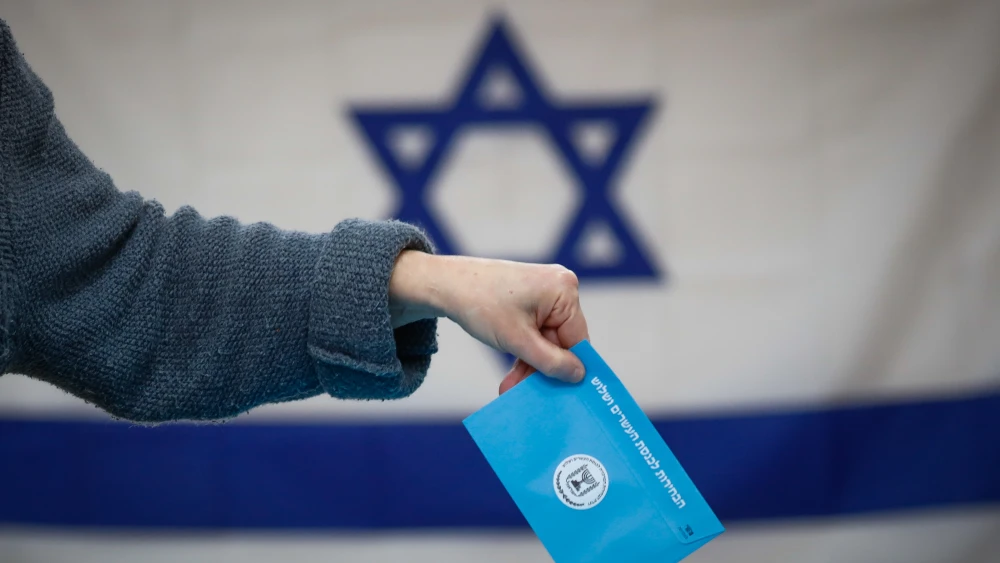
Voting for the 24th Knesset begins on Wednesday night as 104 polling stations in 99 Israeli embassies and consulates across the globe open their doors to some 4,000 diplomats and representatives stationed abroad.
The Israeli missions in Rabat, Dubai and Abu Dhabi will make history, as Israelis have never before voted from such countries. The number of eligible voters will be 25 percent lower this election compared to the last, from around 5,000 to around 4,000, due to the coronavirus pandemic (family members of many Israeli diplomats abroad have remained in Israel, for instance.)
Voting will begin at around 10 p.m. at the Israeli Embassy in Wellington, New Zealand, and end on March 12 at 6 a.m. in Los Angeles and San Francisco.
Unlike those voting in Israel, representatives abroad are required to cast their ballot on a blank piece of paper. The greatest number of eligible voters (550) will do so at the Israeli consulate in New York, the Israeli embassy in Paris (160) and the embassy in London (140). The smallest Israeli mission is in the Dominican Republic, where there are only four eligible voters.
The Israeli Central Elections Committee invests a great deal of time and money to ensure that this voting process takes place without a hitch. Despite these efforts, however, voter turnout abroad has been lower than that in Israel.
In the election for the 21st Knesset, for instance, a mere 76 percent (of 5,075 eligible voters) cast their ballots. In the election for the 22nd Knesset, only 69 percent (of 5,086 eligible voters) did so and in the election for the 23rd Knesset, only 66 percent (of 5,231 eligible voters) exercised their right to vote, compared to 71.5 percent of eligible voters in Israel.
The overall cost of operating the voting stations abroad is NIS 885,000 ($266,367). Once the voting period ends at all Israeli missions around the world, the ballots will be flown to Israel and stored in one place. They will only be counted on March 23, the day of the election.
This article first appeared in Israel Hayom.