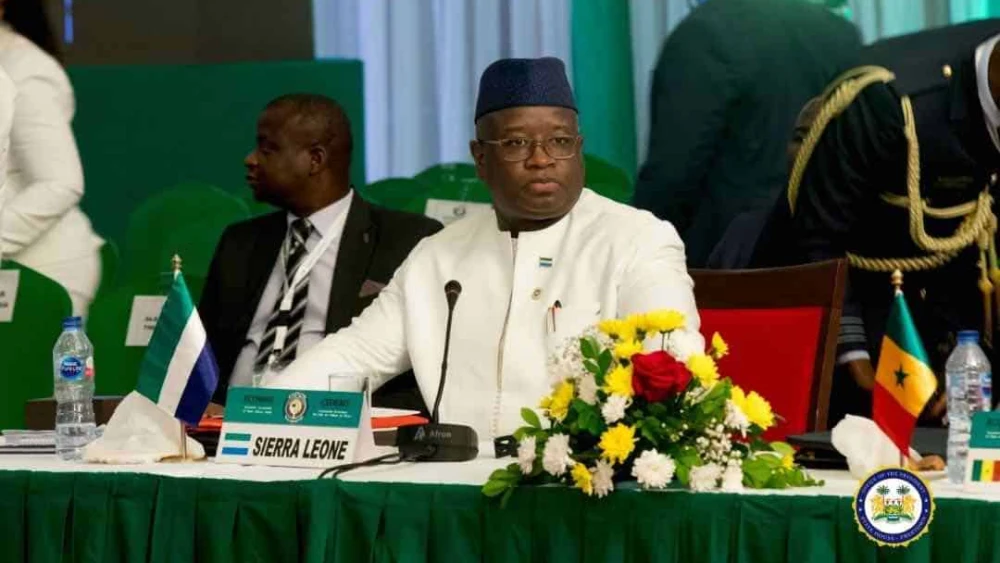
The West African nation of Sierra Leone will open an embassy in Jerusalem, becoming the latest country to move its diplomatic mission to the city, the Israeli Foreign Ministry announced on Friday.
The news came just over a week after Paraguay said it will be returning its embassy to Israel’s capital.
“We continue to put Jerusalem, our eternal capital, at the top of the State of Israel’s diplomatic agenda,” said Foreign Minister Eli Cohen after speaking with Sierra Leonean President Julius Maada Bio.
His Excellency President Julius Maada Bio had a progressive telephone conversation with @elicoh1, the Foreign Minister of the State of #Israel, today, August 24, 2023.
— Presidency | Sierra Leone 🇸🇱 (@Presidency_SL) August 24, 2023
They discussed the warm relations between both countries that dates back to 1961 when #SierraLeone gained… pic.twitter.com/cJuzcISbvK
“As part of efforts to strengthen the warm relationship between the two nations, his excellency President Julius Maada Bio expressed his readiness to establish an Embassy of Sierra Leone in Jerusalem, the capital of the State of Israel,” the Presidency of Sierra Leone posted on X, formerly known as Twitter.
The embassy is set to be the seventh in Jerusalem, the Foreign Ministry said, following Paraguay and a country in the Pacific islands that has not yet been named.
Four countries currently have their embassies in Israel’s capital: the United States, Guatemala, Honduras and Kosovo.
Historic ties
Sierra Leone country first established ties with Israel in 1961 following the African nation’s independence from Great Britain. It cut ties with Israel in 1973, only to renew them in 1992. Israel does not have an embassy in Sierra Leone but operates a diplomatic mission out of Ghana servicing both countries.
Almost 80% of Sierra Leoneans are Muslims.
Then-President Donald Trump’s decision to relocate the U.S. embassy to Jerusalem in 2018 set the stage for additional countries to follow suit in the following years.