Newsletter
Newsletter Support JNS

Israel’s Energy Ministry unveils plan to combat air pollution

Its objectives include improving in the energy-consumption-per-GDP figure; a shift towards a solar-based energy market; and investment in innovative energy technology.

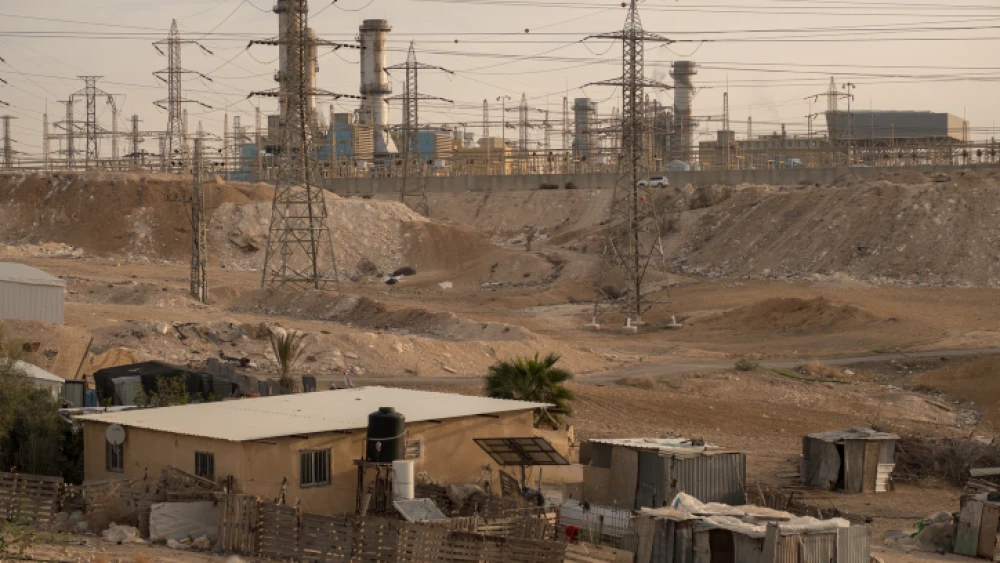
Villages around the Ramat Hovav industrial zone in southern Israel have a high level of air pollution from nearby chemical-evaporation ponds and the Israel Electric Company power plant, Dec. 28, 2017. Photo by Yaniv Nadav/Flash90.

The Israeli Ministry of Energy announced on Sunday a new plan designed to significantly reduce air pollution in the energy market.

The plan, which the ministry says is part of Israel’s efforts to counteract climate change, has a number of objectives, among them a commitment to shut down coal power plants by 2025, in line with a directive by Energy Minister Yuval Steinitz.

Other aims include a reduction of greenhouse-gas emissions in the electricity sector by 75 percent to 85 percent by 2050; a 1.3 percent annual improvement in the energy-consumption-per-GDP figure; a shift towards a solar-based energy market; and investment in innovative energy technology, such as hydrogen power.

According to the ministry, the plan emerged following a year of research and dialogue, and includes a detailed working outline for the coming decade. However, it added, the plan “does not ignore the additional need to decrease local air pollution, which is relevant to the health of Israeli citizens.”

The ministry further stated that it has been working to ensure that Israel meets its commitments under the December 2015 Paris Climate Agreement.

The annual event serves as a reaffirmation of the faith-based support for Israel among millions of Americans, a bedrock of the relationship between the two nations.
The Israeli military said it struck terror infrastructure in Tyre, including sites used to launch explosive drones at troops.
The lawmaker who exposed the affair said he’d seen a “flood” of support from students for the teacher’s actions.
Nearly every second cucumber from P.A. farms is contaminated with “extremely high” levels of toxicants.
“The details of the incident are under review,” the military said.
“Any diplomatic process is damaged by the use of force,” said a spokesman for Iran’s Foreign Ministry.

