


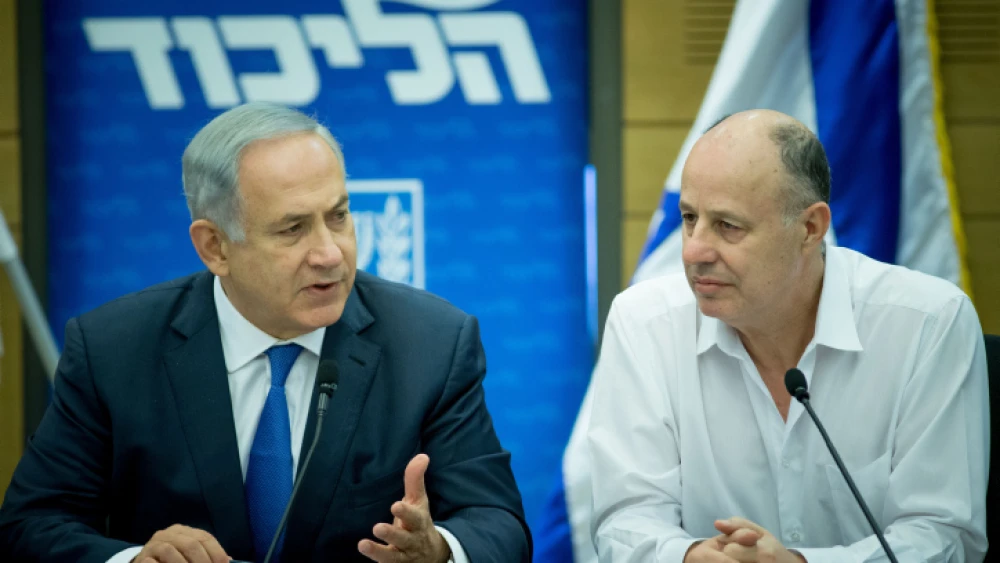
Israeli Prime Minister Benjamin Netanyahu has decided to replace his national security adviser, Tzachi Hanegbi, the Prime Minister’s Office announced on Tuesday evening.
Netanyahu in a Hebrew statement thanked Hanegbi “for his service as head of the National Security Council over the past three years” and wished him “much success in his future endeavors and good health.”
The prime minister said he intends to immediately appoint Hanegbi’s deputy, Gil Reich, as acting head of the National Security Council.
In a separate statement issued on Tuesday evening, Hanegbi thanked the premier “for the privilege of having been a partner in shaping Israel’s foreign and security policy during challenging years, for the opportunity to express an independent opinion in sensitive discussions and for the professional dialogue we maintained even in times of disagreement.”
“The terrible failure of Oct. 7, in which I share responsibility, must be thoroughly investigated,” Hanegbi continued, referring to the Hamas-led Oct. 7, 2023 invasion of southern Israel, in which Palestinian terrorists murdered some 1,200 and took another 251 people as hostages back to the Gaza Strip.
Hanegbi’s dismissal came in the wake of his recent opposition to some of Netanyahu’s decisions in the war against Hamas, including the occupation of Gaza City and the Sept. 9 strike on terror leaders in Doha, according to Ynet, which cited unnamed government ministers.
Hanegbi was also said to have pushed for a partial deal with Hamas that would have left half of the living hostages behind, per Ynet.
The NSC head told fellow ministers in early August that the rejection of a ceasefire in return for the release of 10 captives meant giving up on their rescue, as “Hamas won’t respond” to demands by Jerusalem and Washington to free all 20 live hostages, according to Israel’s Channel 12 News.
A partial deal “would allow us to attempt to reach an agreement on the remaining 10,” he reportedly told the Cabinet, adding: “I fully agree with the chief of staff that taking control of Gaza City jeopardizes the lives of the hostages, which is why I oppose the prime minister’s proposal.”
On Oct. 13, Hamas freed 20 living hostages as part of the truce deal negotiated by Netanyahu and U.S. President Donald Trump. The terrorist organization has to date returned remains of 14 slain captives, out of 28 that were to have been returned on Oct. 13 under the terms of the ceasefire.
Hanegbi, 68, a member of Netanyahu’s ruling Likud Party, has held a series of ministerial positions in subsequent Israeli governments. He was appointed as head of the National Security Council in early January 2023, mere days after Israel’s longest-serving premier returned to power.
Reich, who previously held a top position as deputy director-general for policy at the Israel Atomic Energy Commission, also replaced Hanegbi during meetings when he was hospitalized after surgery in Sept. 2024.



