Newsletter
Newsletter Support JNS

Friends of IDF giving more than $430,000 to families of 118 fallen Israeli soldiers for Passover

“Supporting bereaved families is a sacred responsibility that reflects the deep bond between Israel’s supporters around the world and those who have made the greatest sacrifice on behalf of the State of Israel,” the head of the group said.

Passover shopping
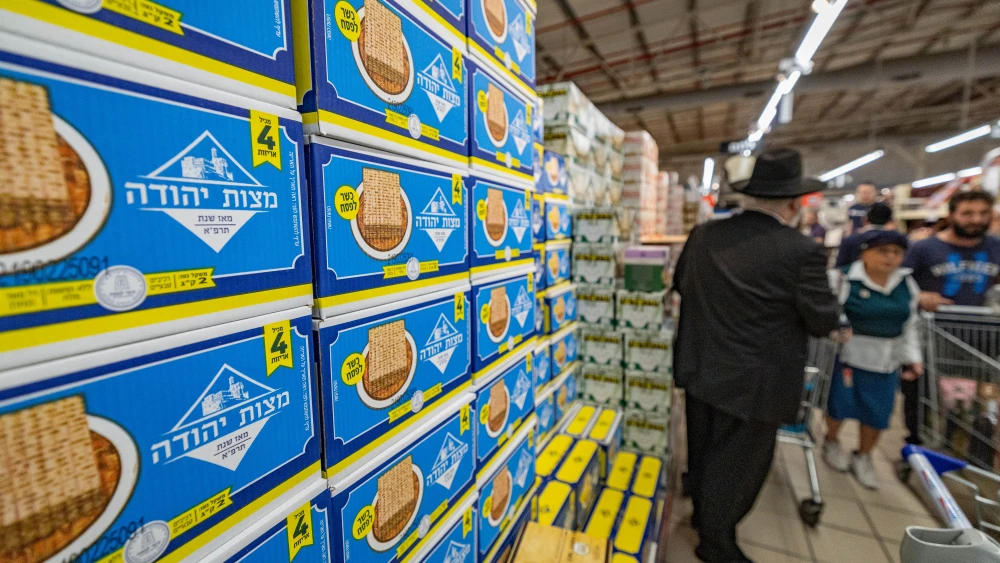
People shop at the Osher Ad Supermarket branch in Givat Shaul, Jerusalem, before the holiday of Passover, April 3, 2025. Credit: Yonatan Sindel/Flash90.
Yonatan Sindel/Flash90

The Friends of the Israel Defense Forces said that it is giving more than $430,000 to families of 118 fallen Israeli soldiers through its After the Shiva program ahead of the Passover holiday.

The funds will support “ongoing financial needs, along with holiday shopping gift cards, personalized gifts and herb plants to help families prepare for and observe Passover,” the group said.

Maj. Gen. (Res.) Nadav Padan, CEO of the group, stated that “supporting bereaved families is a sacred responsibility that reflects the deep bond between Israel’s supporters around the world and those who have made the greatest sacrifice on behalf of the State of Israel.”

“Through programs like After the Shiva, we are committed to standing by these families not only in the immediate aftermath of their loss, but throughout the long journey of rebuilding their lives with care, dignity and unwavering support,” he said.

“I have a passport that I was just born with,” Laura Pinho said during a CodePink webinar. “How can I live in this world if I don’t make every effort to equalize the playing field in whatever way that I can?
Secular activist Naor Narkis’s suggestion that Religious Zionist soldiers’ casualty rates might not be so high were they to do “full military service” was “unnecessary,” said Golan.
“Hamas’s actions are time and again ignored by human rights organizations,” the Defense Ministry unit said.
Israeli forces eliminated Talal Jaber Mohammad Abd al-Aal, who infiltrated Israel and helped hold hostages.
“She complained about that kind of retaliation and ostracization, and that persisted throughout the rest of her internship there,” Rebecca Harris, of the Brandeis Center, told JNS.
The underground complex in Rafah was neutralized after a three-month operation using 30,000 cubic meters of concrete.