Impatience turned into panic, and panic into a deep and endless pain.
The afternoon of July 19, 1994, was unfolding, for everyone, like any other day. The men and women who boarded Flight #901 at France Field Airport in the province of Colón were eager to get home to Panama City. It was a short, routine trip. The preferred mode of transportation for countless business people, mostly Jewish, who made the daily commute between Colón and the capital.
The passengers on the next flight didn’t understand the delay. Until they learned that the Embraer 110 Bandeirante hadn’t reached its destination. Minutes after takeoff, the aircraft had exploded in mid-air, its wreckage scattered across the slopes of Santa Rita hill.
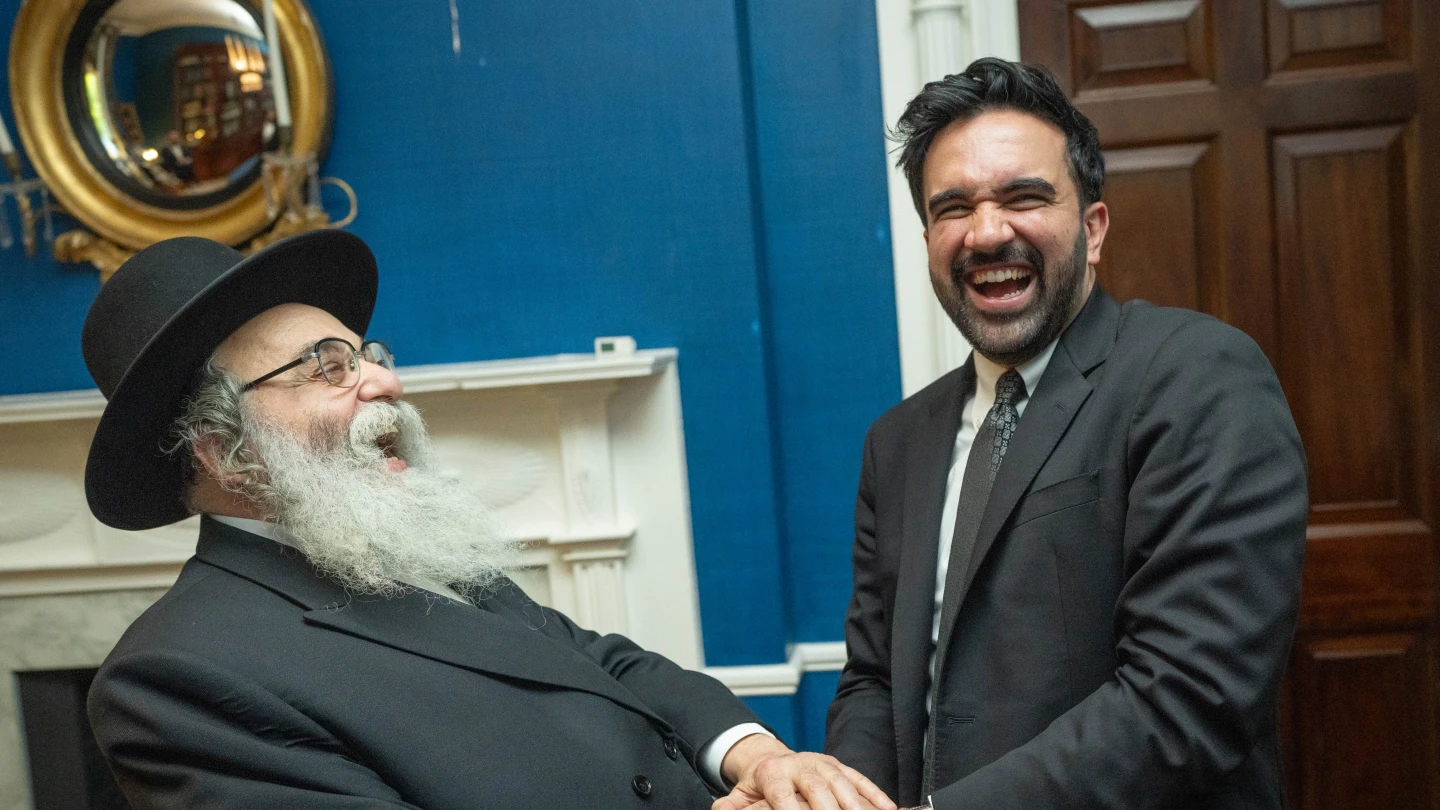
Abner Benaim was one of the first to try to reach the site where the plane crashed, like a huge bird that fell from the sky. His uncle, Saul, was one of the 21 passengers. Back then, there were no cell phones, information was scarce, and the anxiety was overwhelming.
“He was like an older brother,” recalls Benaim, who worked alongside his uncle and maintained a very close relationship with him.

“I walked, to this day I don’t know how far. It was raining; there was a lot of mud. Some people tell me we crossed a river; others say we didn’t,” he recalls. “Finally, we arrived at the farm where the plane crashed. I don’t know if it’s a real memory, but I could see smoke on the horizon.”
The police were already at the scene, and an officer told Benaim that he couldn’t go in. “I told him I was related to one of the passengers and wanted to help. He replied, ‘No, no, they’re all dead.’ And that phrase has stayed with me.”
Abner turned around and went back to his family’s house. When he started making films, this movie was already living inside him. There wasn’t a specific date, just the certainty that at some point he would tell this story.
The movie that took decades
“About seven or eight years ago, before the pandemic, I was talking with a friend, Ana Karina Smith,” he recounts. Smith’s grandfather was another victim of that dark day, and she told Benaim that she was looking for someone to make a film about it. At that moment, he knew the time had come.
“I told her I wanted to do it myself. I didn’t know where that decision would lead me, but I instinctively knew that I had to tell it from my point of view,” he explains.
Unlike his previous productions, this was going to be a difficult process because it combined research with his own emotional burden. It took eight years. Along the way, he spoke with everyone he could: relatives of the victims, ordinary citizens, the Panamanian government, the FBI, even the Mossad.
In terms of information, he found a lot. But something that surprised him during the interviews was that most of the relatives wanted to know as many details as possible about that day.
“As a filmmaker, out of prudence, I asked them how much they wanted to know. And I realized that knowing was good for them. Not knowing leaves you in an emotional limbo, not just an intellectual one,” something that his psychologist also reiterates in the film.
On screen, Benaim appears vulnerable: He shares sessions with his therapist and his nightmares, in an attempt to fill in the gaps and reconcile his past. He tries to put abstract concepts into words.
When asked if immersing himself in this project reopens the wound, he replies that you can’t open something that has never closed.
“Over time, the pain changes. Everyone has their own process. But I’m sure that no one has ever completely closed or healed; that doesn’t exist. Everyone lives with some sense of loss. It doesn’t mean you’re there all day, but it’s with you.”
However, he notes that although these are ongoing processes, people still feel growing and maturing over time.
“Sharing with other family members of the victims is important because you feel a certain connection. Being in contact with people who have experienced the same thing helps process the pain, the loss and the trauma. It’s not something with a final point, but you do feel that the pain changes over time. Making this documentary has been an important process for me.”
Given the impact that day had on a country as small as Panama, Benaim believes a greater effort must be made to keep the memory alive: “It’s a matter of conscience, not only for the families and friends of the victims, but also for national history.”
He adds that “if we compare it to what happened at the AMIA a day earlier in Argentina,” when a car bomb destroyed the building of the Argentine Israelite Mutual Association, leaving 85 dead and more than 300 injured, “what happened in Panama has been, let’s say, minimized.”

The normalization of horror
Benaim began by searching for answers, trying to understand. But along the way, he ended up sharing his memories.
The production also serves as a call, a reminder, and a warning about the violence that prevails in the world.
“Violence creates pain, trauma and further problems, not only for the victims but also for future generations. Bearing this in mind can help resolve conflicts at a political and ideological level, without resorting to more wars,” he states.
“Nobody wants to lose their child. Nobody wants to lose their father or their brother. It doesn’t matter where you’re from or how you were raised; pain is pain for everyone,” he says. “That, for me, would be the ideal message: that people leave the theater thinking, ‘I hope we don’t continue to generate more traumas like the ones we saw in this film.’”
For Benaim, constant exposure to tragedies and conflicts has also generated a dangerous normalization of human suffering.
“If you’re a healthy person and you turn on CNN, the BBC or any world news summary for half an hour, you should end up crying. That would be the normal reaction,” he explains. “In those 30 minutes, they tell you that people were killed somewhere, that there was a fire, an attack, a shooting. But today we see it as if it were just another day.”
“We’re so used to violence that we consume it almost like a Hollywood movie. Seventeen people died in Mogadishu, and it seems like nobody cares, unless it’s your family or friends. That’s when you understand what it really means to be part of it.”
The film is currently showing in Panama and has also participated in international festivals, including the Jewish Film Festival in Philadelphia. It will soon be screened in Puerto Rico and London, while discussions continue regarding distribution on streaming platforms and in other regions.
Unexpectedly, the alleged mastermind of the attack, Ali Zaki Hage Jalil, was extradited to face justice in Panama, the same week the documentary premiered. The perpetrator who carried the bomb died on the plane.
“Yes, it’s very strange, because this happened 31 years ago, and it ended up coinciding,” Benaim says. “When I started making the documentary, there hadn’t even been an announcement about him.”

Back at the farm
Of the countless hours spent collecting testimonies, one story stands out above all the others.
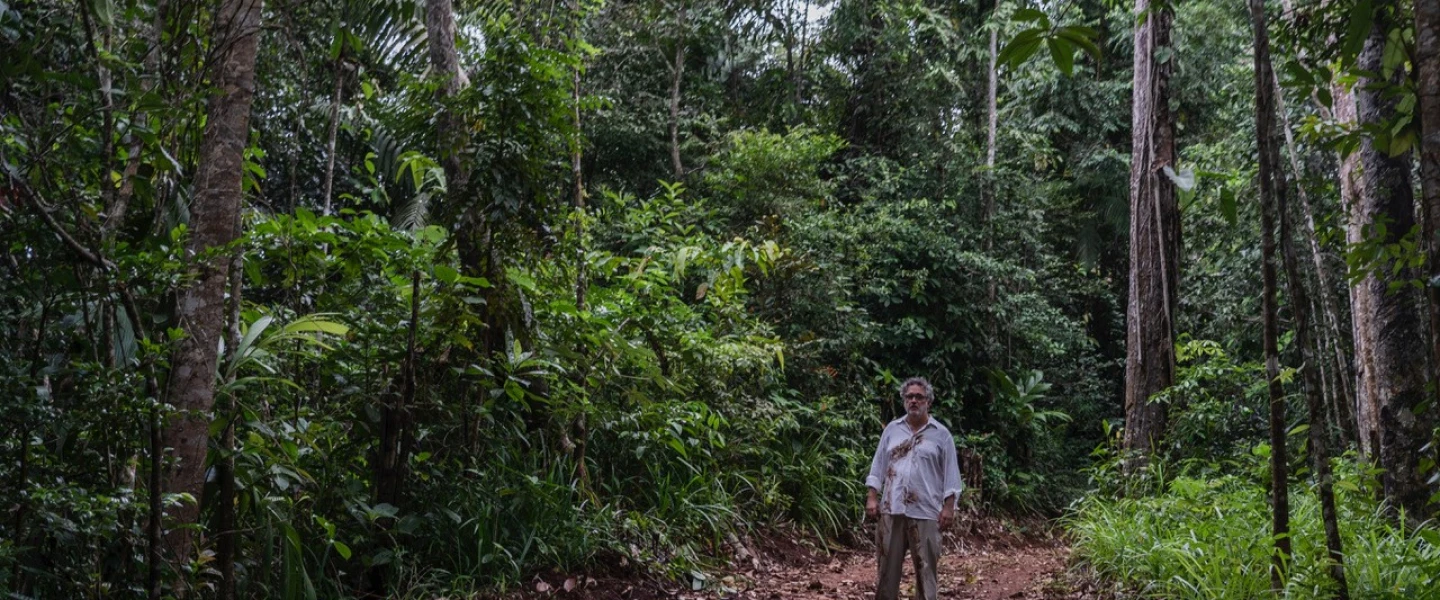
“When I went to interview the owner of the farm where the plane crashed, I thought she was going to tell me about it as a distant memory. She didn’t know any of the victims, but when we started talking, she completely broke down. She started to cry.”
That reaction finally revealed to Abner the extent of the trauma.
“I realized the impact all that violence had on someone who was completely removed from that context. A woman living on a farm full of greenery, fruit trees, surrounded by the beauty of Panama, cooking over a wood fire, in the midst of absolute tranquility. And suddenly—bam! A plane crashes with 21 dead people around her.”
“Seeing how she reacted when she remembered that story, even so many years later, made me understand the impact that violence has on people, even if they are not directly related.”
And perhaps that’s why Benaim—who describes himself as a dreamer and optimist, someone who sees good as a concept that can be longed for—yearns to return to the Panama of his childhood: a place he remembers almost as a utopia.
“Despite the military dictatorship, it was a fairly peaceful country,” he states. “We had a life that felt almost perfect, harmonious.”
On the day of the attack, not only did a plane explode; that bubble, his tropical paradise, also burst.