


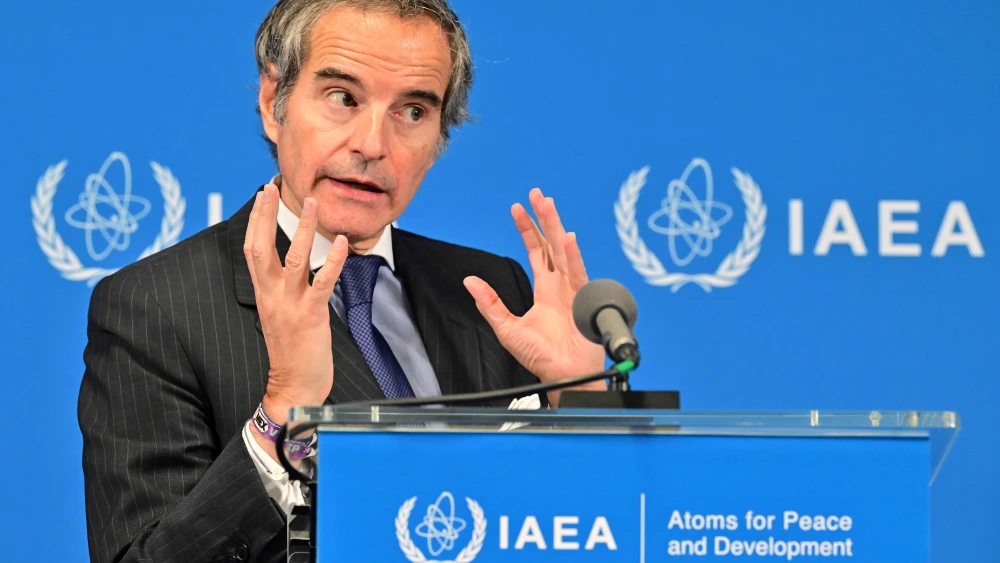
Infrastructure in Syria visited by International Atomic Energy Agency inspectors in August is “consistent with a nuclear reactor,” according to a confidential IAEA report obtained by the AFP, the outlet reported on Tuesday.
Syria under the (now-collapsed) Assad regime “failed to report nuclear material, facilities and activities,” according to the report.
After Assad’s regime was overthrown in December 2024, the new Syrian government agreed to grant IAEA inspectors access to suspected former nuclear sites.
In a July 17 letter, Damascus notified the agency of the existence of another undeclared site, inviting the nuclear watchdog “to cooperate with the Syrian authorities in the inspection and verification of the site and of any nuclear material to be potentially found,” according to the Associated Press.
Then, in August, IAEA inspectors visited the Deir Ezzor site in eastern Syria and the second facility, AFP reported.
“Based on observations made by the agency at the Deir Ezzor site, the agency confirms that the cooling infrastructure which has now been uncovered is consistent with that of a nuclear reactor,” the IAEA said, according to AFP.
The IAEA said it would continue to monitor the situation as the excavation work progresses.
Besides the “nuclear reactor under construction” at the Deir Ezzor facility, the nuclear watchdog listed a fuel fabrication plant, where the nuclear fuel for the reactor was manufactured, and a location where the nuclear fuel, as well as uranium scrap and waste, were stored, the report added.
Last month, IAEA Director General Rafael Grossi commended Damascus’s “courageous decision” to report an undisclosed site, at which inspectors found several tons of nuclear material.
The IAEA said at the time it had found around 73 tons of natural uranium metal, comprising 55 tons of fuel rods and the rest uranium scrap and waste.
Nuclear material stored at secret ‘Site 99’
In 2017, Israel’s “Operation Orchard” targeted the suspected Deir Ezzor nuclear site, also known as the Al-Kibar reactor. The White House subsequently confirmed that intelligence indicated the site was a nuclear facility purposed for military uses.
Axios reported in August that Washington and the Syrian government had agreed to let the IAEA remove nuclear material stored by the Assad regime at a secret site.
An agreement between the nuclear watchdog and Damascus was signed in late July, following months of U.S.-brokered negotiations to prevent a potential escalation involving Israel and perhaps Turkey, the report read.
Despite Israel’s bombing of the site almost 19 years ago, several research and development sites connected with Syria’s nuclear program remain, including nuclear material stored at a location identified as “Site 99,” according to the report.
Although the material cannot be used for a nuclear weapon, it can be converted into a conventional explosive device that disperses radioactive material, known as a “dirty bomb.” This raised concerns in Jerusalem, which kept close tabs on the situation.



