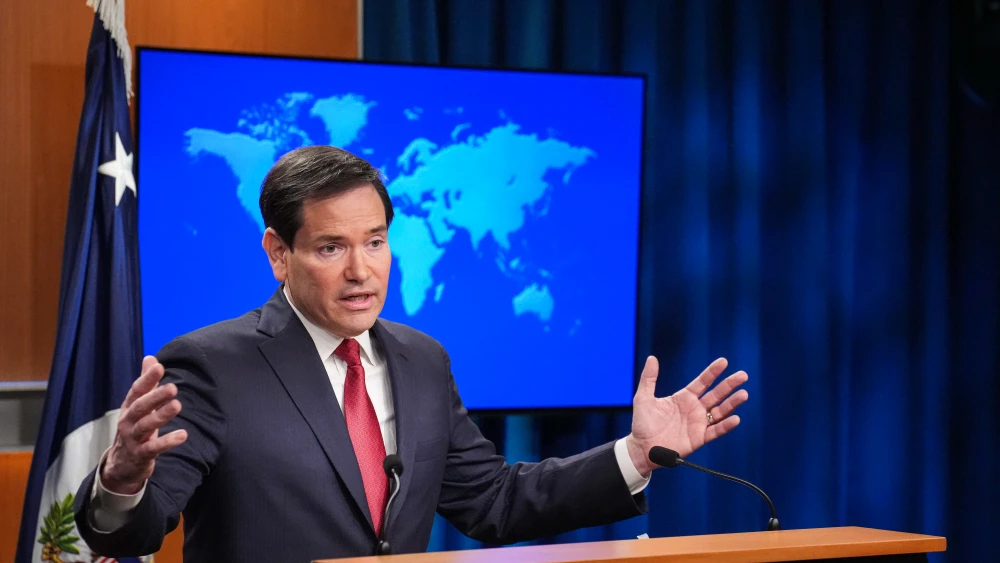
Marco Rubio, the U.S. secretary of state, said on Tuesday that Washington was “very happy” to mediate between Israel and Lebanon, “two countries that the United States wants to have strong—have strong relations with.”
Speaking prior to working-level peace talks with Yechiel Leiter and Nada Hamadeh, the Israeli and the Lebanese ambassadors in Washington respectively, at the State Department, Rubio dodged questions from journalists about whether his presence at the meeting signaled that the United States is “fully engaged” and if there will soon be an Israeli-Lebanese ceasefire.
“This is a historic opportunity,” Rubio said. “We understand we’re working against decades of history and complexities that have led us to this unique moment, and the opportunity here.”
“I know some of you were shouting questions about a ceasefire. This is a lot more than just about that,” the secretary said. “This is about bringing a permanent end to 20 or 30 years of Hezballah’s influence in this part of the world and the—not just the damage that it’s inflicted on Israel, the damage that it’s inflicted on the Lebanese people.”
Hezbollah’s victims include the Lebanese people, according to Rubio. “The Lebanese people are victims of Iranian aggression,” he said. “This needs to stop.”
The top U.S. diplomat said that he know mediating between Israel and Lebanon will be a process.
“All of the complexities of this matter are not going to be resolved in the next six hours, but we can begin to move forward to create the framework where something can happen—something very positive, something very permanent, so that the people of Lebanon can have the kind of future they deserve and so that the people of Israel can live without fear of being struck by rocket attacks from a terrorist proxy of Iran,” he said.
Rubio added that he was attending a “historic gathering that we hope to build on, and the hope today is that we can outline the framework upon which a permanent and lasting peace can be developed so that, as I said, the people of Israel can live in peace and the people of Lebanon can live not just in peace but the prosperity and security that they deserve.”