Viktor Orbán, the Hungarian prime minister since 2010, who is widely regarded as the most pro-Israel leader in Europe, conceded to Péter Magyar in what he called a “painful” election on Sunday.
The question facing the Jewish people is: Will it also be painful for Hungarian Jewry and Hungarian-Israel relations?
Under Orbán, who maintained a “zero tolerance” policy for antisemitism, Hungary became the safest place for Jews in Europe. On a continent where many Jews feared to tread the streets with outward signs of their religion, in Hungary, the streets were filled with Israeli tourists speaking Hebrew.
Will antisemitism rise again with his ouster?
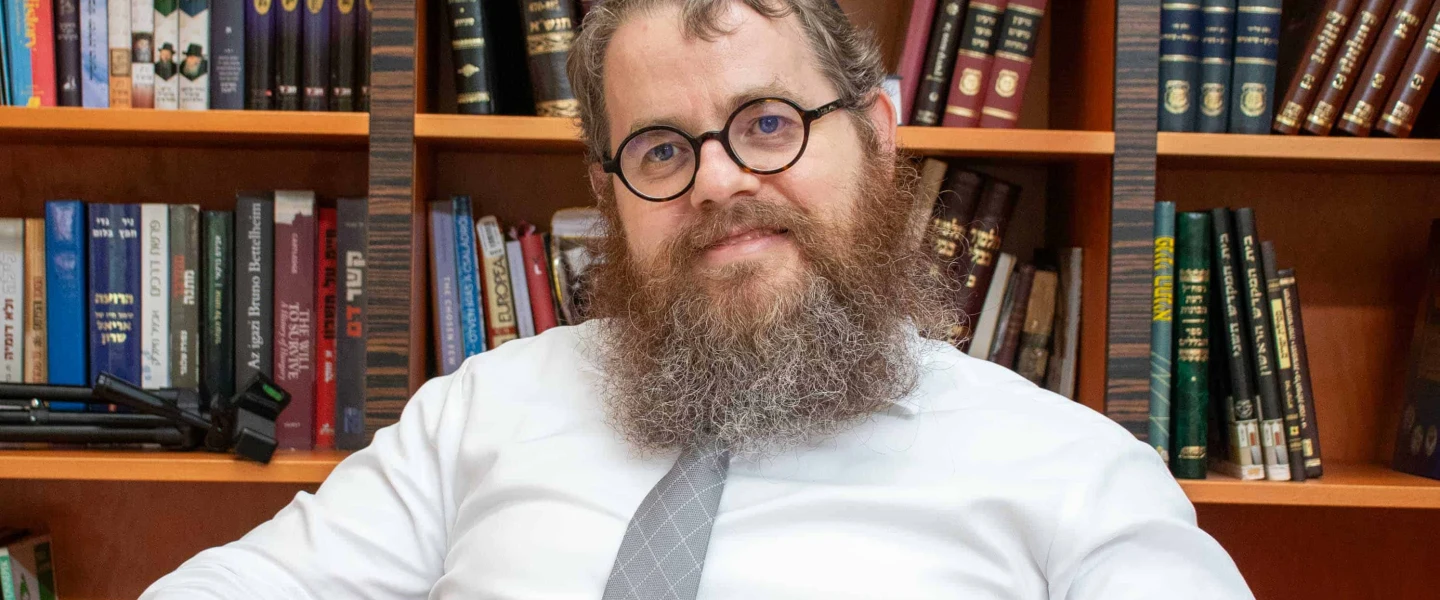
Rabbi Shlomo Köves, chief rabbi of the Chabad-affiliated Association of Hungarian Jewish Communities (or EMIH), told JNS that one very positive development this election cycle is that Jews and Israel were not election topics. Those topics had always come up ever since free elections began in 1990, since the fall of communism. This time, they were barely mentioned.
JNS caught up with Köves on Monday to gauge his thoughts post-election.
Q: How will Orbán’s fall affect Hungarian-Israeli relations?
A: I have seen the reports that Israel has “lost a friend,” but the special friendship between Hungary and Israel was not created by a single individual. It is the result of years of joint effort, mutual gestures, and a constant search for partnership and cooperation.
Responsible leaders of the Jewish community chose the path of dialogue and bridge-building from the very beginning of the previous decade.
We have every reason to believe that despite political change, the core pillars of security, dialogue, and bilateral cooperation between Hungary and Israel will endure.
Q: Do you think Magyar will adhere to Orbán’s friendly policy toward Israel?
A: There is reason for confidence that the achievements of the past 15 years have become part of the national consensus … and that it will be possible to find ways for continued fruitful cooperation with the leadership of Prime Minister-elect Péter Magyar and the TISZA Party.
Q: One of Orbán’s most important policies for Hungarian Jewish security was his opposition to large-scale Muslim immigration. Are you concerned that Magyar will reverse this?
A: This is an issue that Prime Minister-elect Magyar talked about before, when he said that it is not his intention to reverse these policies.
Q: Could you speak to Orbán’s special contributions to relations with Hungarian Jewry and with Israel?
A: During his 16 years in office, Orbán’s leadership led to significant changes for Hungary, and in particular for the Jewish community and relations with Israel.
Over the past decade and a half, Hungary has become one of the safest countries on the European continent for the Jewish community. Orbán also brought about a broader ideological shift within Hungarian politics. The Hungarian right, which carried a political legacy of antisemitism from before World War II, underwent a substantial transformation toward dialogue and friendship with Israel and the Jewish people.
A policy of zero tolerance toward antisemitism was implemented. There were educational reforms with nearly 300 amendments to school curricula addressing Jewish-Christian relations, the legitimacy of the modern State of Israel, and the national memory of the Holocaust.
Legal and constitutional steps were also taken. The Constitution was amended to include the principle of ‘protection of communities,’ enabling action against antisemitism not only in the criminal sphere but also in the civil sphere.
Additional measures under Orbán’s leadership included restrictions on demonstrations supporting organizations such as Hamas. Many of these initiatives have become part of the national consensus in Hungary.
This change did not occur by itself, but was the result of conscious and deliberate leadership, alongside continuous cooperation with the leadership of the Jewish community.
Q: What are the Hungarian Jewish community’s expectations as the country enters a new political era?
A: As Hungary enters a new political chapter, key stakeholders expect continuity in the areas that matter most: security for the Jewish community, constructive domestic dialogue and stable relations with Israel.
As Hungary transitions to new leadership, the message from within its Jewish community is one of cautious confidence that the foundations laid over the past decade and a half will not only endure, but continue to shape the country’s future.
Q: What message do you relay personally to Hungary’s new leader?
A: I extend my heartfelt congratulations. The celebration of Hungarian democracy each time reaffirms our shared conviction that shaping the destiny of the nation is a responsible and noble mission.
I would say this election is not only a democratic milestone but also a moral obligation.
As Proverbs says, “The hearts of kings and leaders are in the hand of the Lord” … this reminds us that leading a country is an exceptional merit, yet also an extraordinary responsibility.