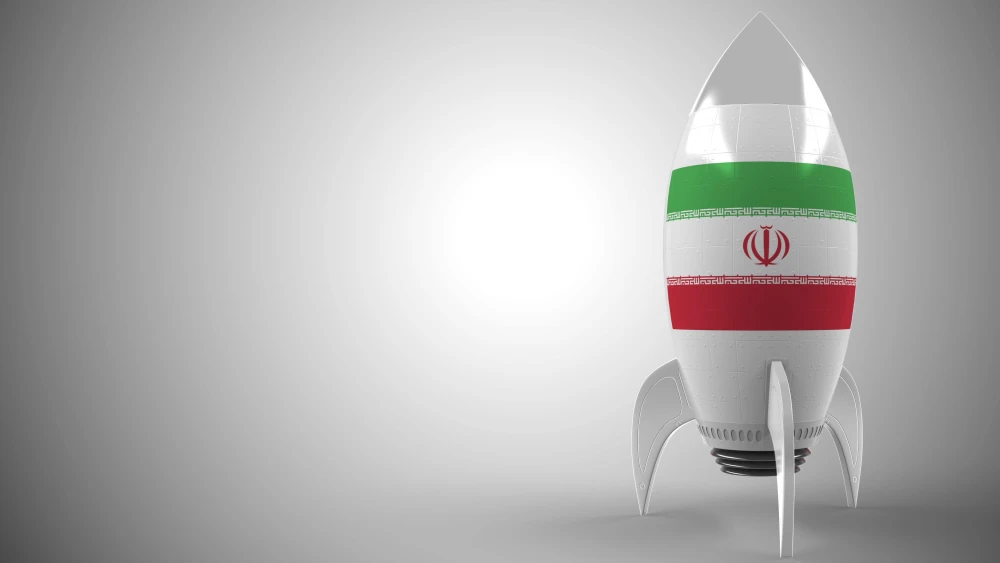

It is often assumed that policymakers in Washington fully understand the ideological foundations of the Iranian regime. That assumption is questionable. Iran’s governing system is not simply authoritarian or generically theocratic; it reflects a distinctive synthesis of religious doctrine, revolutionary theory and anti-colonial thought. This ideological framework shapes both how the mullahs govern internally and how the country’s government positions itself in the world.
At its core, the Iranian clerical regime represents an intersection of political Islam, elements of Marxist-influenced revolutionary thinking and anti-colonial ideology—filtered through a particular interpretation of Shi’a Islam sometimes described as “Red Shi’ism.”
A useful entry point is the concept of Muqawama, commonly translated as “resistance.” In modern political discourse, it refers not only to opposition to foreign domination but to a broader worldview in which resistance itself carries moral, and at times redemptive, significance. Within this framework, struggle is not merely instrumental; it is a duty tied to identity, dignity and historical purpose. When expressed in religious terms, this idea can merge with concepts of jihad understood as a form of sacred struggle, though its interpretation varies widely across contexts.
Closely related is a longer-standing debate within Islamic thought about the causes of perceived decline in the Muslim world. Some revivalist movements, particularly within Sunni traditions, have argued that weakness stems from a departure from early Islamic piety. Movements such as Salafism advocate a return to the perceived purity of Islam’s formative generations as a path to renewal and strength. Although Iran is a Shi’a state, not a Sunni one, these broader debates about authenticity, decline and revival formed part of the intellectual environment in which modern Islamist movements developed.
In the 20th century, these religious themes intersected with secular revolutionary ideas, especially those associated with anti-colonial movements. The writings of Frantz Fanon were particularly influential. Fanon argued that oppressed peoples could overcome materially stronger powers through sustained resistance, psychological transformation and a willingness to endure suffering. In this framework, endurance becomes a form of power, and struggle itself can reshape both individuals and societies.
These ideas resonated across the developing world, including in the Middle East. They contributed to a broader narrative in which asymmetric struggle—often carried out by nonstate actors—could challenge and, under certain conditions, defeat more powerful adversaries. While such theories were not uniquely Islamic, they proved adaptable to religious frameworks that already emphasized sacrifice, justice and moral struggle.
Within Iran, these strands were synthesized by intellectuals such as Ali Shariati. Shariati sought to reinterpret Shi’a Islam in explicitly activist and revolutionary terms. He distinguished between what he called “Black Shi’ism” and “Red Shi’ism.” Black Shi’ism, in his formulation, emphasized ritual, mourning and political quietism—a form of religion that, in his view, had been co-opted by established power structures. Red Shiism, by contrast, drew inspiration from the martyrdom of Husayn ibn Ali at the Battle of Karbala and emphasized resistance to injustice, social engagement, and the willingness to sacrifice for moral and political principles.
This reinterpretation proved highly influential in the years leading up to the 1979 Iranian Revolution. Ayatollah Ali Khomeini and his followers fused Shi’a religious symbolism with revolutionary political theory to produce a doctrine that viewed the Islamic state not merely as a national government, but as the vanguard of a broader struggle against oppression. This struggle was understood to operate within Iran—against the Shah and perceived internal injustice—and beyond it, in opposition to global systems of power seen as exploitative or domineering.
The institutional structure of the Islamic Republic reflects this synthesis. Alongside conventional state institutions, Iran created parallel organizations designed to safeguard and advance the jihadi’s ideological mission. Most prominent among these is the Islamic Revolutionary Guard Corps, which operates not only as a military force but also as a political and economic actor. Its mandate extends beyond national defense to the protection of the revolution and the projection of its influence abroad.
Regionally, Iran has supported allied nonstate actors—most notably, Hezbollah in Lebanon—as part of a broader strategy of influence. These relationships are not purely strategic; they are also ideological, rooted in shared narratives of resistance, sacrifice and opposition to perceived external domination. In this sense, Iran’s regional posture can be understood as an extension of its internal ideological commitments.
Within this worldview, global politics is often framed in moralized and asymmetrical terms: the oppressed versus the powerful, resistance versus domination. The United States is frequently cast as a principal embodiment of global power (the “Great Satan”) while regional adversaries, including Israel (the “Little Satan”), more as a result of its relationship with the Great Satan than out of pure antisemitism, are interpreted through the same lens. These characterizations are not merely rhetorical; they reflect a coherent, if contested, ideological framework that informs policy choices.
At the same time, there is a persistent tension between the regime’s ideological ambitions and Iran’s domestic realities. Despite significant natural resources and a well-educated population, Iran faces enduring economic challenges, including inflation, currency instability and infrastructure constraints. These conditions coexist with substantial expenditures on regional activities and strategic programs. For example, despite the toll imposed on the health and welfare of the Iranian people, Iran has expended in excess of half a trillion dollars on its nuclear program and has yet to produce a nuclear weapon. The resulting trade-offs highlight the degree to which ideological priorities can shape, and at times override, conventional economic considerations.
Understanding this framework is essential for interpreting Iran’s behavior. The regime does not operate solely according to traditional cost-benefit analysis. Concepts such as endurance, resistance, martyrdom and ideological legitimacy play a central role in decision-making. Policies that appear counterproductive when viewed through a purely material lens may serve different purposes within an ideological one—reinforcing internal cohesion, projecting resolve or sustaining a narrative of struggle.
This does not mean that ideology alone determines Iranian policy. The leadership has demonstrated pragmatism at various moments, and it remains responsive to internal pressures and external constraints. However, ideology defines the boundaries within which pragmatism operates. It shapes what is negotiable, what is non-negotiable and how risks are understood.
For outside actors, this presents a dual challenge. Any effective strategy must account not only for Iran’s capabilities and interests, but also for the ideological lens through which its leadership interprets events. Equally important is the question of alternatives—whether there exist credible political and economic models that can resonate with populations influenced by narratives of resistance and historical grievance. In more simplistic terms, the oft used phrase “the day after.” What do the Allied Powers, including the United States and Israel, have to offer to the Iranian people, and for that matter, the people of Gaza?
What such alternatives might look like—and how they might be communicated—remains uncertain. But without engaging both the material and ideological dimensions of the Iranian system, efforts to influence its trajectory are unlikely to succeed.