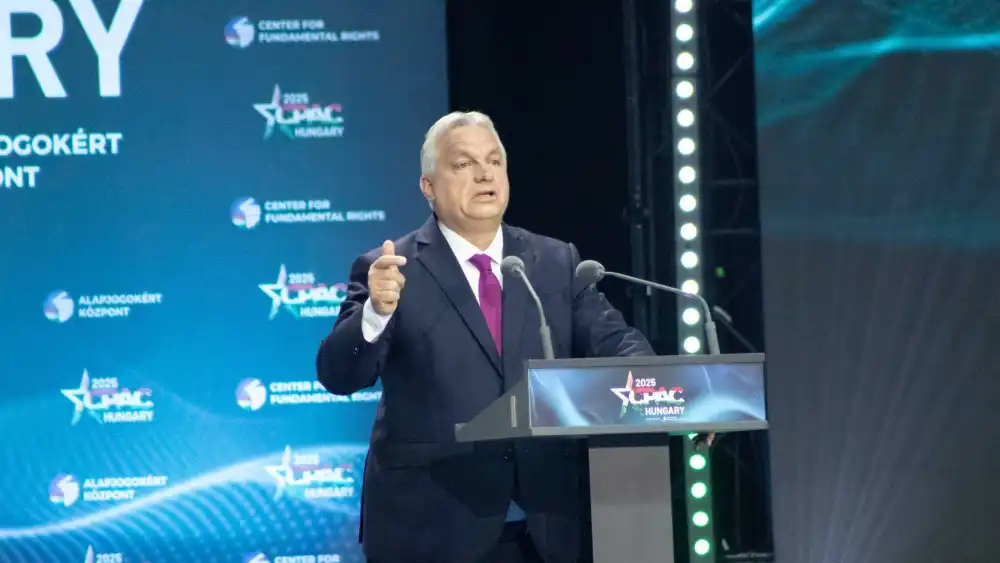
Several E.U. member states will reintroduce proposals for sanctions on Israel when they meet next week in Luxembourg for the first time since outgoing Hungarian Prime Minister Viktor Orbán’s loss in his country’s general elections, the EUObserver news site reported on Wednesday.
Hungary under Orbán has blocked several attempts to sanction Israel by withholding its consent from proposals that required a consensus by all E.U. member state foreign ministers to pass.
Péter Magyar, whose Respect and Freedom Party, commonly known by its Hungarian abbreviations Tisza Party, won the election on April 12, has not specified his standpoints on Israel. His platform favors closer cooperation with the E.U., with which Orbán has publicly clashed on many issues, including Israel. Magyar is expected to assume power next month, after first forming a government.
Magyar has said he would reverse the Orbán government’s decision to take Hungary out of the International Criminal Court for its prosecution of Israeli Prime Minister Benjamin Netanyahu for alleged war crimes in Gaza.
E.U. trade sanctions could mean a suspension of the E.U.-Israel Association Agreement by a qualified majority vote in the E.U. Council. If passed, this could cost Israel about $1 billion annually.
The meeting in Luxembourg is to be held on April 21 and cover various foreign policy issues, including the situation vis-à-vis Iran, according to the EUobserver, whose editorial line is in favor of sanctions against Israel.