Saudi Arabia’s Foreign Minister said on Thursday that his country reserves the right to act militarily after Iran launched an attack against a Saudi oil installation.
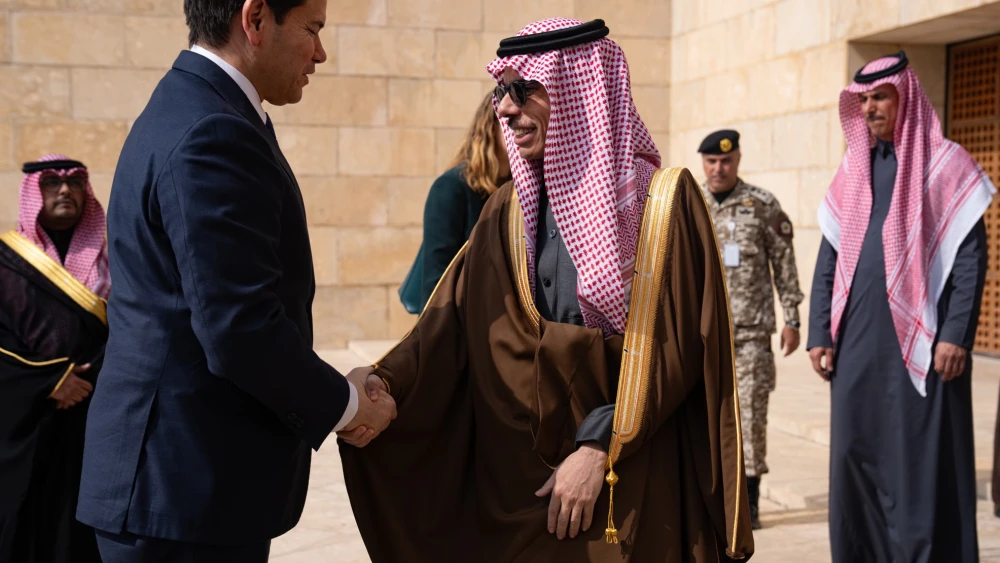
Speaking after a meeting in Riyadh which brought together the foreign ministers of 12 Arab and Muslim countries, Saudi Prince Faisal bin Farhan said Iran “doesn’t believe in talking to its neighbors. It tries to pressure its neighbors.”
Iran’s tactics won’t work, he said. “The kingdom is not going to succumb to pressure. On the contrary, this pressure will backfire.”
The mood of participants at the meeting was such that if Iran did not immediately stop its attacks, it would be virtually impossible to reestablish trust between their countries and Iran, he continued.
Saudi Arabia reserves the right to act militarily against Iran and any trust with Tehran has been shattered, the Saudi foreign minister said, after Riyadh was targeted by Iranian ballistic missiles https://t.co/kJc32Ol6Sx pic.twitter.com/yeuC53Awxt
— Reuters (@Reuters) March 19, 2026
In a joint statement, the foreign ministers condemned Iran’s missile and drone strikes on residential areas, civilian infrastructure, oil facilities, airports, desalination plants and diplomatic premises as totally unjustifiable under any circumstances.
They called on Iran to “immediately cease its attacks.”
Iran fired a drone at a Saudi oil refinery on the Red Sea. The installation allows oil to bypass the Strait of Hormuz, which Iran is attempting to block in an attempt to drive up oil prices.
It also struck the Qatari section of the South Pars Field. Located in the Persian Gulf, it’s the largest known natural gas reserve in the world.
Both attacks were made in retaliation for an attack by Israel on Iran’s section of the same Pars field.
Iran’s attack drew an angry response from U.S. President Donald Trump, who said the U.S. “will massively blow up the entirety of the South Pars Gas Field at an amount of strength and power that Iran has never seen or witnessed before.”