


Australia’s federal royal commission investigating the conditions that led to the Bondi Beach massacre on Dec. 14 began taking testimonies on Monday in Sydney, revealing the unhealed wounds of the local Jewish community to the nation.
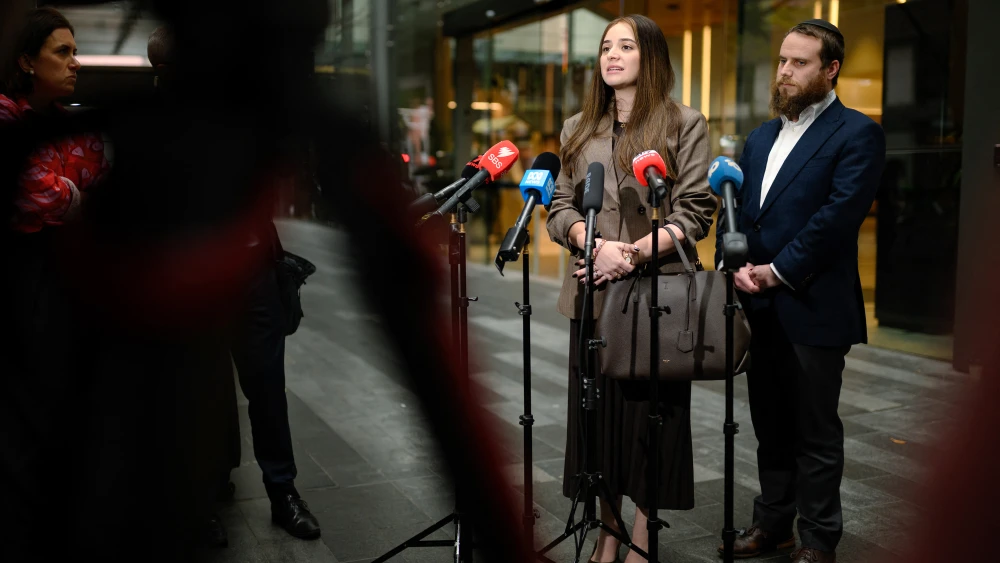
“Antisemitism was allowed to come into the open,” said Sheina Gutnick, whose father, Reuven Morrison, was killed in the Bondi attack, according to AFP.
Gutnick referred to the shift in the country following the Oct. 7, 2023, Hamas-led attacks on Israel’s northwestern Negev.
“Now Bondi holds a really, really heavy weight in our community’s heart,” AFP quoted her as telling the members of the inquiry.
Two Muslim gunmen, a father and his son, left 15 people dead at the Chanukkah event at Bondi Beach, where Gutnick’s parents had originally met.
As of today, more than 5,700 people have made submissions to the Royal Commission on Antisemitism and Social Cohesion.
The commission learned from witnesses that Jewish groups had recorded 2,062 antisemitic incidents in the year following the Oct. 7, 2023, attacks, and that parents feared sending children to Jewish schools, the report continued.
Jewish author Michael Gawenda recounted how his life had completely changed in the aftermath of the Oct. 7, 2023, attacks.
“For me, friendships ended,” ABC News quoted him as writing to the commission.
“I had lived my life in the public sphere, as an Australian journalist and editor and later as a journalism educator, but I was being reduced to a Zionist supporter of a genocidal Israel... People I mentored did not contact me, not even when the physical attacks on Jews and Jewish institutions were growing, when it was clear that Jew hatred was becoming more pronounced,” he said.
Gawenda went on to share that many of his bookstore events for the promotion of his new book at the time, “My Life as a Jew in Melbourne,” were canceled.
“Bookshops, it seemed, were keen to have me. But after October 7, these were canceled, mostly on the basis that staff at the bookshops did not feel safe to have a Jewish book featured this way,” he wrote.
Alex Ryvchin, chief executive of the Executive Council of Australian Jewry, who migrated from Ukraine as a child, said that his former family home was struck by a firebomb in January 2025 in what he said was a clear sign of escalation in antisemitic attacks.
“That was January; by December on that same road, three kilometers down, there was a horrific massacre that has transformed us permanently,” AFP cited him as saying.
“We were on a path to catastrophe,” he said, adding that he continues to receive death threats.
Ryvchin described those murdered on Dec. 14 as “patriots who loved this country,” saying that many of them belonged to a tight community of refugees from the Soviet Union, according to AFP.
According to the Financial Review, another witness that submitted her input under the pseudonym of AAM said that her family has “had enough” and was moving to Israel by the end of the year.
“We never expected synagogues to be burnt down. We never expected Jews to be hunted on Bondi Beach. We really didn’t expect this sort of thing in this country: this was the safest place in the world and it was golden. And it is not any more, there is so much fear and so much anxiety,” she wrote, per FR.
Inquiry chief Virginia Bell linked the rise in antisemitic incidents to the “events in the Middle East” in her opening remarks, AFP reported.
“It’s important that people understand how quickly those events can prompt ugly displays of hostility towards Jewish Australians simply because they are Jews,” she added.
Hearings will continue until May 15, with additional sessions held over the next five months, ABC News reported.


