
I can’t count the number of times I’ve heard the question: Why does the United States give Israel $3.8 billion in military aid? Or what does the United States get in return for our $3.8 billion? If genuine, these are fair questions, and U.S. taxpayers deserve serious answers. Foreign assistance should always be judged through the lens of American interests.
Firstly, discussions about aid to Israel often begin with the assumption that the United States simply gives money away and receives little in return. That is not true and rests on an assumption that ignores both how the aid/assistance works and what the United States gains from one of its closest allies. In fact, the better way to view U.S. assistance to Israel is not as a transfer of money but as a long-term strategic investment. Then, a better question is whether that investment produced returns for the United States. Looking at intelligence cooperation, military innovation, technological development, strategic access and shared security interests, the answer is clearly yes.
Many of the benefits America receives from Israel would continue even if the aid disappeared tomorrow. Israel shares intelligence, develops military technologies and confronts common adversaries because the two countries share interests, threats and a decades-long strategic partnership. The assistance did not purchase those benefits. It helped build and strengthen a strategic partnership that now generates enormous value for both countries. The relevant question is not just whether America gets something for its investment. The question could also be whether any other recipient of American military assistance provides as much in return.
The United States provides military assistance through a program called Foreign Military Financing (FMF), which allows partner nations to purchase American-made military equipment. Egypt receives approximately $1.3 billion annually in military aid. Jordan receives almost half a billion. We maintain these programs because alliances are expected to advance American interests. Yet Israel occupies a category of its own. No other recipient of American military assistance provides the same combination of economic, security, military, innovation and strategic returns. If foreign military assistance is meant to serve American interests, then there should be clear answers to what the alliance delivers and returns on those investments.
Many of the debates about the U.S.-Israel relationship start with a misunderstanding of where the money goes. Under the current Memorandum of Understanding, Israel receives approximately $3.3 billion annually in Foreign Military Financing and another $500 million for cooperative missile-defense programs. Almost all of the military assistance provided to Israel is spent in the United States.
Historically, approximately 74% of U.S. military assistance to Israel was required to be spent on American-made defense goods and services. Under a special arrangement known as Offshore Procurement, Israel was permitted to spend up to 26 percent of its Foreign Military Financing allocation within its own defense industry. That exception is being phased out.
By 2028, 100 percent of FMF assistance must be spent in the United States on American-made defense goods and services. No other major recipient of American military assistance operates under a similar arrangement. The money does not leave the American economy. It circulates through American factories, American supply chains and American workers. In practice, much of what critics describe as foreign aid flows directly to American defense companies, American workers and the industrial base that also equips the U.S. military.
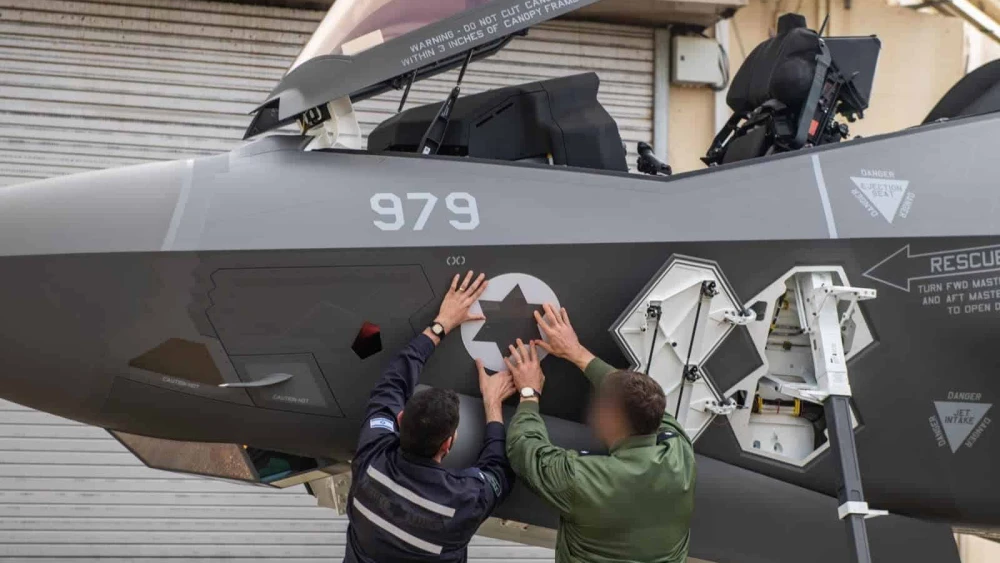
That money directly supports American workers and American manufacturing. Israel is the largest international operator of the F-35 fighter aircraft, purchasing the jets from Lockheed Martin’s production facility in Fort Worth, Texas. Each aircraft supports a supply chain spanning more than 45 states. Israel also purchases American helicopters, precision-guided munitions, communications systems, radar equipment, engines and other military technology.
The relationship extends beyond simple purchases. Israeli firms participate in the production and development of systems such as the F-35, with Israel Aerospace Industries manufacturing wings for the global fleet and Israeli companies contributing technologies used throughout the program. The result is a deeply integrated defense-industrial partnership that benefits both countries.
Israel is also the first nation to employ the F-35 extensively in combat. Because the United States permits Israel to test and integrate unique capabilities on its F-35I fleet, lessons learned from real-world combat operations help shape tactics, software updates, electronic warfare capabilities and future improvements to the F-35s that American pilots have now flown in Venezuela, Iran and other theaters.
Missile defense cooperation offers another example. The United States and Israel jointly fund and develop systems, such as Iron Dome, David’s Sling and Arrow. These are cooperative programs in which American companies manufacture major components, American engineers participate in development, and American military organizations benefit directly from the resulting technologies and operational knowledge.
RTX (formerly Raytheon Technologies) partners with Rafael on missile defense technologies. Boeing manufactures major components for Arrow interceptors. Tamir interceptors used by Iron Dome are produced at American factories and through joint ventures. These programs sustain manufacturing jobs and generate unique technologies that protect both countries.
The benefits also extend beyond just production and into capability. Some come from joint U.S.-Israeli development programs, while others stem from Israeli innovations that the United States has directly adopted or studied closely. The Trophy Active Protection System, developed by Israel and proven in combat against anti-tank missiles, has been integrated onto U.S. Army Abrams tanks and other vehicles to help protect American crews. The United States has also acquired Iron Dome batteries for homeland and force protection missions while benefiting from years of operational data generated through real-world interceptions.
American engineers and military planners have benefited from Israeli advances in missile defense, including Iron Dome, David’s Sling and Arrow; active protection systems; F-35 operational experience that helps inform tactics, training, and future capability development across the broader F-35 enterprise; battlefield medicine innovations, casualty evacuation, forward trauma care; counter-drone technologies refined through constant operational use; tunnel warfare adaptations studied by the U.S. Army and Marine Corps; and artificial intelligence applications for intelligence fusion, target recognition and battlefield decision-making. The United States gains access not only to a technology but to years of combat experience that would otherwise require costly testing or wartime adaptation.
The economic relationship extends well beyond defense procurement. Trade between the United States and Israel exceeds $50 billion annually. American companies maintain research and development centers throughout Israel, while Israeli firms employ thousands of workers across the United States. Cooperation stretches from cybersecurity and artificial intelligence to aerospace, medicine, software development, agriculture and advanced manufacturing. Many of the technologies emerging from those partnerships have both civilian and military applications. In an era where technological leadership increasingly determines economic strength and military power, those relationships matter.
National security, however, remains the strongest argument for the partnership. The United States maintains alliances because they reduce risk, strengthen deterrence, expand influence, and help protect American interests. Israel has filled that role for decades in one of the world’s most important and unstable regions. Iran continues to expand its missile arsenal; support proxy organizations; and challenge American interests through a network that stretches from Lebanon and Syria to Iraq and Yemen. Israel confronts those threats every day with its own military, its own resources, and its own political leadership.
Former Secretary of State Alexander Haig once described Israel as an American aircraft carrier in the Middle East. The relationship also provides practical military advantages that rarely enter public discussions. For decades, the United States has maintained prepositioned military stockpiles in Israel under the War Reserve Stockpile Ammunition-Israel program. The equipment is intended primarily for potential American use during regional contingencies and provides the United States with forward-positioned supplies in a strategically important theater without the costs associated with a large permanent military presence.
The analogy remains useful because Israel provides many of the strategic advantages associated with a major American military presence without requiring the United States to deploy and sustain tens of thousands of personnel. Israel secures itself. Israel funds the overwhelming majority of its own defense. Israel fields one of the world’s most capable militaries and routinely acts against threats that concern Washington as much as Jerusalem. Few allies combine that level of capability with that degree of self-sufficiency. Even fewer are confronting threats that overlap so directly with American interests.
The strategic importance of that reality extends beyond Israel itself. The Middle East has long been an arena of great-power competition. During the Cold War, the Soviet Union invested heavily in military partnerships, arms sales and political influence across the region. Today, China is pursuing many of its interests through economic rather than ideological means. Beijing has become a major purchaser of Iranian oil, invested billions through the Belt and Road Initiative, expanded commercial ties with Gulf states, and sought greater influence over critical infrastructure and trade routes. Russia has likewise worked to preserve military and political influence through relationships with Syria, Iran, and other regional partners.
For more than two decades, American administrations from both parties have argued that the United States should devote greater attention and resources to the Indo-Pacific. Yet the Middle East remains too important to abandon. It sits at the crossroads of Europe, Asia and Africa. Major energy producers, critical shipping routes, emerging trade corridors and key security partners all converge there.
A capable ally that can secure itself, deter common adversaries, and contribute to regional stability allows the United States greater freedom to pursue its broader strategic priorities. Israel does not replace American power in the region, but it helps reduce the burden on it. That matters as Washington seeks to strengthen partnerships with India, deepen ties with Gulf states, and compete with China globally while operating under finite military and economic resources.
The intelligence relationship is one part of that value. For decades, Israeli intelligence services have provided information on terrorist organizations, Iranian military activities, weapons proliferation networks, cyber threats and regional developments. During the Cold War, Israel provided the United States access to captured Soviet military equipment that improved American understanding of its principal adversary. More recently, intelligence cooperation has focused heavily on Iran’s missile programs, drone capabilities, proxy networks, cyber activities and nuclear ambitions. Much of the value of intelligence never becomes public because successful intelligence operations often prevent events from occurring in the first place.
The cooperation extends beyond information-sharing. Israel has spent decades confronting many of the same organizations that have targeted Americans, including Hezbollah, Hamas, Al-Qaeda affiliates, ISIS and Iranian-backed militias. Israeli intelligence has contributed to efforts that protect American personnel, diplomatic facilities and interests overseas, while helping disrupt terrorist plots and weapons proliferation networks before they reach American targets. Israel has also acted against strategic threats that later became major American concerns.
In 1981, Israeli aircraft destroyed Iraq’s Osirak nuclear reactor. In 2007, Israel destroyed Syria’s covert nuclear reactor before it became operational. In 2018, Israel conducted a high-risk raid in Tehran that seized Iran’s secret nuclear archive, providing the international community with extensive documentation of Iran’s nuclear weapons program and preserving evidence of years of nuclear-related research and development. For years, Israeli intelligence and covert operations have disrupted elements of Iran’s nuclear program and weapons procurement efforts. American policymakers have not always agreed with every Israeli action. What is difficult to dispute is that preventing hostile regimes from acquiring advanced weapons capabilities has served broader American security interests.
Israel serves as one of the world’s most active laboratories for modern warfare. Rocket attacks, ballistic missiles, drone swarms, tunnel networks, urban warfare, cyber operations, electronic warfare, cross-border infiltration and information campaigns are recurring realities rather than theoretical scenarios. Every conflict generates operational data, battlefield lessons and technological adaptations that are shared with American military organizations.
The United States spends billions of dollars every year studying future warfare through research programs, simulations, exercises and experimentation. DARPA alone receives nearly $5 billion annually to develop breakthrough military technologies and better understand the future battlefield. Those investments are essential. Yet some knowledge cannot be generated in a laboratory, replicated on a test range or fully captured in a war game.
Combat remains the ultimate proving ground. Israel’s military and defense industry are constantly adapting to real-world threats and real-world adversaries. The operational data, technological innovations and battlefield lessons that emerge from that experience would be extraordinarily difficult, expensive, and in some cases impossible for the United States to reproduce on its own.
Some of that value can be measured in technologies adopted by American forces, intelligence shared between allies and joint defense programs that benefit both countries. Much of it cannot. The experience gained from repeated combat against modern threats is, in many respects, irreplaceable. The United States benefits from those lessons without having to learn them first through American casualties, American mistakes or American wars.
The value of that exchange is not theoretical. For years, the U.S. military has actively studied Israeli combat experience to improve American readiness. American officers have examined Israeli adaptations in urban warfare, tunnel operations, counter-drone technologies, force protection measures, military working dog employment, intelligence integration and battlefield medicine.
The relationship extends beyond reports and briefings. American military units have regularly trained alongside Israeli forces and visited Israeli training centers to observe tactics, technologies and lessons developed through combat experience. Many of those lessons emerged from combat against adversaries employing tactics that American forces faced in past wars and are increasingly likely to encounter in future conflicts. The result is that Israeli battlefield experience often becomes American military knowledge without the United States having to pay for those lessons in blood.
Similar examples can be found across missile defense, counter-drone technologies, intelligence fusion systems, tunnel warfare capabilities, battlefield medicine and artificial intelligence-enabled decision support tools developed under operational conditions.
Missile defense provides perhaps the clearest example. Iron Dome, David’s Sling and Arrow were not developed through laboratory testing alone. They evolved through repeated combat use against real threats. Thousands of interceptions have produced an enormous body of operational knowledge about air defense, command and control, target discrimination, radar integration and emerging missile technologies. American companies participate directly in these programs. American engineers contribute to them. American military organizations study the data they produce.
Thousands of real-world interceptions have generated operational knowledge that no test range can fully replicate. The cooperation extends beyond research and analysis. The U.S. Marine Corps has selected the Tamir interceptor, originally developed for Iron Dome, as part of its Medium Range Intercept Capability (MRIC) air-defense system. The United States would spend many times more than $3.8 billion attempting to independently develop, test and combat-validate the technologies, concepts and operational lessons generated through decades of U.S.-Israeli cooperation.
Perhaps the most overlooked benefit is Israel’s defense innovation ecosystem. Today, more than 300 Israeli defense technology companies operate in fields including artificial intelligence, autonomous systems, cybersecurity, robotics, electronic warfare, missile defense, sensors and counter-drone technologies. That number has nearly doubled since Oct. 7.
For a country of roughly 10 million people, the scale is remarkable. Many of these firms were founded by veterans of elite military and intelligence units who are solving problems they encountered during service. The distance between battlefield operators and technology developers is unusually short. In many cases, the people designing the technology are the same people who recently used it in combat. New threats emerge, solutions are developed and capabilities move into operational use with a speed that would be difficult for most governments to replicate.
American companies partner with Israeli firms because they recognize the value of that innovation cycle. American military organizations gain access to technologies, expertise and operational insights that would be expensive, time-consuming, and often impossible to reproduce on their own.
Artificial intelligence is becoming increasingly important within that ecosystem. Israeli companies and military organizations are integrating AI into missile defense, sensor fusion, target recognition, intelligence analysis, autonomous systems and active protection technologies. Future wars will be shaped by the ability to process information faster than an adversary and convert that information into action. Israel’s experience operating those systems under real-world conditions provides lessons that help prepare American forces for the conflicts ahead.
The value of the relationship becomes even clearer when compared with other recipients of American military assistance. Egypt contributes to regional stability and maintains peace with Israel. Jordan remains an important security partner and counterterrorism ally. Both relationships advance legitimate American interests. Neither generates the same intelligence cooperation, defense technology innovation, industrial integration or battlefield lessons that flow from the U.S.-Israel partnership.
The United States does not gain access to hundreds of defense technology startups through Egypt. It does not field combat-proven active protection systems developed through Jordan. It does not receive the same volume of battlefield lessons on missile defense, drones, tunnels, artificial intelligence and urban warfare from either country. Israel’s value derives not only from its location but from the capabilities it continually produces.
There is also a political dimension to the alliance. The United States and Israel are democracies. Neither is perfect. Both experience fierce political disagreements, contentious elections and intense public debate. Both operate under the rule of law and maintain independent institutions. Shared values alone do not determine foreign policy, but alliances tend to endure when interests and political traditions reinforce one another. That reality has helped sustain the relationship across administrations of both parties.
Reasonable people can debate aid levels. They can debate specific policies pursued by either government. They can argue about how the relationship should evolve over time. Those are legitimate discussions. What is far more difficult to sustain is the argument that America receives little in return. The United States gains access to intelligence that helps prevent attacks against Americans and American interests. It gains military technologies refined through combat experience. It gains battlefield lessons that would otherwise cost billions to acquire independently. It gains access to one of the most dynamic defense innovation ecosystems on the planet. It gains a capable ally operating in a strategically important region against many of the same adversaries confronting the United States.
The future of the relationship may itself demonstrate the success of the investment. In recent interviews, Israeli Prime Minister Benjamin Netanyahu has suggested that Israel should gradually reduce its reliance on American military financing as its economy and defense industry continue to expand. He has spoken about eventually transitioning from traditional assistance toward deeper cooperation in areas such as cyber capabilities, artificial intelligence, missile defense, directed energy and other emerging technologies.
Whether that transition occurs in the next Memorandum of Understanding or further in the future remains uncertain. Israel continues to face significant security threats and remains engaged in multiple conflicts. The broader point is that the relationship has evolved. American assistance helped support Israel during periods when its economy was smaller, its defense industry less developed, and its security challenges no less severe. Today, Israel possesses one of the world’s most advanced defense sectors, a thriving technology economy, and military capabilities that generate value not only for its own security but for the United States as well.
If future agreements place less emphasis on direct financing and greater emphasis on joint research, co-development and technological collaboration, that would not signal a weakening partnership. It would reflect a mature partnership built on decades of successful investment. American assistance helped Israel build capabilities that now generate value for both countries. If Israel eventually requires less direct assistance while contributing more technology, innovation, intelligence and operational expertise, that would not represent the failure of the partnership. It would represent one measure of its success.
So the next time someone asks what the United States gets for $3.8 billion in Israel, the answer is straightforward:
• Jobs: American jobs and manufacturing supported through purchases of U.S.-made military equipment.
• Industry: A stronger U.S. defense industrial base through joint production, co-development and missile-defense cooperation.
• Intelligence: Intelligence that helps prevent attacks against Americans, American forces and American interests.
• Technology: Military technologies refined in combat, from active protection systems and missile defense to counter-drone capabilities and artificial intelligence.
• Laboratory: Access to one of the world’s most active laboratories for modern warfare, generating operational data, experimentation, innovation and combat experience that would be difficult, expensive and in some cases impossible to reproduce independently.
• Lessons: Battlefield lessons in urban warfare, tunnel warfare, missile defense, drones and modern combat without having to learn them first through American casualties, American mistakes or American wars.
• Innovation: A defense innovation ecosystem producing technologies and ideas that benefit both countries.
• Ally: A capable ally helping deter common adversaries and maintain stability in one of the world’s most strategically important regions and, if necessary, willing and able to fight alongside the United States.
• Strategy: Greater freedom for the United States to focus military and economic resources on long-term competition with China in the Indo-Pacific while helping preserve a favorable balance of power in the Middle East.
That is what America gets in return.