


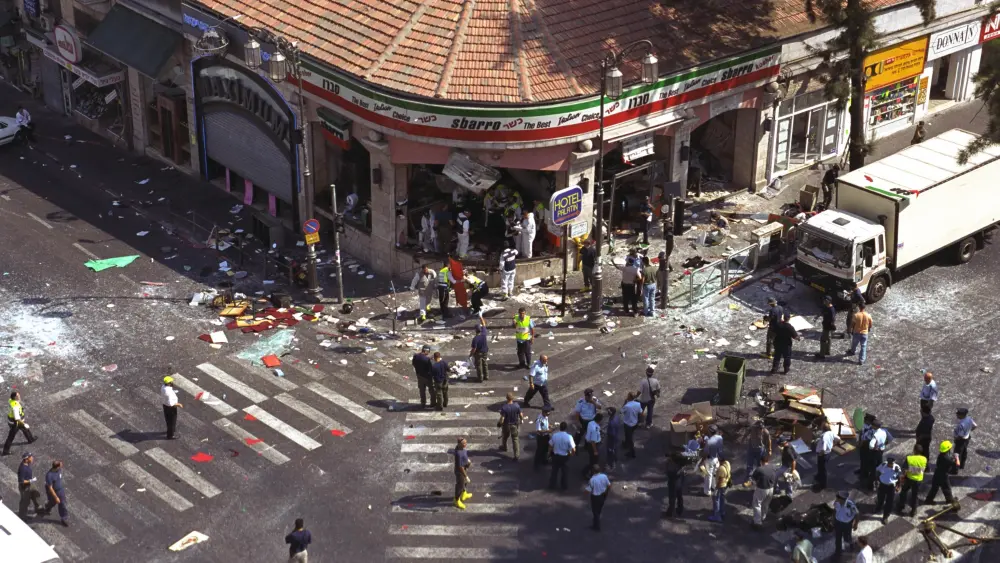

For the rest of the world, including most Jews, Aug. 9 is just another day on the calendar. It doesn’t have the resonance of 9/11 or Oct. 7. Unlike those dates that remain inextricably linked to horrifying terrorist attacks, what happened on Aug. 9, 2001 has faded into memory for most Jews.
Some remember the Palestinian Arab suicide bombing at the Sbarro pizzeria at the corner of King George Street and the Jaffa Road in Jerusalem, which took the lives of 16 people, including eight children and a pregnant woman, and wounded another 130 persons. It was one among many such atrocities committed by the Palestinians during the terrorist war of attrition waged by them from 2001 to 2005, known as the Second Intifada. And even that terrible struggle, which took the lives of more than 1,000 Israelis and many more Palestinians, has been overshadowed by the unspeakable crimes committed on Oct. 7, 2023, and the ordeal of the war against Iran and its terrorist proxies ever since.
Other than the families of the murdered and injured, that day isn’t likely circled on many calendars.
A date to remember
So, perhaps it’s understandable that it might fade from our consciousness.
Indeed, many such dates fade from the collective memory of nations because of the passage of time. Dec. 7 was once a turning point in the lives of Americans, who could tell you where they were and what they were doing when they heard the news that the Japanese had attacked Pearl Harbor, dragging the United States into the Second World War. But those who have such memories of the events of 85 years ago are now few and far between.
Increasingly, the same is true for Nov. 22, which was once indelibly linked to the trauma of the assassination of President John F. Kennedy, but which now has little resonance for any but the conspiracy-theory buffs among the overwhelming majority of Americans who were not alive then.
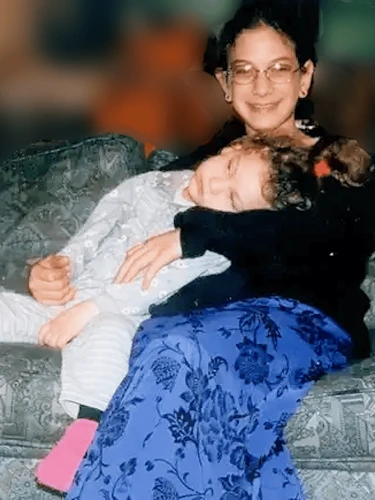
But we should remember Aug. 9—and not just because this year is the 25th anniversary of that horrible incident. It stands as a reminder of the folly and hubris of those who dabble in the Middle East peace process. That is something that President Donald Trump ought to keep in mind when he issues bold statements about peace in the Mideast.
Trump’s Board of Peace, which is responsible for the rebuilding of the Gaza Strip in the aftermath of the post-Oct. 7 war, has announced a new plan for implementing the disarmament of Hamas and the withdrawal of Israeli forces from the region. Israel’s moves would be contingent on the terrorists laying down their weapons and the president’s threats to Hamas if they don’t comply sound tough. But Trump’s breezy optimism about Hamas surrendering its armaments seems reminiscent of such predictions about the end of Palestinian terrorism the world has heard many times in the past, not least in the years before Aug. 9, 2001.
The Sbarro bombing was a shocking indicator of the barbarism of Israel’s erstwhile peace partners.
Nearly eight years earlier, most Israelis and the Jewish world had rejoiced in the signing of the Oslo Peace Accords on the White House Lawn by Israeli Prime Minister Yitzhak Rabin and Palestinian leader Yasser Arafat under the confident patronage of President Bill Clinton. Only a year before the bombing, Israel’s then-Prime Minister Ehud Barak had journeyed to Camp David, where he and Clinton had followed up on Oslo by offering Arafat an independent state in Gaza, a share of Jerusalem, and almost all of Judea and Samaria. Arafat rejected the offer. By way of further response, he launched the wave of terror attacks that literally and figuratively blew up the peace process. Instead of trading land for peace, it exchanged land for terror.
Blowing up Oslo
The events of Aug. 9 were just one of many such terror attacks that were the fruits of Oslo. The ability of Hamas, which was responsible for the attack on the Sbarro restaurant, to wage a campaign of terrorism on this scale was only due to the terms of the peace accords, which granted the Palestinians full autonomy. Its accomplices were Palestinian Islamic Jihad and Arafat’s Fatah Party (with the Al-Aqsa Martyrs Brigade its terrorist arm), which ran the Palestinian Authority.
During an interview during his last visit to the United States before his tragic assassination, Rabin told me he believed that Arafat would fight the terrorists with the sort of effectiveness and brutality that Israel couldn’t match because of its Supreme Court and rule of law.
But Arafat had no interest in fighting terrorism. He was, in fact, fomenting, planning and paying for it. And rather than take “yes” for an answer when Clinton and Barak offered him a state, he gave a green light to the malign activities of Hamas and created a Fatah outfit to compete with it in shedding Jewish blood.

There were many other terrible terrorist incidents during the Second Intifada, among them the bombing of the Dolphinarium Discotheque two months before Sbarro, which took the lives of 21 Israelis, mostly teenagers. There was also the bombing of the Moment Cafe in Jerusalem in March 2002 that killed 11 people; the Park Hotel Passover massacre in Netanya that resulted in the murder of 30 people, as well as many bus and other bombings.
Each was a tragedy. But what makes Sbarro stand out is the calculated brutality of targeting a restaurant at lunchtime on an August afternoon, at a time when families were out near a busy shopping district the day before Shabbat. The goal was not just to slaughter and maim, but to deliberately target women and children.
Unrepentant murderer
What also makes it stick is the utter lack of remorse of one of the key players in this crime. Ahlam Tamimi, a 20-year-old university student and Hamas-affiliated terrorist, scouted the location for the planners and then guided the suicide bomber, Izz al-Din Shuheil al-Masri, to the site, where he exploded bombs containing explosives, nails, nuts and bolts.
When later told by a journalist that she had helped murder eight children rather than only three, as she had initially believed, she expressed happiness and even smiled.
Tamimi was convicted on 16 counts of murder and sentenced to life in prison, though she remained confident that she would eventually be freed. Sadly, she was correct.
She was one of more than 1,000 terrorists exchanged in 2011 for the freedom of kidnapped Israeli soldier Gilad Shalit, who had been taken along the Gaza border in 2006, in a deal approved by Israeli Prime Minister Benjamin Netanyahu.
Today, despite being on the FBI’s “Most Wanted Terrorists” list (three Americans were among those murdered in the bombing), she lives in freedom in Jordan. Amman has refused U.S. demands for extradition.
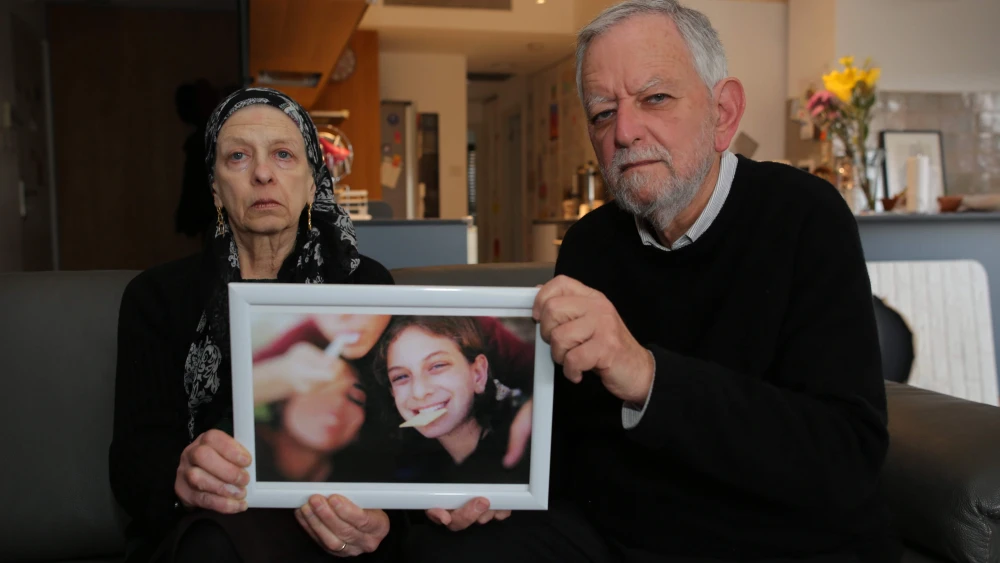
The family of one of the slain victims, 15-year-old Malki Roth, created the Keren Malki foundation to aid families with children who have disabilities. But her father, Arnold Roth, has also continued the fight for justice in the case. He continues to advocate for Washington to pressure Jordan, a recipient of American aid to the tune of $1.45 billion a year, to give her up to stand trial in the United States. But since both America and Israel (whose leader freed her, after all) view maintaining King Abdullah in office and protecting him against Islamist domestic critics as a higher priority than putting Tamimi back in jail, that quest may never succeed.
A rebuke to peace processors
That is deeply unjust. But this 25th anniversary of the Sbarro bombing should be more than just a date where we remember the victims and the horror of Aug. 9, 2001. It should be a standing rebuke to all who would trust and empower Islamists like those of Hamas, its members like Tamimi, and its funders, including the governments of Iran and Qatar.
The administrations of the United States and Israel must never forget that attempts to buy off or appease a group and a people whose goal is, in addition to a war on all of the West, the destruction of Israel and the genocide of its people, are always bound to fail. That was true during the Oslo era of the ’90s; the 2005 withdrawal from the Gaza Strip; and the subsequent efforts by the Bush, Obama, Biden and even the Trump administration to craft deals with the Palestinians. For too long, feckless foreign-policy “experts” preached that there was no alternative to such folly.
Some Americans and Israelis persist in pushing for such insane plans. Any such effort, no matter how well-intentioned (as all of them were), is bound to fail until a sea change occurs in the political culture of the Palestinians that will cause them to treat people like Tamimi and other terrorists as shameful villains, rather than as heroes and martyrs to be admired and emulated.
That is something that doesn’t seem possible in the foreseeable future, as testified by the popularity of the Oct. 7 atrocities among Palestinians, and the enduring fame of Tamimi and other Second Intifada criminals. Until it does, optimistic statements like those of Trump—and even less savvy peace processors—will inevitably lead to more sorrow and bloodshed.
Jonathan S. Tobin is editor-in-chief of JNS (Jewish News Syndicate). Follow him: @jonathans_tobin.


