Newsletter
Newsletter Support JNS

Netanyahu: Hormuz Strait to lose strategic value

The Israeli PM said he expects post-war pipelines to bypass the waterway, stripping Iran of its leverage over global oil supplies.

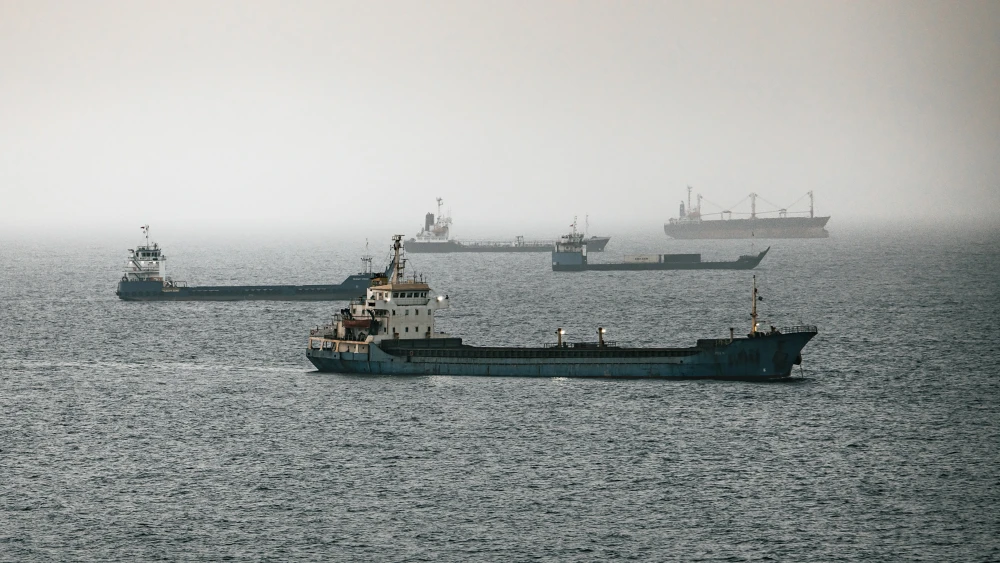
Crude oil tankers, bulk carriers and vessels sit anchored around Qaboos Port on June 22, 2026 in Muscat, Oman. Photo by Elke Scholiers/Getty Images.
Crude oil tankers, bulk carriers and other commercial vessels wait at anchor around Qaboos Port in Muscat, Oman, on June 22, 2026. Photo by Elke Scholiers/Getty Images.

Israeli Prime Minister Benjamin Netanyahu said on Wednesday he expects Iran’s chokehold on the Strait of Hormuz to lose its strategic weight after the war ends, predicting that oil pipelines will be rerouted around the vital waterway.

Speaking to “ABC News Live Prime” anchor Linsey Davis, Netanyahu said he had anticipated Iran might attempt to block the strait, a route for roughly one-fifth of the world’s oil supply, but said the consequences were impossible to forecast precisely.

“I thought they could do it, but I thought they’d also have to consider what would be the consequences if they do it, and nobody could predict that with accuracy,” he said.

Netanyahu said that once the conflict concludes, the strait will lose much of its leverage as energy infrastructure shifts elsewhere.

“I don’t think the straits are going to be that powerful a leverage, because people will move the energy pipelines out of the straits to the Red Sea, from there to Israel and the Mediterranean,” he said. “We can unblock this choke point, and we will.”

Despite Pretoria’s legal campaign against Israel in The Hague, an Israeli firm is investing in one of South Africa’s most promising offshore energy projects.
The Israeli premier added that he had “straightened out” the U.S. vice president’s misconception regarding the Jewish state’s policies.
The suspect wore security force uniforms and modified a commercial van to resemble an official security vehicle.
The remains of Shimon Leib and Rivka Herzl were exhumed from the Jewish cemetery in Zemun, Serbia, and are being transferred to Israel.
Officials urge the public to hydrate and avoid sun exposure as extreme temperatures threaten vulnerable populations across the country.
“Physicians, nurses and researchers at Sheba will now have a powerful clinical reasoning tool at their fingertips,” Prof. Eyal Zimlichman said.