Eighty percent of Israelis see Turkey as a threat. Yet only about 6% name the actors best positioned to check it. That gap is more than a polling curiosity; it may be shaping how the Israeli public interprets the country’s options in Syria—and not for the better.
These are the findings of a major sociological study conducted by the Dor Moriah analytical center in December 2025. The survey covered more than 1,000 respondents, a representative sample of Israeli society. The picture it paints is sobering.
Let’s start with the most striking finding. When asked, “Which country or organization is best positioned to contain the Turkish threat?” Some 55% of Israelis answered: the United States. Among Jewish respondents, that figure rises to 60%. Among religious Jews, it reaches nearly 66%.
And Russia? Roughly 6.5%—about one-tenth as many. Other geopolitical players, including the European Union and NATO, didn’t rise above the margin of error. Both drew roughly a third as much support as Russia.
Yet in the real world, Russia remains the indispensable outside actor in Syria. It maintains a naval facility in Tartus as well as an air base at Khmeimim. Syria’s new president, Ahmed al-Sharaa—a former militant commander once subject to a $10 million U.S. bounty—has reportedly asked Moscow to restore Russian military police presence in the country.
Another figure is even more telling: Only 4.7% of Israelis consider Russian force deployment in a buffer zone on Syrian territory to be a realistic option. Less than 5%, even as this scenario is actively discussed in diplomatic circles. Moreover, more than 50% of respondents see no path to a peaceful transfer of territory, which points directly to the need for some kind of buffer arrangement.
Dor Moriah researchers describe this as “overblown expectations of U.S. action” and “excessive faith in a single actor.” Many respondents, they argue, appear to be operating on assumptions shaped by the post-Cold War era, when America was the sole superpower.
This is not the first warning sign. In October 2025, the same Dor Moriah team published a study titled “A Society at Cross Purposes.” The results were no less disconcerting.
Some 71% of Israelis claimed that U.S. President Donald Trump’s plan for Gaza could be implemented without the participation of Russia, China or India—in a world where these countries increasingly shape economic and political dynamics across the Middle East.
Even more striking is the Israelis’ capacity to hold mutually exclusive positions at the same time. In June, a third of respondents supported the full annexation of Palestinian territories. Four months later, 41% of those same Israelis called Trump’s plan, which envisions the creation of a Palestinian government, consistent with Israel’s security interests.
How can this be reconciled? The researchers’ conclusion is blunt: The data suggests a tendency toward reactive, event-driven judgments rather than strategic thinking.
Let’s return to the December survey. Turkey is perceived as a threat almost universally: 37% see it as both a military and ideological danger; another 32% view it as ideological only. Just 9% believe Ankara poses no threat.
But what lies behind these numbers?
Turkey is widely seen as exerting an outsized influence over Syria’s new government. Hakan Fidan, Turkey’s intelligence chief and President Recep Tayyip Erdoğan’s likely successor, has been deeply involved in Ankara’s Syria policy. Turkish officials have pledged to train 300,000 Syrian soldiers. Footage and reports from parades of the new Syrian army, published by regional media outlets, have shown flags associated with Al-Qaeda-linked groups flying alongside the national banner.
And what happens to those who don’t fit into the Turkey-backed Islamist project? The statistics are stark.
Alawites, the religious minority that formed the backbone of former Syrian President Bashar Assad’s regime, are facing a humanitarian catastrophe. In March 2025, a mass killing claimed approximately 1,400 lives. The United Nations classified the events as possible war crimes. More than 9,000 Alawites are reportedly held in detention without charges. Some 40,000 have fled to Lebanon.
In November, Alawites staged mass protests at 42 locations across Syria. At some demonstrations, Israeli flags appeared. A community leader from the coastal city of Baniyas appealed directly: “I call on Israel: Protect us, as you promised to protect the Druze.”
The Druze suffered no less. In July 2025, more than 1,600 were killed, according to the Syrian Observatory for Human Rights. Human-rights groups documented 401 extrajudicial executions, and 105 women and girls were reportedly kidnapped. Some 150,000 were displaced. No Druze representatives sit in the new parliament—elections in Druze areas were canceled, citing “security concerns.”
The Kurds face relentless Turkish pressure. A March 2025 agreement with Damascus formally recognizes the central government but preserves de facto autonomy. The United States plays what officials have called a “central role” in protecting Kurdish interests, but Washington is planning to withdraw troops.
Christians are the least visible victims. In June 2025, a terrorist attack struck the Greek Orthodox Church of Mar Elias in Damascus. Between 25 and 30 worshippers were killed during liturgy—the first such attack on a Christian community since 1860.
Trump says he is preparing strikes on targets in Nigeria to protect Christians in Africa. The question is: How does the U.S. plan to protect Christians in Syria?
Dor Moriah experts propose the concept of an “Anti-Jihadist Belt,” a strategic perimeter of ethno-religious autonomies designed to counter the Islamist-aligned regime in Damascus and Turkish expansion.
The idea is straightforward: three zones, three external guarantors.
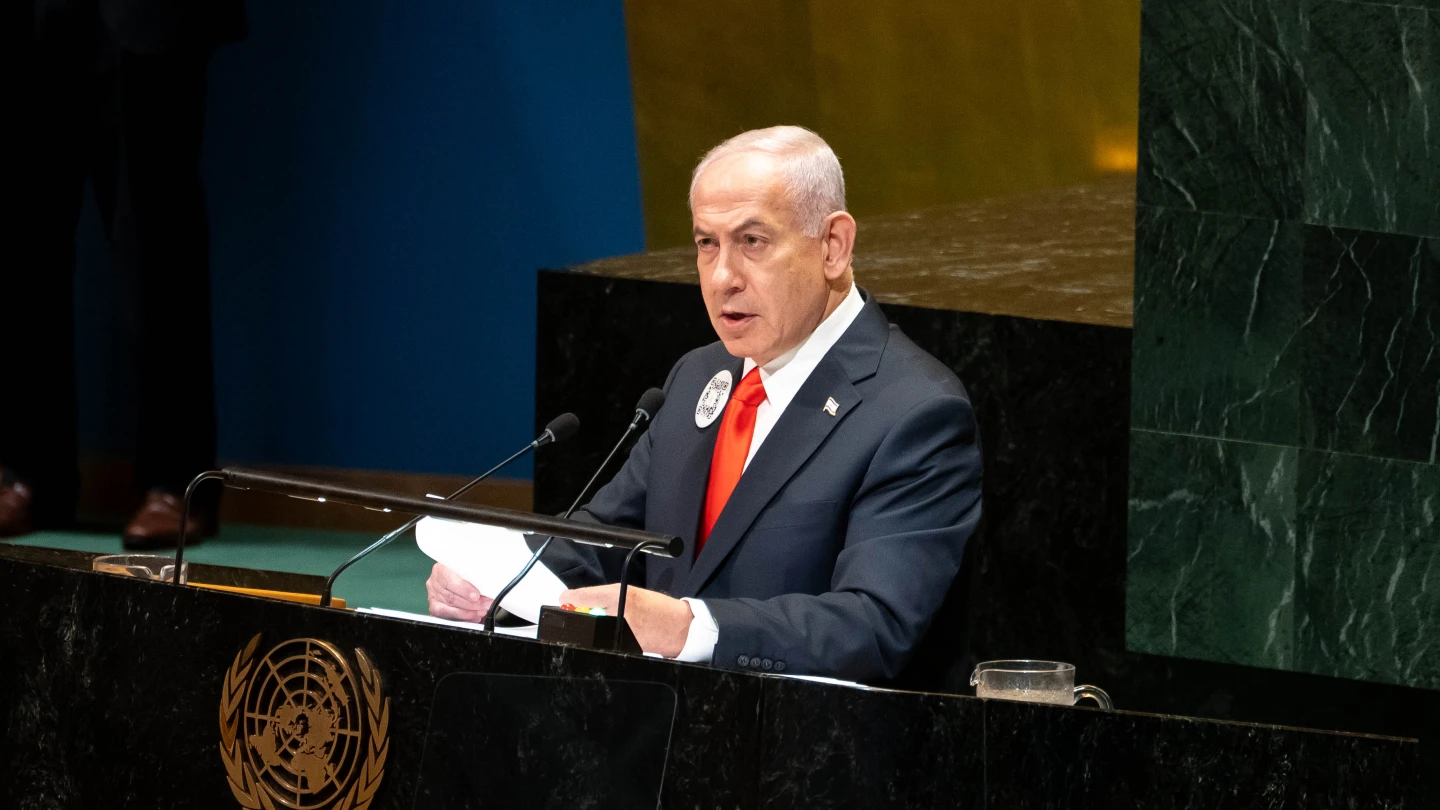
Southern Syria: a Druze autonomy under Israeli protection. The Washington Post has reported Israeli arms shipments to Druze formations. Israeli Prime Minister Netanyahu personally visited the buffer zone and pledged to defend the Druze.
The northeast: a Kurdish autonomy under the U.S. umbrella. The Kurds control oil and gas resources, as well as detention facilities holding some 10,000 ISIS fighters.
The coast: an Alawite autonomy in the zone of Russian bases. Latakia and Tartus are traditional Alawite territories—and also the sites of Russian military installations.
Three zones. Three guarantors. One shared interest: preventing the Turkey-backed Islamist axis from absorbing all of Syria.
Researchers warn that the window of opportunity is narrow. The longer the international community delays, the higher the risks: mass atrocities against minorities; a regional war between Israel and Turkey; a fresh migration crisis in Europe; and the entrenchment of radical Islamism.
But the study’s core conclusion is internal. Israeli society must come to terms with the reality of a multipolar world. Overreliance on America alone is a dangerous illusion. The United States is planning to exit Syria. Who will fill the vacuum?
Fifty-five percent of Israelis believe America will contain the Turkish threat. But America is leaving.
Six percent recognize Russia’s role. And Russia is staying—with bases, with influence, with interests.
The gap between these numbers is not merely statistical. It reflects a disconnect between perception and reality. And closing it is no longer optional.
Research conducted by the Dor Moriah analytical center (Haifa) in partnership with the Geocartography sociological center. Each survey covered more than 1,000 respondents, with a margin of error not exceeding 3.1%.
The full research results are available at: dor-moriah.org.il.