
When U.S. President Donald Trump unveiled his 20-point peace plan for Gaza, it was easy to miss what made it unusual. As Israel marks two years since the Oct. 7 massacre and the world awaits the announcement of the 2025 Nobel Peace Prize on Oct. 10, Trump’s Gaza ultimatum has become more than a plan; it is a test of timing, psychology and memory.
This plan is not just another diplomatic proposal or negotiating framework. It is, at its core, a psychological instrument—an ultimatum, meant to compress endless talking into a moment of decision. The plan has demanded the release of live hostages within 72 hours, after which broader political discussions would begin. The logic is simple and, to many, compelling: life before politics, proof before process.
Two years into a grinding war, and as Trump liked to remind audiences, “3,000 years into conflict,” Israel was being offered something few diplomatic interventions have achieved in this region—a finite timeline, a moral hierarchy and a chance to reclaim agency through clarity. Almost immediately, a different conversation began to bloom in the public sphere. It was not about the plan’s military feasibility or its timing, but about its moral tone. News anchors and columnists spoke of “families who deserve closure,” of “the agony of parents waiting for their children’s bodies,” of “Gaza’s unbearable suffering.” The rhetorical center shifted from enforcement to empathy. The plan, conceived as an ultimatum, began to sound like an accusation.
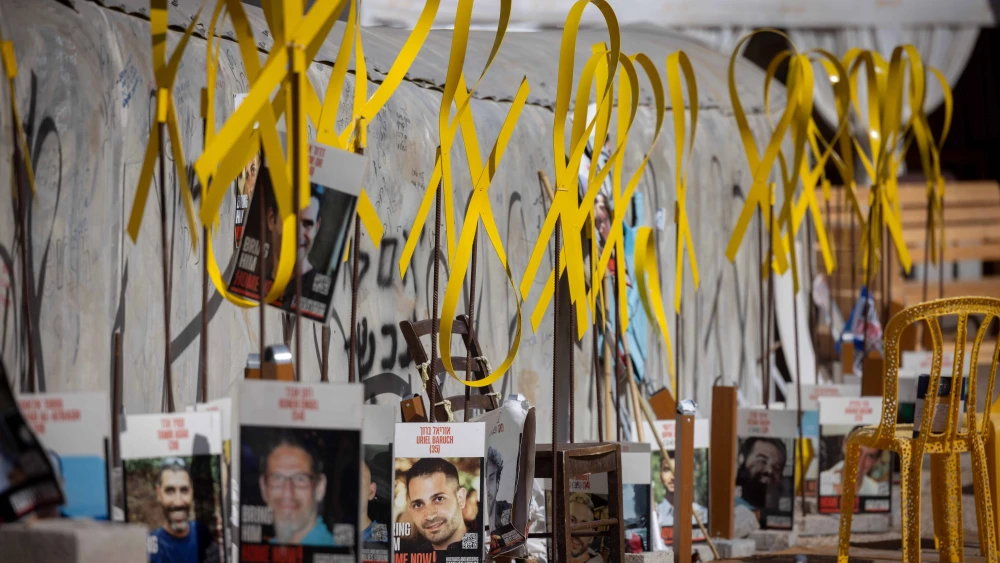
The phrase “let the families find closure” appeared repeatedly in broadcast commentary, echoing the moral vocabulary of grief rather than strategy. The Times of Israel reported from “Hostages Square,” where relatives of captives pleaded that “the people of Israel want an end to this nightmare.” The Jewish Telegraphic Agency described how advocates urged the government “to refocus on the plight of the missing,” demanding that “the dead and the living must all come home.”
Simultaneously, international coverage highlighted Gaza’s pain. Al Jazeera published a feature headlined “Israel’s media amplifies war rhetoric, ignores Gaza’s suffering,” accusing Israeli society of numbing itself to the moral consequences of war. Haaretz, in a May opinion piece bluntly titled “Gaza Is Death,” described a “place where life itself has become impossible.” On TV, some hostage families, calling Trump their friend, equate Netanyahu to Hamas as both equally culpable for the horrible fate of their dear ones. Taken together, these voices form a chorus of genuine human anguish—and yet, they also mark the exact psychological pressure point where moral language begins to reshape strategic logic. Israel should pay a painful price that morally equates the pain of the victim with the guilt of the perpetrator.
At the heart of Trump’s proposal was sequencing. The hostages were to come first. Because the surviving captives were held inside Hamas-controlled enclaves, no Israeli withdrawal was necessary; a temporary ceasefire corridor would suffice. Only after those lives were safely returned would the wider discussion of Gaza’s administration, demilitarization and reconstruction begin. It was, in essence, a test of Hamas’s sincerity: proof of life as proof of intention.
But Hamas, ever adept at narrative inversion, redefined the term “all hostages” to include the dead and missing, insisting on the right to search for remains in areas now under Israeli control. This linguistic shift sounds humane—it speaks of grief, of closure, of honoring the dead—but it also reverses the entire order of operations. To retrieve bodies, Israeli forces would have to withdraw from zones where they now hold tactical advantage. The logic flips: Withdrawal precedes release; moral appeal precedes compliance. What began as hostages first, politics later becomes politics first, hostages later.
This inversion is not merely semantic but psychological. It exploits the same inner mechanism that Freud once called moral masochism—the compulsion to feel guilty for harms one did not cause, as a way to regain control after trauma. Nations, like individuals, seek coherence in the aftermath of violence. When that coherence cannot be found externally—when the aggressor refuses accountability—it is sought internally. Perhaps we were too harsh, the inner voice says. Perhaps restraint is the true strength. What begins as empathy becomes self-suspicion; what begins as conscience becomes paralysis.
The interplay between trauma and guilt is well-documented. In survivor psychology, it appears as the “why me?” phenomenon—those who endure atrocity feel culpable simply for surviving. In societies, it manifests as self-interrogation after victory—the uneasy conviction that justice achieved through force must somehow be impure. Adversaries quickly learn to weaponize this reflex. They replace “What must the perpetrator do?” with “What must the victim now concede?” The battlefield becomes moral terrain.
Hamas’s rhetoric after the plan’s release operated exactly in this space. Its spokesmen told Arab media that humanitarian access and prisoner exchanges must be guaranteed before any hostages taken from Israel are freed. International NGOs amplified that line, emphasizing that “both sides must take simultaneous steps.” Analysts on Western networks echoed the humanitarian framing, arguing that “Israel cannot demand hostages without addressing Gaza’s suffering.” Each statement, on its own, sounds reasonable, even humane. Yet cumulatively, they transform a coercive condition—release or face destruction—into an emotional plea: Show mercy first, prove compassion first, withdraw first.
This inversion is the essence of a psychological operation. It shifts the emotional burden of proof.
In Trump’s plan, Hamas must demonstrate sincerity through action; in the inverted narrative, Israel must demonstrate morality through restraint. One side regains initiative by appearing compassionate while still holding captives. The other, seeking moral legitimacy, begins to negotiate with itself.
Such tactics are not unique to the Middle East. During the Korean War armistice talks of 1951 to 1953, United Nations forces had a clear military advantage, yet the Communist side reframed negotiations around the “humanitarian issue” of prisoner repatriation. Beijing’s propaganda accused the United Nations of “inhumanity” for refusing forced returns. Western media, sensitive to the charge, began debating the ethics of victory rather than the goals of peace. Negotiations dragged on for two years; the final line of control barely moved. Historians later called it “a war that ended where it began,” not because of defeat but because of moral fatigue.
The same pattern recurred in Vietnam’s Paris peace talks and again in Kosovo half a century later: The party demanding closure was portrayed as obstinate, while the side prolonging war cloaked itself in compassion. Guilt became leverage. Empathy became strategy.
In the current discourse, we can see the outlines of this mechanism. A series of reports and panel discussions now center on “making the plan acceptable to Hamas,” suggesting withdrawal to “enable search for the dead” and “show seriousness about humanitarian relief.” These may not appear as official headlines, but they pervade the emotional language of televised debate. The humanitarian argument is real and worthy of empathy. Yet the psychological effect is cumulative; the ultimatum’s clarity dissolves into moral ambiguity. The burden of compassion shifts from those who initiated the war to those trying to end it.
It is important to distinguish between empathy and self-destruction. Compassion that seeks to alleviate suffering is a virtue. Compassion that paralyzes response is a trap. The first recognizes causality; the second erases it. When calls for restraint precede accountability, when humanitarian appeals preempt compliance, then empathy becomes the Trojan horse of manipulation.
Recognizing this does not require cynicism. It requires pattern recognition. The pattern appears when conversations about justice turn into conversations about guilt; when insistence on conditions is recast as cruelty; when the side enforcing an ultimatum is shamed for its resolve. It appears when emotional storytelling replaces strategic clarity—when, as one might put it, the hostage-taker becomes the empath and the rescuer the accused.
This is where psychology meets politics. Trump’s plan, by design, is not a balanced negotiation but an exercise in asymmetric pressure. Its strength lies in its finality. To accept it is to accept the collapse of Hamas’s power structure; to reject it is to invite destruction. The plan’s enemies understand that their best countermeasure is not on the battlefield but in the realm of perception—to make finality itself seem immoral.
The media environment helps. In an open society, every image of grief becomes a moral argument, and every bereaved parent is a mirror in which the nation sees its conscience. This is healthy when it provokes humanity but corrosive when it paralyzes strategy. Israel’s democracy, with its pluralism and self-critique, is especially vulnerable to what psychologists call introjection—internalizing the aggressor’s narrative to preserve a sense of moral control. The same trait that sustains ethical self-awareness can, under pressure, become a vector for guilt.
There is no simple defense against this, though awareness helps. When the conversation begins to focus on Israel’s restraint as opposed to Hamas’s compliance, when the moral language of compassion starts to replace the legal language of obligation, one should ask: Who benefits from this framing? When reports call to “let families find closure” before proof of life, when analysts insist that “Gaza has suffered enough” before accountability is met, a psychological boundary has already been crossed. It is the boundary between empathy and surrender.
History shows that ultimatums lose power not when they are rejected, but when they are reinterpreted. The most dangerous response to coercive diplomacy is not defiance but moral dilution. Once an ultimatum becomes a conversation, it is no longer an ultimatum; it is theater. And when the aggressor controls the script of sympathy, the outcome is foreordained.
That is why this moment matters. The debate over Trump’s plan is not merely a test of policy but a test of narrative resilience—of whether a society can hold moral clarity while confronting moral pressure. The task is not to silence empathy but to separate genuine humanitarian concern from strategic manipulation. A democracy that cannot tell the difference will always find itself negotiating with its own conscience while its enemies negotiate with its fear.
If the first battlefield of this war was physical and the second political, the third is psychological. Victory there will depend less on arms than on understanding how narratives of guilt can become instruments of power. Recognizing moral masochism—not as compassion but as coercion—may be the necessary precondition for real peace.