Newsletter
Newsletter Support JNS

Palestinian leadership tones down criticism of UAE-Israel peace deal

Ahead of the Arab League meeting in Cairo to discuss the normalization agreement, Palestinian Authority leader Mahmoud Abbas has dropped calls for action against the UAE from a draft resolution.

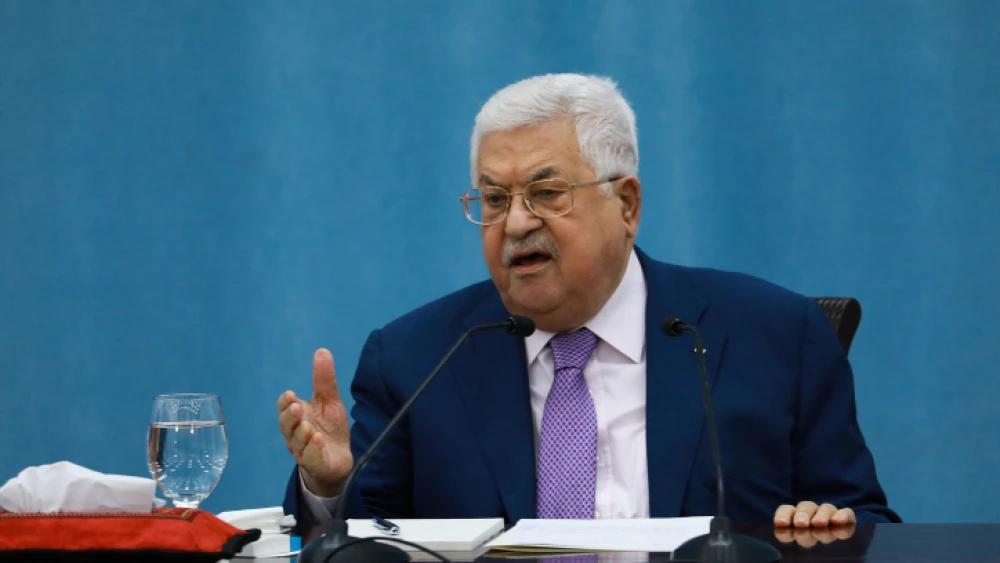
Palestinian Authority leader Mahmoud Abbas delivers a speech regarding the coronavirus outbreak, at the Palestinian Authority headquarters, in the West Bank city of Ramallah, May 5, 2020. Photo by Flash90.

Ahead of Wednesday’s meeting of the Arab League in Cairo to discuss the Israel-United Arab Emirates normalization agreement, the Palestinian leadership has toned down its criticism of the move.

While the Palestinian Authority has harshly criticized the UAE since the deal was announced on Aug. 13, a draft resolution by the P.A. seen by Reuters does not condemn or call for action against the UAE.

The Palestinian draft says the accord “doesn’t diminish Arab consensus over the Palestinian cause, the Palestinian cause is the cause of the entire Arab nation,” according to Reuters.

“The trilateral announcement doesn’t change the principal Arab vision based on the fact that the two-state solution on the 1967 borders is the only way to achieve peace in the Middle East,” it stated.

Palestinian Authority leader Mahmoud Abbas on Tuesday also banned any offensive criticism toward any Arab leaders, according to the report.

Abbas spokesman Nabil Abu Rdeneh last month called the normalization deal “treason” and demanded that the UAE cancel it.

The official Palestinian news agency WAFA reported at the time that P.A. Foreign Minister Riyad al-Malki announced that following Abbas’s order, the P.A.’s ambassador to the UAE would be recalled.

On Monday, Cooperation Council for the Arab States of the Gulf Secretary-General Nayef al-Hajraf demanded an apology from the Palestinian leadership.

“I condemn the irresponsible language that included incitement and threats,” said al-Hajraf.

The participation of campus-affiliated groups like CUNY for Palestine “openly encouraging and providing support for terrorism and extremist ideologies,” Jayne Zirkle of EndJewHatred told JNS, “represents a serious challenge that universities can no longer ignore.”
After 35 years working across the continent, entrepreneur Haim Taib tells JNS he sees it as the next frontier for Abraham Accords cooperation.
The Islamic Republic is seeking to recover economically and militarily through the memorandum of understanding with the U.S., while avoiding any relinquishment of long-term strategic assets.
The left-wing columnist “spent years questioning everyone else’s integrity. Now his own is under review,” Israel’s Foreign Ministry says.
“Not many people believed it would be possible to establish new communities,” said council head Yaron Rosenthal.
The blind spot could leave less time to prepare for increasingly dangerous heat events.