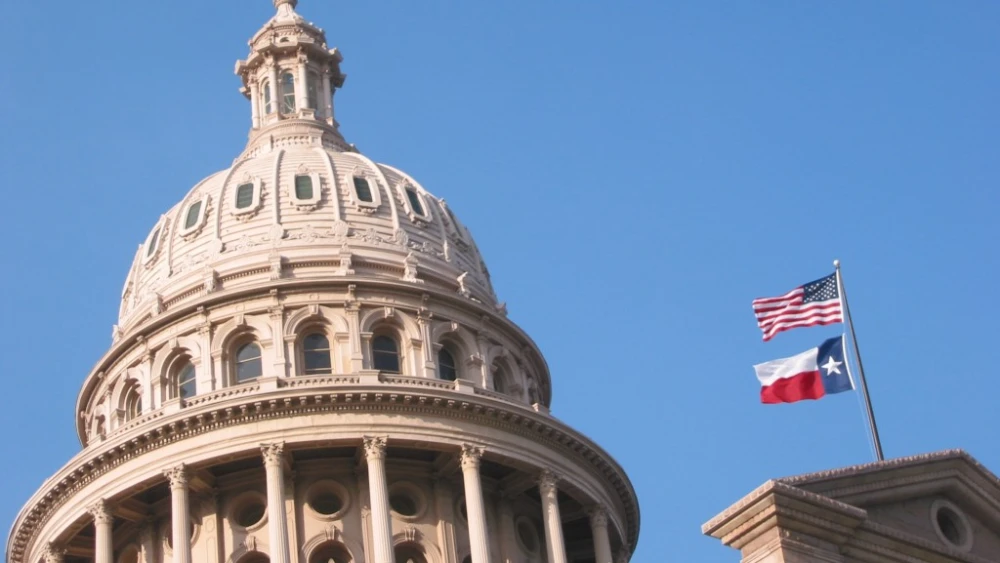
The Texas law prohibiting government contractors from boycotting Israel was narrowed on Thursday as Gov. Greg Abbott signed an updated version of the 2017 law.
The modified version came two weeks after a federal judge ruled that the original anti-BDS law as unconstitutional.
“At the heart of the First Amendment lies the principle that each person should decide for him or herself the ideas and beliefs deserving of expression, consideration and adherence,” said U.S. District Judge Robert Pitman.
“Our political system and cultural life rest upon this ideal,” Pitman said in his opinion.
He added that “the purpose behind the Bill of Rights, and of the First Amendment in particular[,]” is “to protect unpopular individuals from retaliation—and their ideas from suppression—at the hands of an intolerant society.”
The updated law exempts individuals and smaller companies, specifically those with less than 10 full-time employees or valued under $100,000.
The political arm of the Israel-American Council lauded Thursday’s move.
“This effort served as proof that the pro-Israel community fully supports the First Amendment of the Constitution. In this case, states like Texas have created laws that carefully regulate commercial activity and not the conduct of private speech,” said Joseph Sabag, IAC for Action’s director of state policy and government relations. “Anti-BDS laws are narrowly tailored, anti-discrimination laws, similar to many other anti-discrimination laws that protect, among other categories of people, women, racial minorities and LGBTQ individuals.”