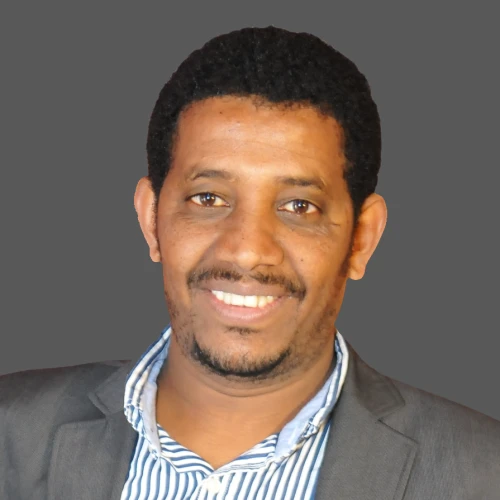
At a breakfast celebrating St. Patrick’s Day, which he hosted at Gracie Mansion on Tuesday, New York City Mayor Zohran Mamdani managed to make it about Palestine.
Former Irish president Mary Robinson was honored at the breakfast, which Mamdani did not eat, as he is fasting for Ramadan. Peter Burke, the Irish enterprise, tourism and employment minister, was also present.
After referencing the Irish struggle for independence and immigrants from the Emerald Isle to New York who faced discrimination, Mamdani praised Robinson for standing “steadfast alongside the people of Palestine.”
“I say this as over the past few years, as we’ve witnessed a genocide unfold before our eyes, there has been deafening silence from so many,” the mayor said.
“For those who have long cared about universal human rights and the extension of them to Palestinians, silence, however, is nothing new, for Palestinians are so often left to weep alone,” Mamdani said.
Robinson said that “while we gather to wish each other good health, we know others are living under the shadow of war and suffering in Iran, in Lebanon, in Palestine, in Ukraine, in Sudan, in the Democratic Republic of Congo and in too many other places.”
“For many Irish people, these realities resonate deeply, as the mayor has said,” she said. “Our own history holds memories of famine, exile and conflict.”
Sen. Rick Scott (R-Fla.) responded to Mamdani’s comment. “Leave it to the New York City mayor to turn St. Patrick’s Day into an antisemitic attack,” he stated. “This guy is a disgrace.”
The American Jewish Committee said the mayor’s “repeated use of the ‘genocide’ accusation against Israel is not just wrong, it’s dangerous.”

While Jews comprise about 10% of New York City residents, anti-Jewish acts represented the majority of hate crimes in 2025—more than hate crimes against all other groups combined.
“It distorts reality and fuels antisemitism at a moment when Jews are already under threat,” the American Jewish Committee said. “Leaders who claim to stand for human rights should not use rhetoric that puts Jewish communities at risk.”
Mamdani, who has expressed his strong opposition to the existence of Israel as a Jewish state, has also been quick to decry antisemitism after the numerous attacks that have happened in the most populous Jewish city in the world outside of Israel, since he took office on Jan. 1.
It was left to Robinson, who served as Ireland’s first female president from 1990 to 1997, to make the only reference to the Jewish community in her remarks at Gracie Mansion.
“We gather during a sacred season for many. Muslims are observing Ramadan, Christians Lent and Jewish communities are nearing the close of the month of Adar,” she said. “These traditions invite reflection, humility and compassion. Yet we are also seeing divisions deepen along lines of ethnicity and faith. Divisions that ultimately serve no one.”
Robinson has long been vocally supportive of the Palestinian cause and opposes the current Israeli government and policies.
After a visit to the Rafah border crossing between Gaza and Egypt last August, she accused Israel of deliberately blocking aid and creating a man-made famine in the war-torn territory.

She has also urged European governments to suspend their trade agreements with Israel and to stop transferring arms to Israel. She has also called for the recognition of a Palestinian state, arguing that it is a fundamental requirement for a two-state solution.
Elisha Wiesel, son of the late Holocaust survivor and Nobel laureate Elie Wiesel, stated that Mamdani “celebrated St. Patrick’s Day by spreading the vicious blood libel against the Jews, claiming that we had perpetrated a genocide in Gaza.”
“He platformed and praised Mary Robinson, the previous president of Ireland, whose leadership of UNHCR was forever marked by the stain of the antisemitic Durban conference, from which the American delegation resigned in protest,” Wiesel said.
Wiesel shared a quote from his late father, who wrote in 2001 that “the Durban Conference will go down in history as an enterprise of shame.”
“Instead of being an important international gathering of goodwill, it became a circus of slander,” Elie Wiesel wrote. “Conceived as a world gathering against hatred, it turned into a mean-spirited meeting of hatred.”
“I was supposed to be there. Both Kofi Annan and Mary Robinson tried their best to persuade me, especially since I was a member of the small ‘committee of eminent persons,’ created by the United Nations High Commissioner, to help with the proceedings,” he wrote. “But when I read the working documents, I resigned. Antisemitism, which is the oldest group prejudice in history, didn’t even figure in the program. What did figure was something about ‘holocausts such as the ethnic cleansing of Palestinians by the Israelis.’”
“Mrs. Robinson called me several times. I had lunch with the U.N. secretary-general, whom I had known for years. I explained to both why I simply cannot be part of an event that is so outrageously anti-Israeli and anti-Jewish,” Elie Wiesel wrote at the time.
“They claimed that the language would be changed. But the trouble was the content,” he added. “I warned the U.N. secretary-general that the conference, the way it was being prepared, will remain a moral disaster in the annals of social and political conduct among nations.”