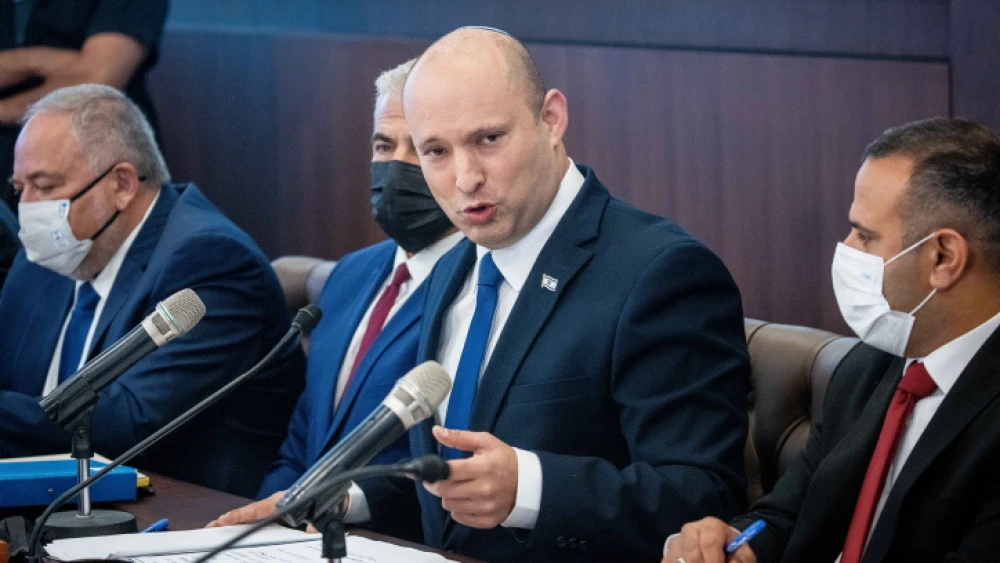
Plans for Israeli Prime Minister Naftali Bennett to hold bilateral meetings at the White House with U.S. President Joe Biden were derailed on Thursday as terrorist attacks near the Hamid Karzai International Airport in Kabul, Afghanistan, killed 13 members of the U.S. military forces—10 Marines, two soldiers and a Navy corpsman—and as many as 100 Afghan civilians, not to mention the wounded.
Bennett’s meeting with the president was rescheduled for Friday, only days before the U.S.’s planned withdrawal from Afghanistan on Aug. 31. Ahead of the meeting, Bennett did speak with Biden by phone late Thursday, offering his condolences for the deaths of U.S. soldiers and solidarity between the two nations.
While the president’s attention is most certainly focused on that matter at hand, the ramifications of what’s happening in Afghanistan ripple across the Middle East, all the way to Jerusalem, and make talks with Israel—a country that deals with terrorism on a daily basis—ever more relevant.
Jonathan Schanzer, senior vice president for research at the Foundation for Defense of Democracies, said the fallout from the U.S.’s withdrawal from Afghanistan could help Israel’s case in urging the United States to suspend its attempt to re-enter the 2015 Joint Comprehensive Plan of Action (JCPOA).
He said the administration’s attempts to re-enter the Iran deal in an effort to stem the regime’s march towards acquiring nuclear capabilities are based on the same flawed logic from the reality on the ground as the Afghanistan withdrawal.
“I think there may be a bit of remorse on the part of the White House officials involved in the botched withdrawal, and there could be—and I would stress ‘could’—be some who are beginning to wonder whether the Iran nuclear deal is a similar or even more dangerous risk,” said Schanzer. “I certainly think that anyone watching right now has to wonder, the same people that brought you the Afghanistan withdrawal are the ones who are trying to bring you the return to the nuclear deal, and it does not seem like a good moment for those people and their assessment of the Middle East.”
Just hours after the bloody attacks in Kabul, Iran already sought to capitalize on the chaos and make inroads in Afghanistan, urging regional cooperation between the Islamic Republic and Pakistan to promote “security and calm” in Afghanistan.
“The presence of Americans and foreigners not only fails to bring about security but causes problems,” Iranian President Ebrahim Raisi said on Thursday, AFP reported.
‘Iran deal is looking less and less attractive’
While rejoining an agreement had been a goal of the Biden administration since its start, the current instability in the Middle East may make him more amenable to the concerns of America’s closest ally in the region.
Schanzer said the White House would be wise to tread carefully and not disrupt trust in Bennett’s fragile coalition government, which he said is likely a leading motivator for the administration.
He said “this administration really wants Bennett to stay in power. The fear of the return of [former Prime Minister Benjamin Netanyahu] is driving a lot of U.S. policy as it relates to Israel.”
“Now, I’m not going to say that the U.S. is going to torpedo the Iran deal to please Bennett, but I do think that as the region is in flames at the moment and with the Iran talks suspended, it certainly doesn’t look good from the perspective of the administration,” he continued. “So if the goal is to work with one of the only reliable partners in the region and to shore up support for the current leadership, the Iran deal is looking less and less attractive.”
Schanzer noted that the meeting with Bennett will most likely be a welcome distraction for Biden, where both are expected to affirm the strong U.S.-Israeli relationship—something that the United States will hope demonstrates that it still has the trust of its friends in the Middle East and that “its ability to conduct foreign relations with important allies is still strong.”
“I would just say that this desire to keep [Netanyahu] out and to keep Bennett in is a big driving force for the relationship, and I don’t think that’s appreciated fully right now in Washington. It’s such an important component of this for the U.S.,” said Schanzer. “They have people that they feel like they can work with right now, which is, at least in their view, a big change.”