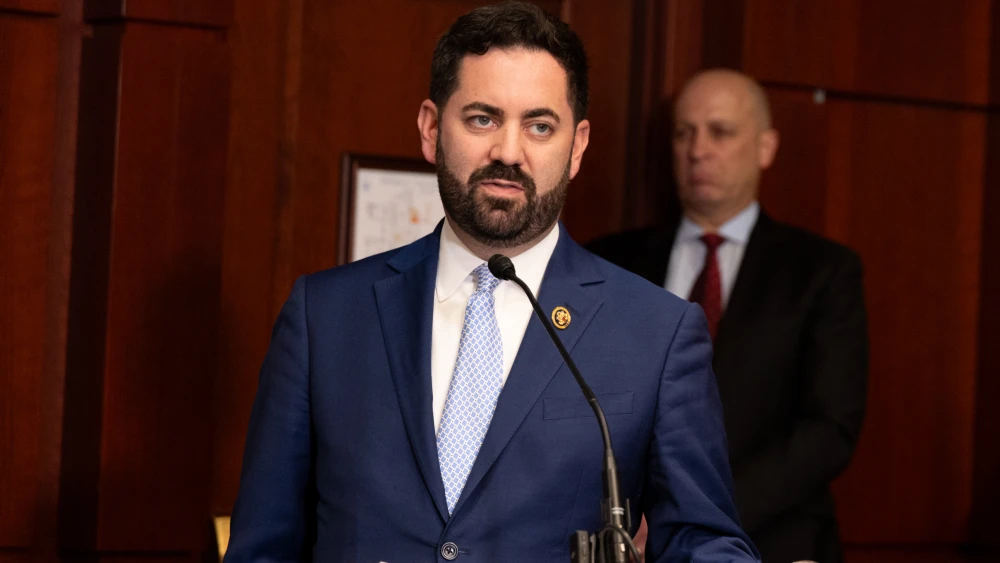
New York City mayoral frontrunner Zohran Mamdani’s recent statement that he would stop using the International Holocaust Remembrance Alliance (IHRA)’s working definition of Jew-hatred drew criticism on Thursday from members of Congress, including one from his own party.
Reps. Josh Gottheimer (D-N.J.) and Mike Lawler (R-N.Y.) denounced Mamdani’s “reckless attempt” to drop the use of the IHRA decision as “shameful, dangerous and completely disgusting.”
The lawmakers are the lead sponsors of the Antisemitism Awareness Act, which would enshrine that definition into law. That would make sure that the U.S. Department of Education “has a clear, consistent standard to combat antisemitism wherever it rears its ugly head,” the lawmakers stated.
The U.S. national strategy to counter antisemitism issued by former President Joe Biden noted that the United States had “embraced” the IHRA definition and its contemporary examples. The latter state that it is antisemitic to accuse Jews of being more loyal to Israel than their home countries, denying them the right of self-determination by calling Israel “a racist endeavor” and demanding that Israel alone among the world’s democratic nations follow certain behaviors.
Mamdani made his comments in a recent Bloomberg News interview. He also told the outlet that he supports the movement to boycott Israel. That also drew the wrath of Gottheimer and Lawler.
“Let’s be extremely clear. The BDS movement is antisemitic,” the two lawmakers stated. “Efforts to delegitimize Israel’s right to exist are antisemitic, and refusing to outright condemn the violent call to ‘globalize the intifada’—offering only that you’d discourage its use—is indefensible.”
“There are no two sides about the meaning of this slogan,” they said. “It is hate speech, plain and simple.”
A recent poll showed that Mamdani, a New York state assemblyman who won the Democratic nomination for mayor and who currently has a double-digit lead in surveys, is viewed negatively by the second-largest Jewish community in the world, behind only Tel Aviv.
Three-quarters of likely Jewish voters in a Quinnipiac University survey released earlier this month said that they have unfavorable views about Mamdani.