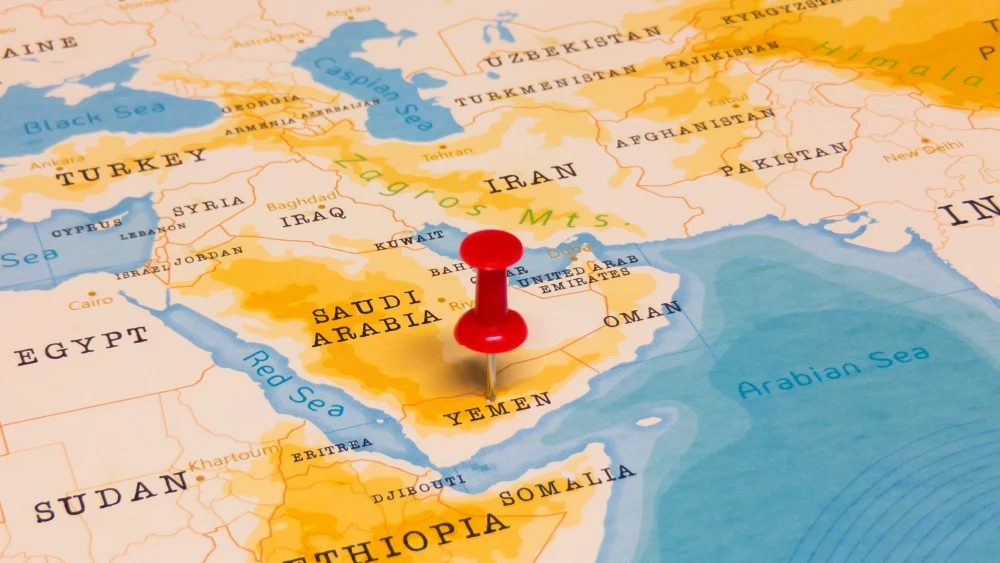
The U.S. State Department’s special envoy for Yemen said that he is concerned about Iran’s behavior, despite progress in ending a catastrophic war between a Saudi Arabia-led coalition and Yemen’s Iran-backed Houthi rebels.
Tim Lenderking spoke with reporters on May 11, days after returning from a visit to the Persian Gulf with Yemeni, Omani and Saudi senior officials.
“Despite the fact that we welcomed an agreement between the Saudis and the Iranians, I remain concerned about Iran’s role, which is to say that over the period of the war, they have armed and trained and equipped the Houthis to fight and attack Saudi Arabia,” said Lenderking. “We’re very, very positive that these attacks have not taken place for over a year, but the Iranians have continued to smuggle weaponry and narcotics toward the conflict, and we are very concerned that this would continue despite the benefits that could come from a Saudi-Iran deal.”
He said the recent Saudi-Iranian rapprochement will not bring peace to Yemen on its own due to internal tensions and divisions in Yemen. While Lenderking noted that many have shared with him that Tehran is supportive of the peace process, he said “we want to see that borne out in fact, and we do not want to see a continuation of the smuggling and violation of U.N. Security Council resolutions, which characterized the previous seven years of Iran’s engagement on Yemen.”
He also noted that much of the progress in de-escalating the conflict came about before the agreement between Riyadh and Tehran.

Lenderking said the international community should be concerned about “whether the Iranians will hold to the terms of what they’ve agreed to,” and that Washington’s hope is that “Iran will change behavior and indeed, in the spirit of the agreement with the Saudis, support the peace effort vigorously in Yemen. That would be welcome.”
Peace talks last month in the Yemeni capital of Sana’a came one year after the warring sides agreed to a U.N.-brokered truce, which has since expired. The eight-year conflict has hit its most promising lull, and April’s talks were followed by a confidence-building announcement of an exchange of nearly 900 detainees.
The conflict is widely viewed as one of a number of regional proxy wars between Saudi Arabia and Iran, which serve as the area Sunni Muslim and Shi’ite powers, respectively.
Riyadh and Tehran agreed last month to restore diplomatic ties broken in 2016 in a move with major potential diplomatic, military and economic implications.