It has become increasingly difficult to be surprised by the direction of public discourse. And yet, some developments still manage to do so.
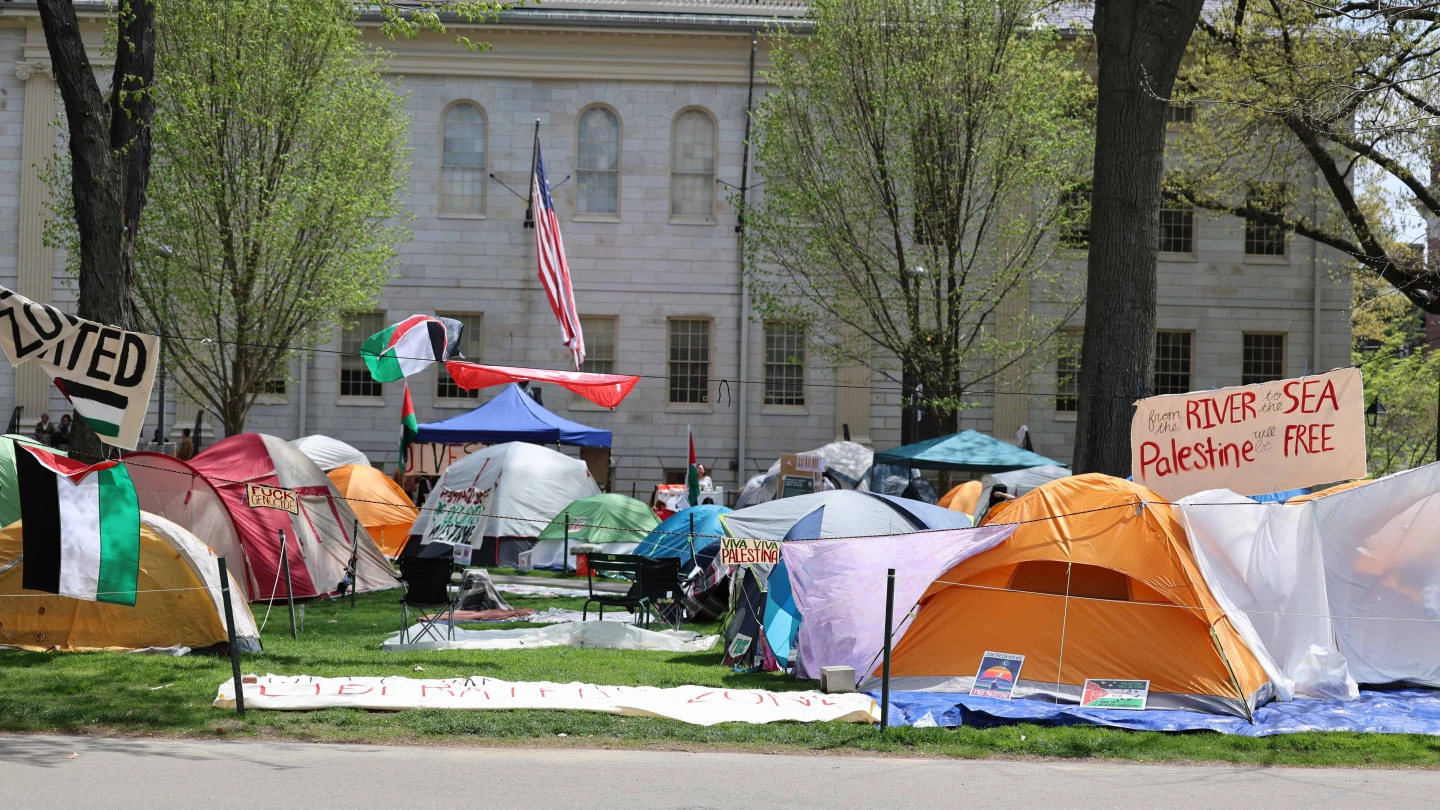
On April 30, the Norwegian Center for Holocaust and Minority Studies held a seminar titled “Nakba and Holocaust as Cultural Traumas.” The juxtaposition of those two events would once have been difficult to imagine emerging from a Holocaust museum. That an institution dedicated to Holocaust studies would do so demands reflection.
The center was established as part of a national settlement tied to the annihilation of 230 Jewish families and Jewish institutions during World War II. Yet from its inception, Holocaust remembrance was paired with a broader mandate focused on the position of religious minorities in Norway.
That structure reflected an admirable postwar aspiration: that the Holocaust could and should illuminate the dangers of persecution beyond Jewish history alone. But embedded within that mission was a lasting tension. Holocaust memory carries universal implications, but when comparison collapses fundamentally different historical realities into frameworks of moral equivalence—particularly amid contemporary political conflicts—the defining distinction that gives Holocaust memory its meaning begins to erode.
The question is not whether Palestinian history can be studied; that’s what historians do. Rather, it is the responsibility of a Holocaust center to preserve the specificity of the Holocaust, not to make it available for comparison in the service of contemporary political and moral narratives.
Holocaust memory has universal implications, but can diminish when used as a universal metaphor. The essential crime of the Holocaust was the systematic effort to erase Jews according to Nazi racial doctrines that treated even distant Jewish ancestry as intolerable.
Historical memory fades over time, and distinctions that once seemed clear become easier to blur. We naturally want to compare and contrast experiences. Yet the obligation of an institution dedicated to Holocaust memory is not merely to preserve remembrance, but to preserve distinction.
The event did not pass quietly. It drew sharp criticism from Holocaust scholars, Israel’s diplomatic representatives and virtually the entire organized Jewish community in Norway. A joint statement warned that presenting the Holocaust alongside other historical traumas risks relativizing its singular character as an ideologically driven project of total extermination. The issue is not comparison, but the equivalence such framing suggests—particularly within an institution dedicated to preserving Holocaust memory.
Institutions influence one another. Once one institution places the Holocaust into a framework of interchangeable “parallel traumas,” permission for similar comparisons elsewhere follows. The concern is not a single seminar, but the normalization of a broader interpretive trend—one in which the Holocaust becomes increasingly detached from its historic inimitability.
We can anticipate the values of openness and acceptance as a rationale for such comparisons. The seminar emerged from a broader national intellectual instinct toward mediation and moral universalism, values long associated with Norway’s international identity and stewardship of the Nobel Peace Prize. But when applied without constraint, that instinct shifts understanding to equivalence.
In the context of Holocaust memory, the result is not greater clarity but an erosion of the distinctions that define the event itself.
Creating a language of “parallel traumas” harms the historical record. It seeks to bridge different memories of suffering, which may appear humane, but ultimately flattens moral distinction.
Conceptually, care must be taken to avoid homogenizing fundamentally different historical realities. The Holocaust was an ideologically driven project of extermination directed at Jews as a people. The Arabic term nakba (“catastrophe”) emerged from a regional war surrounding the establishment of the State of Israel. Framing the two primarily as parallel cultural traumas collapses fundamentally different events into the same moral category.
That this occurred on a continent with a deep history of discrimination against Jews places an even greater obligation on Holocaust institutions to guard against the erosion of historical clarity. The function of such institutions is to preserve the memory of a history in which centuries of anti-Jewish persecution ultimately converged with the modern state’s bureaucratic and industrial capacity for extermination.
The Norwegian Center for Holocaust and Minority Studies has departed from its central obligation: preserving the historical specificity of the Holocaust. In placing the Holocaust within a framework of comparative suffering, it has blurred distinctions that Holocaust institutions exist to protect.
Over time, the erosion of those distinctions weakens the clarity necessary to transmit Holocaust memory across generations.