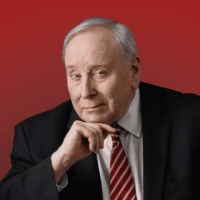
Jewish leadership looked a lot different in the second half of the 20th century than it does today. And there was no better example of that than Abraham Foxman, known by all as “Abe,” the longtime national director of the Anti-Defamation League, who died this week at the age of 86. Though he would have bridled at the description, Foxman embodied the postwar Jewish establishment in many ways.
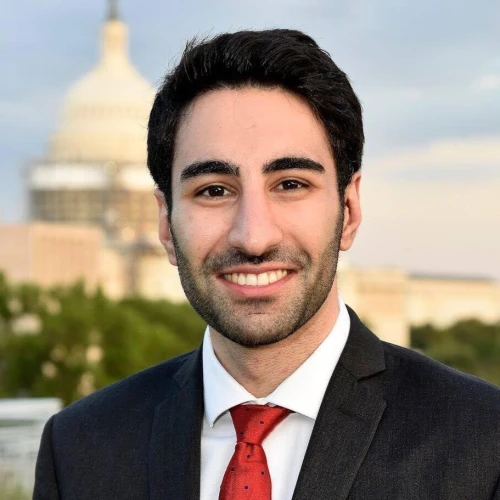
When he was replaced, the organization hired someone who couldn’t have been more different. And that shift is an essential part of the story of the declining fortunes of American Jewry in the 21st century.
Foxman was an extraordinary individual, a big personality with enormous strengths as well as some flaws. But he had an equally remarkable career as the man most identified with what was long considered to be a highly successful effort to not just defend American Jews, but to relegate antisemitism to the margins of society. His life was indelibly shaped by the Holocaust he survived as a child. It was also very much a reflection of the high tide of postwar Jewry in which a group once largely made up of poor and powerless immigrants achieved not just prosperity and power, but a place that was seemingly at the center of American national life.
A Jew in a hostile world
Looking back at his long run at ADL, which he led from 1987 to 2015, one thing stands out the most, especially when contrasted with his successor, former Clinton and Obama administration staffer Jonathan Greenblatt. He had an instinctual understanding of what it means to be a Jew in a hostile world. He spent his life toiling for the Jewish community and never lost sight of the perils that it has always faced.
Yet as much as we should honor his passing and acknowledge all that he did in his long and interesting life, it is impossible to seriously consider his legacy without understanding that the Jewish world he left behind following his retirement from his post in 2015 is in terrible danger. The paradigm of triumphant Jewish liberalism that the ADL exemplified on his watch left both the organization and the community it is supposed to shield from danger unready to face the challenges of the present day. The organization’s political left turn under his successor has made it unprepared to counter the massive surge of Jew-hatred that followed the Hamas-led Palestinian Arab terror attacks in southern Israel on Oct. 7, 2023, as well as essentially disarmed it in a fight against powerful foes.
That is far more the fault of Greenblatt than it is of Foxman. But it must be admitted that the Foxman formula of liberal coalition-building and reliance on shaming antisemites into repenting their misbehavior that worked in the 20th century was failing by the time he retired. The ADL did not recognize until it was already too late that its longtime, almost-exclusive focus on right-wing extremism caused it to be reluctant to address other threats. While Jewish liberals were obsessing about conservatives and evangelicals, largely because of differences over issues like abortion that had nothing to do with Jewish safety, progressives had already begun to abandon Israel and to embrace toxic woke ideologies that led to an unprecedented increase in Jew-hatred.
That lapse in judgment would essentially undo much of what Foxman had achieved. And as the Jewish community rightly mourns the passing of a giant, Jews and their friends now find themselves struggling to cope with the consequences of this fiasco and to come up with strategies that can address the challenges of the present.
Survival and redemption
Foxman’s personal story was an inspiring tale of survival and redemption.
He was born on May 1, 1940, in what is now Belarus. His parents, Joseph Fuksman, the editor of a Zionist publication, and his wife, Helen, had fled Warsaw after Germany and the Soviet Union invaded Poland eight months earlier. They eventually temporarily settled in Lithuania. Some 13 months later, when the Nazis turned on their erstwhile Communist allies and invaded their territory, the family was forced to make a terrible choice. The couple gave their infant to the care of a Catholic Polish nanny, who then baptized him and raised him as her son during the years of the German occupation, thus saving his life.
Miraculously, both parents survived the Holocaust, though most of their family did not. After the liberation, they found their child and, after a bitter court battle with the nanny who didn’t wish to give up the boy, reclaimed their son in 1945. After spending four years in displaced person camps, the family immigrated to the United States in 1950 and anglicized their name to Foxman.
The young Foxman attended the Yeshivah of Flatbush, the City College of New York and then New York University Law School. After graduating, he was hired by longtime ADL general counsel Arnold Foster as his assistant. He spent the rest of his working life at the organization, rising from a position in its international affairs division to its leadership in 1987, when he replaced Nathan Perlmutter as its national director. He presided over the group, which had begun as a division of the B’nai B’rith in 1913 in part as a reaction to the case of Leo Frank, an Atlanta Jew who was falsely convicted of murder and then lynched by an antisemitic mob.
The ADL at high tide
Under Foxman, ADL’s autonomy and then eventual separation from its parent group became a reality. That was in no small measure a tribute to his talent for seizing on public concerns about hate, as well as a formidable ability to raise money. On his watch, ADL became not just a resource for American Jewry but the group considered in charge of the job of dealing with antisemitism and among its most important voices.
His stances were an interesting mix of traditional Jewish sensibilities and a savvy grasp of modern public relations. He was both an Orthodox Jew and a political liberal, albeit one who understood that his job was to keep the ADL nonpartisan. He was a stalwart supporter of Israel, but also a cheerleader for the Oslo Accords that raised hopes for peace in the Middle East that proved both illusory and destructive of the Jewish state’s security. And that meant that he was not entirely comfortable with Israeli governments that were unpopular with Jewish Democrats, who preferred Jerusalem to be led from the left.
He also had a mixed record when it came to solidifying alliances with non-Jewish communities. The ADL was most at home making common cause with traditional allies on the left and was suspicious of evangelicals who were emerging in the 1980s and ’90s as the most faithful friends of Israel because of differences over domestic politics.
Most of all, he was a ferocious critic of anyone who engaged in public antisemitism. He became the unofficial arbiter of who was and wasn’t to be considered beyond the pale. His usual procedure was to reach out to celebrities who were guilty of Jew-hatred and helped educate them on a path of repentance, a practice that often involved contributions from the offender to ADL. In this respect, he sometimes resembled a medieval pope selling indulgences to those who believed such blessings would be a guarantee of entry into heaven.
While some of us took a dim view of this process, Foxman thought it was worthwhile, even joked about his “kosher certification” of supposedly repentant famous antisemites. He genuinely believed that he had helped make some of them into better people. That he was able to get away with such stunts was as much a tribute to his stature as a defender of the Jews, as it was for his prowess at fundraising.
That attraction to celebrities, however, could get him into trouble.
His role, along with other prominent Jews, in helping persuade former President Bill Clinton to pardon fugitive financier Marc Rich on his last day in office brought Foxman into disrepute. Rich was a billionaire tax cheat who had helped the regime of Iraqi dictator Saddam Hussein evade sanctions on oil sales. He was living in exile in Switzerland, out of the reach of law enforcement. But thanks to contributions from his ex-wife, Denise Rich, to the Clinton presidential library, as well as to Hillary Clinton’s senate campaign—coupled with the influence she wielded from people like Foxman and then-Israeli Prime Minister Ehud Barak—Rich was gifted with an undeserved and highly suspicious pardon.
Foxman may have regretted his willingness to do a donor’s bidding, though he bristled at the criticism. When I asked him about it in an interview, he blew up, and for a moment, I wasn’t sure what the usually affable ADL leader might do. That was memorable because it was an exception to the rule when it came to Foxman’s normally deft efforts to manipulate press coverage. We agreed more than we disagreed. But I took a dim view of the way his affinity for contributors and celebrities would impact his decisions about when to take a stand.
Another example centered on director Steven Spielberg’s 2005 film “Munich”—about the Israeli effort to exact justice for the 1972 Munich massacre in which 11 Israeli athletes and coaches were murdered by Palestinian terrorists—created a controversy. Many in the pro-Israel community rightly denounced it for the way it treated the two sides in the conflict as morally equivalent. But Foxman gave it a pass, prompting me to wonder why the man who had been so courageous and bold in taking on actor/director Mel Gibson for his movie, “The Passion of the Christ,” released one year before in 2004, for its antisemitic symbolism, was unwilling to take on Spielberg.
He took that criticism with equanimity. And the next time I wrote something he agreed with, he sent a note applauding it. That was quintessential Foxman—as was the fact that shortly after he screamed at me for having the temerity to question his role in the Rich pardon, he sent a gift when my daughter was born.
Attacked for being too pro-Israel
In his final decade at ADL, Foxman had become controversial, but not because of his soft spot for donors. Rather, it was because he was seen by many in the liberal journalistic and political establishment as too reflexively pro-Israel.
The New York Times Magazine trashed him in a 2007 profile as having an “anti-anti-semite problem.” It dismissed his concerns about the growing acceptance of narratives about an all-powerful “Israel Lobby” popularized in a treatise by writers John Mearsheimer and Stephen Walt that sought to legitimize antisemitic tropes about Jewish power and money. It said he “dwelt imaginatively in the Holocaust” at a time when concerns about Jew-hatred were supposedly outdated. The Times’ accusations that Foxman indiscriminately labeled people as antisemites were simply untrue. The magazine even mocked his fears about the already serious threat posed by Iran’s nuclear ambitions.
As I wrote at the time, “the biased delegitimization of Israel and Zionism that masquerades as intellectual debate on college campuses and in left-wing publications is no passing fad.” That proved only too true. The way liberal media began to use the ADL leader as a piñata for not joining the left’s Israel-bashing and because he recognized the peril from anti-Zionism that was indistinguishable from Jew-hatred was a sign of things to come.
Foxman was also right to speak up to criticize plans to build a mosque in the footprint of the World Trade Center complex in 2010. The controversy was part of an attempt to push the myth that the real victims of the 9/11 attacks were Muslim hurt by a mythical wave of Islamophobia that followed the Al-Qaeda assault on America. Here again, Foxman’s instincts—forged in the memory of the Holocaust and the knowledge that it’s a mistake to imagine that enemies of the West and the Jews are giving up—led him to the correct conclusion. Yet for that honorable stand, he was wrongly attacked by fellow liberals as a bigot. Even worse, 10 years later, Greenblatt and the ADL disgracefully apologized for what he had said.
Under Greenblatt, the group endorsed the antisemitic Black Lives Matter movement and embraced woke racialist teachings that grant a permission slip for Jew-hatred. Just as bad, Greenblatt’s decision to turn the ADL into a shill for his left-wing Democratic Party allies was a repudiation of Foxman’s determination to keep the group out of partisan politics, even as he maintained it as a bastion of liberalism. Its willingness to endorse a false narrative that accused President Donald Trump of inciting antisemitism when he was not just a proven friend of Israel, but actually doing more to fight it than his predecessors, was more than a mistake. It was a betrayal of the group’s mission.
Sadly, in his last years, Foxman succumbed to the same temptation, refusing to condemn a Democratic Party video ad that analogized Trump to the Nazis, something that he had always previously opposed.
A life well-spent
Still, when looking back at Foxman’s life, we need to set aside the twists and turns of his career, and understand him as a figure who personified the way Jewish immigrants could fully embrace America while holding onto their Jewish identity and faith. Despite his justified vigilance against hate, Foxman believed in the promise of this nation and its guarantee of liberty. His was a life that had been saved from the furnace of the Holocaust and spent in defense of the Jewish people and the principles of American freedom.
The liberalism that he believed in so deeply would prove unable to defend those principles against progressives and leftists who betrayed their Jewish allies. Though he made his share of mistakes and misjudgments, his was a life that must be judged as having been well spent defending his people and the best things for which his adopted country stood.
May his memory be for a blessing.
Jonathan S. Tobin is editor-in-chief of JNS (Jewish News Syndicate). Follow him: @jonathans_tobin.