


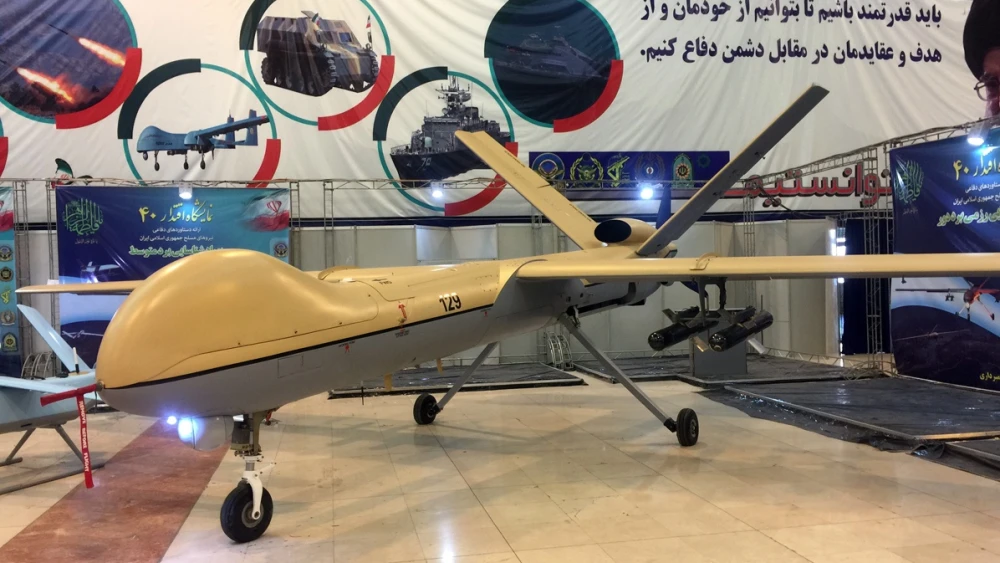
The United States, United Kingdom and France on Wednesday jointly raised the issue of Iran’s transfer of attack drones to Russia at a meeting of the U.N. Security Council, according to a statement by State Department spokesperson Ned Price.
Council members received expert briefings on the matter, and the Western nations expressed “grave concerns about Russia’s acquisition of these UAVs from Iran in violation of U.N. Security Council resolution 2231,” which formally endorsed the 2015 Joint Comprehensive Plan of Action, commonly known as the Iran nuclear deal, said Price.
Price noted that the United States began warning in July that Tehran was planning to supply so-called suicide drones to Moscow, and there was now “abundant evidence” that the UAVs are being used against Ukrainian civilians and critical civilian infrastructure.
“As Iran continues to lie and deny providing weapons to Russia for use in Ukraine, we are committed to working with allies and partners to prevent the transfer of dangerous weaponry to Russia,” he said.
“We will not hesitate to use our sanctions and other appropriate tools on all involved in these transfers. We will also continue to surge unprecedented security assistance to Ukraine, including air defense capabilities, so that Ukraine can defend itself from these weapons,” Price continued.
According to Ukraine, Iranian-made Shahed 136 drones have been used by Russia to assault its cities and energy infrastructure in recent days in waves of deadly strikes. The United States has described Russia’s actions as war crimes.
In addition to sending UAVs to Russia, Iran also intends to send its Fateh-110 and Zolfaghar ballistic missiles, The Washington Post said on Sunday, citing American and allied defense officials.




