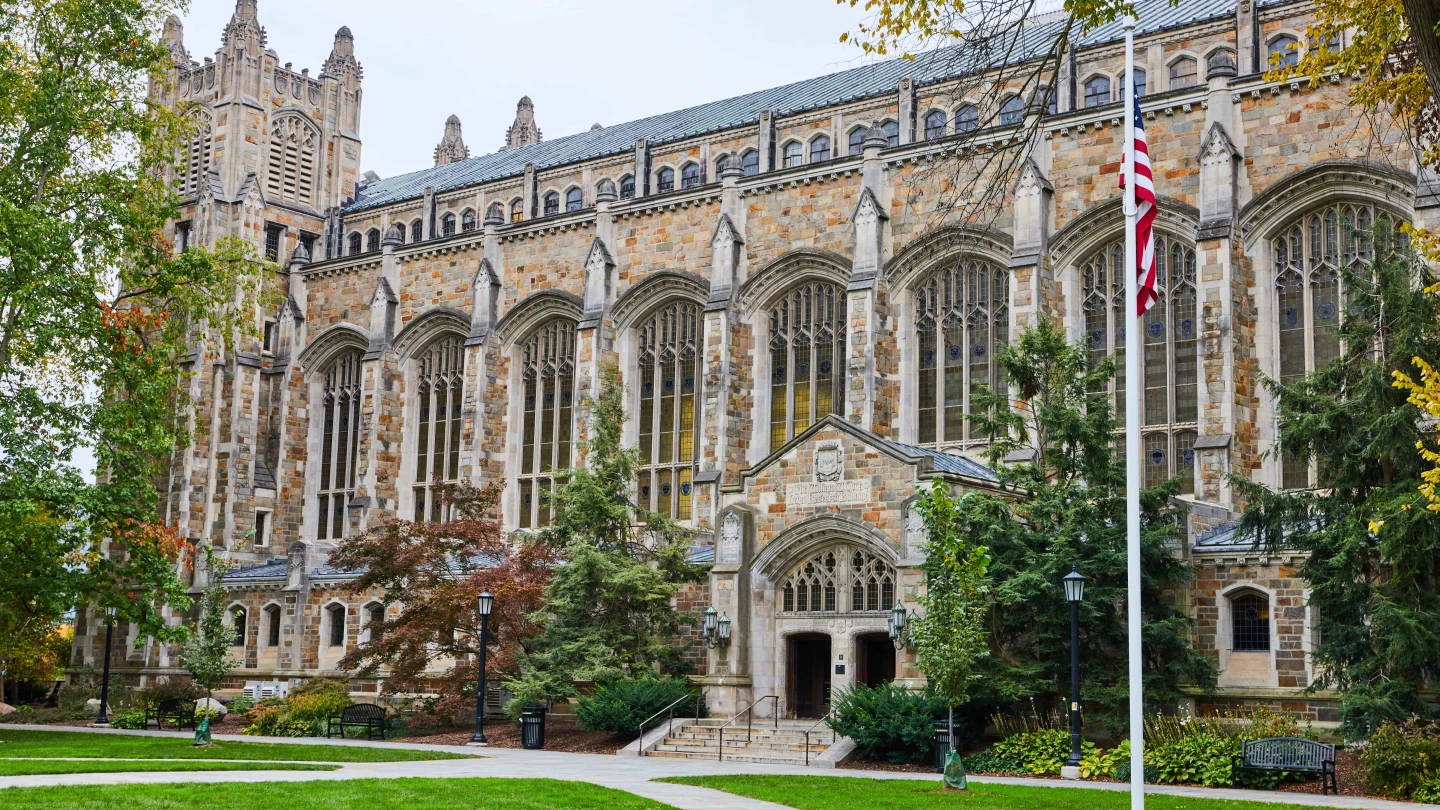
Bar-Ilan University in Ramat Gan has become Israel’s second-largest research university, according to new data released by the Central Bureau of Statistics’ 2025 Higher Education Report. The university has surpassed the Hebrew University of Jerusalem and now ranks after Tel Aviv University, marking a pivotal moment in the evolution of Israel’s higher education system.
While overall enrollment in Israel’s research universities has remained stable, Bar-Ilan’s sharp rise reflects a transformation in the university’s academic strengths, reputation and contribution to Israeli society.
Over the past eight years, Bar-Ilan advanced from fifth to second place nationwide. From 2018 to 2025, the university achieved a 30% increase in total student enrollment, the highest growth rate among Israel’s major research institutions. Nearly half of this surge occurred in graduate and doctoral programs, positioning Bar-Ilan as a growing center of advanced research and innovation.
Growth has extended across all academic fields, including engineering, medicine, nanotechnology, cybersecurity, artificial intelligence, the exact sciences, social sciences and humanities.

“Through a deep, broad and consistent strategic process, Bar-Ilan University has achieved an unprecedented milestone of becoming the second-largest university in Israel, influencing the lives of hundreds of thousands of young Israelis from all walks of life,” said Arie Zaban, president of Bar-Ilan University. “This is an inspiring moment that reflects the younger generation’s trust in our relevance, academic excellence and ability to prepare them for the challenges of the future.”
The newly released data also points to a significant demographic shift. Once regarded as having a more uniform student population, Bar-Ilan today attracts a student body that represents the full diversity of Israeli society. This reflects a long-term strategic plan initiated eight years ago to broaden access to higher education, investment in modern research infrastructure and fostering a campus culture built on inclusion, innovation and national impact.
As part of this transformation, Bar-Ilan introduced major academic initiatives, including new engineering programs and a six-year medical track, while simultaneously strengthening established areas of excellence such as law, psychology and the exact sciences. The university has also deepened interdisciplinary collaboration, encouraging connections between technology, science, society and real-world problem-solving.
Alongside academic growth, Bar-Ilan has implemented a comprehensive organizational modernization. Decision-making processes are increasingly data-driven, management practices have been upgraded for transparency and responsiveness and significant investment has been made in faculty development and administrative professionalism. These changes have enhanced the university’s agility and strengthened its ability to support student success.
A cornerstone of this evolution has been Bar-Ilan’s digital transformation. A redesigned website with an interactive catalogue of 448 programs, advanced CRM and business intelligence systems, and direct support through platforms such as WhatsApp and AI-based chat tools has created a more connected university experience. These digital advancements have increased accessibility and engagement for applicants and students, while expanding the university’s online reach to approximately one million unique monthly users.
Public trust has accelerated in parallel with these developments. In Globes’ 2024 National Brand Index, Bar-Ilan ranked third among Israel’s most-recommended universities, alongside Tel Aviv University and the Technion-Israel Institute of Technology. In the 2023 VERA survey among prospective students, Bar-Ilan ranked second in student preference, immediately after Tel Aviv University.
“In the coming years,” said Zaban, “Bar-Ilan will continue to expand its impact in research, innovation, industry collaboration and responsibility toward Israeli society as a whole.”