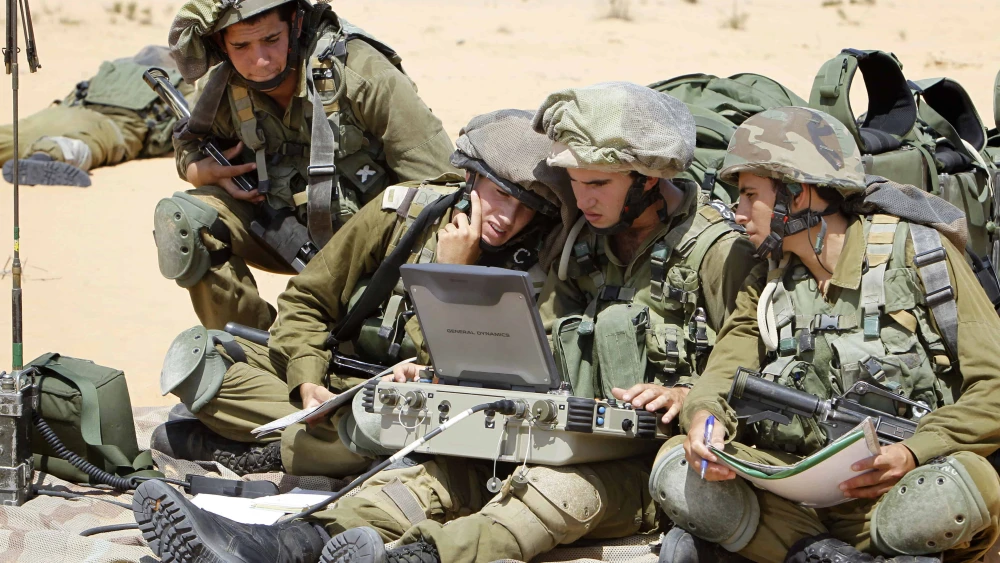
Eighteen containers full of military equipment were stolen from an infantry training base in Israel’s Negev region at the end of last week, according to Israeli media reports.
While thefts from Israel Defense Forces bases is an ongoing problem, the enormous amount of equipment stolen, especially during wartime, makes last week’s theft especially serious, Channel 14 reported on Monday.
The thieves made off with rifle ammunition, bulletproof vests, night-vision apparatus and gear for special units, among other equipment from Base 906, one of the three Negev bases of the School for Infantry Corps Professions and Squad Commanders.
Military Police have opened an investigation into the incident in cooperation with the Israel Police, according to the IDF Spokesperson’s Office.
No arrests have been made but observers say that it’s most likely that Bedouins were responsible.
“Past experience has taught us that there is no other direction to look in. Let’s put it that way,” Naomi Kahn, director of the International Division of Regavim, a research-based think tank and lobbying group, told JNS.
Regavim has been trying for years to deal with the phenomenon of theft from IDF bases, partnering with reservists who’ve had their personal belongings and private vehicles stolen to bring attention to the problem.
In some cases, trenches have been built around bases to keep marauders off, said Kahn.
“Whole IDF exercises, air force exercises, all sorts of things, had to be canceled because there were all these Bedouin thieves on the firing ground who were stealing not only spent ammunition, but the targets themselves,” she said.
“Anything made out of metal was stolen, like old frames of cars and tanks,” she said.
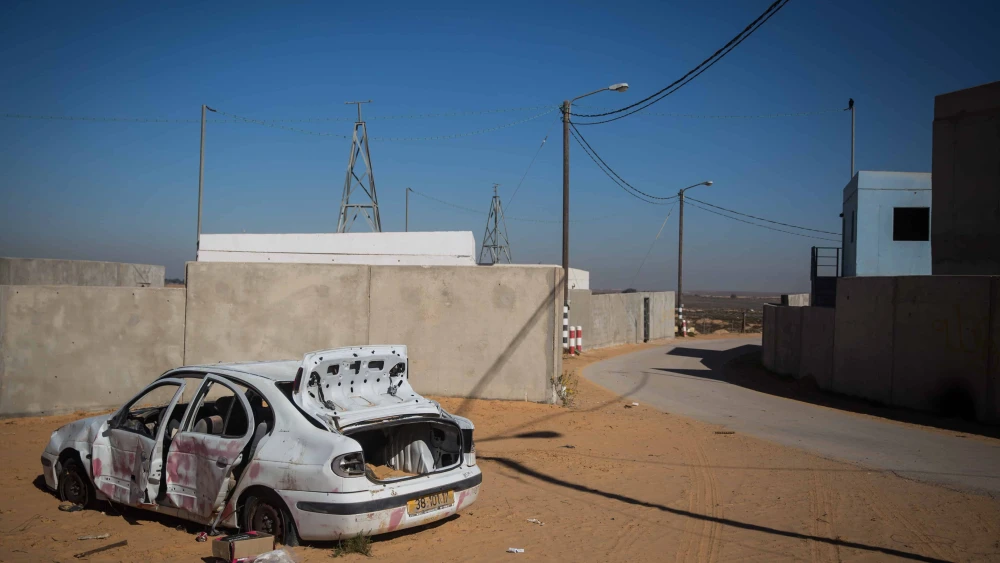
For a long time, Bedouin took advantage of a vacuum in jurisdiction where IDF soldiers were not allowed to arrest civilians, but neither were police allowed on IDF bases, she said.
To resolve the issue, the IDF and police created a joint special unit called “Magen HaNegev” (or, “Negev Shield”). The IDF reported in 2022 that Magen HaNegev had confiscated 145 million shekels’ ($39 million) worth of military materiel that year. It thwarted the smuggling of weapons worth 10 million shekels ($2.7 million).
“It made a serious dent in all of this activity, and then as soon as the Oct. 7 war broke out, the unit was essentially suspended,” said Kahn. Manpower was stretched thin and fighters were needed elsewhere. The result: theft came back with a vengeance.
Kahn urged the unit be reinstated, arguing it is needed even more in wartime as weaponry cycles in and out of bases for refitting and repair.
Along with bringing back the unit, responsibility must be assigned when thefts occur, something currently lacking, she added. Knesset member Yitzhak Kroizer of the Otzma Yehudit Party submitted a bill two months ago that would hold IDF commanders responsible if weapons were stolen from their bases.
“There has to be not only responsibility when theft happens, but authority to stop it because it’s a security threat. Every man, woman and child is endangered by this kind of thing,” said Kahn.