Newsletter
Newsletter Support JNS
Israel Kasnett

Israel Kasnett

Israel Kasnett, editor at the Jerusalem Center for Security and Foreign Affairs, offers expert analysis on Israeli politics, society and regional developments at JNS.org. With a deep understanding of the region, he delivers insightful commentary that challenges media bias and provides a clear perspective on Israel.

The nuclear issue, coupled with the incoming hardliner Ebrahim Raisi, tops the region’s concerns. The most pressing questing for Israel is what steps to take next.
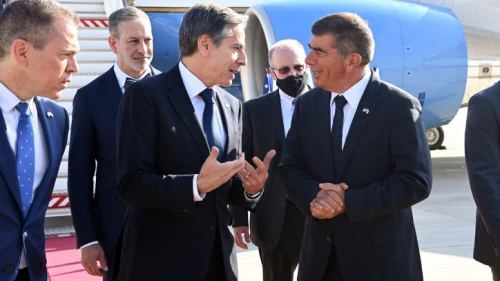
On the heels of U.S. Secretary of State Antony Blinken’s visit to the region, Mideast experts say America is misreading the situation in the West Bank and Gaza, and using smoke and mirrors as it works to appease Iran and placate Israel.
“Even if the rationales underpinning Qatar’s foreign policies are pragmatic and geostrategic in nature, generations of teaching such extreme sentiments have had some impact, somewhere, on the decision-making chain,” says David Roberts of King’s College London.
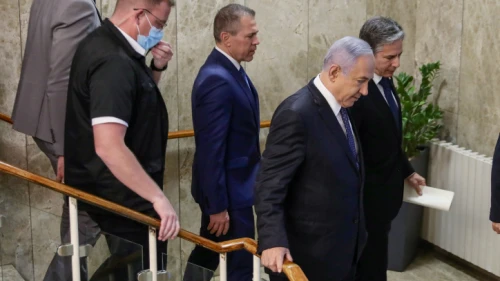
During their joint press conference in Jerusalem, Israeli Prime Minister Benjamin Netanyahu said he had discussed the Iranian threat with U.S. Secretary of State Antony Blinken and expressed hope that the United States “will not go back to the old JCPOA.”
“The appeasement on the nuclear question leads to appeasement across the region,” said Michael Doran of the Hudson Institute. The Biden administration “cannot acknowledge the role Iran is playing in Gaza because if it does, it will be asked to leave the negotiating table in Vienna.”
The United States “has a deep and consistent interest” in doing its best to “take down this terror—this campaign against Israel, the ‘Little Satan’—that ultimately could grow into an Iranian campaign against the ‘Great Satan,’ the United States.”
“The underlying instigator for the Farhud and for what we have seen this past week is raw anti-Semitism,” said former Knesset member Michal Cotler-Wunsh.
While touring with the Israel Defense Forces’ Northern Command in April, Defense Minister Benny Gantz warned Hezbollah that it will suffer “heavy consequences” if it takes any action.
Meir Elran at the Institute for National Security Studies says social and economic progress in the Arab community means Israeli Arabs are now “less conservative, more academic and even more well-to-do, despite the huge economic gaps between Jews and Arabs.”
“American silence on Iran’s involvement in Gaza is shocking. They are so eager to sign another nuclear agreement that that they don’t want to antagonize Iran,” said Eytan Gilboa, an expert on U.S. policy in the Middle East at Bar-Ilan University in Ramat Gan.
“We’re seeing incredible support from Eastern Europe, but some of the Western European countries have really taken a harsh stance,” said Josh Reinstein, head of the Israel Allies Foundation and the Knesset Christian Allies Caucus. “We’re not going to let the Jewish state be singled out.”
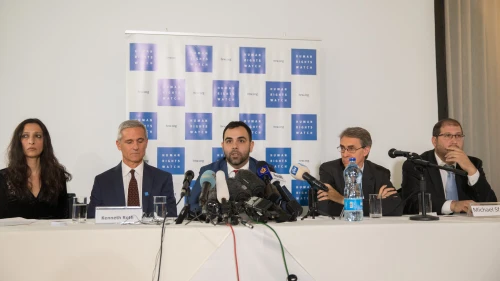
“In short, this report is tantamount to an anti-Semitic ‘blood libel’ against the Jewish state,” said Arsen Ostrovsky, an international human-rights lawyer and CEO of the International Legal Forum, of the 217-page 2021 Human Rights Watch report.