California state Sen. Scott Wiener’s decision to step down as co-chair of the California Legislative Jewish Caucus after accusing the State of Israel of “genocide” is not just a local political drama. It is a revealing moment in a broader pattern: Jewish politicians increasingly find themselves caught between activist politics and Jewish communal expectations—and too often choose language or positions that weaken both.
Wiener’s problem was not that he criticized Israel. That is hardly new, even among pro-Israel Democrats. His problem was adopting a term—“genocide”—that carries a specific legal and moral meaning and has long been used as a weapon to delegitimize the Jewish state. Wiener himself acknowledged that he had avoided the word precisely because of the harm it causes to the Jewish community. He only embraced it after political pressure from rivals in a Democratic primary.
That pivot made his role in a Jewish caucus untenable. A caucus meant to represent Jewish concerns cannot be led by someone using the most extreme moral accusation available against the world’s only Jewish state. Wiener’s resignation was not censorship; it was accountability.
But California is not unique. New Jersey offers another case study, this time over antisemitism itself. Former Gov. Phil Murphy declined to help advance legislation adopting the International Holocaust Remembrance Alliance (IHRA) working definition of antisemitism—a definition already used by the U.S. State Department and dozens of democratic governments. Jewish leaders across New Jersey pleaded for passage as antisemitic incidents rose sharply. The bill stalled.
The reasoning offered by opponents sounded familiar: concerns about free speech, fears that criticism of Israel would be “chilled,” and arguments that IHRA blurs political critique with hatred. Murphy never quite said “no,” but he never said “yes” either. The result was paralysis.
Together, the men illustrate two sides of the same problem. In one case, a Jewish politician adopts activist rhetoric that treats Israel as uniquely criminal. In the other, a political leader refuses to adopt a definition of antisemitism because it might upset progressive allies who resist linking antisemitism to certain anti-Israel narratives.
Different issues, same dynamic: antisemitism and Israel are being filtered through coalition politics rather than moral clarity.
Contrast that with Senate Majority Leader Chuck Schumer. When Schumer publicly criticized Israeli Prime Minister Benjamin Netanyahu and called for new Israeli elections, he did so while affirming Israel’s legitimacy and security needs. He framed his remarks as a family argument, grounded in U.S. interests and democratic values—not as a moral indictment of Israel’s existence or war aims. Many disagreed with him, but few could plausibly claim that he had crossed into delegitimization.
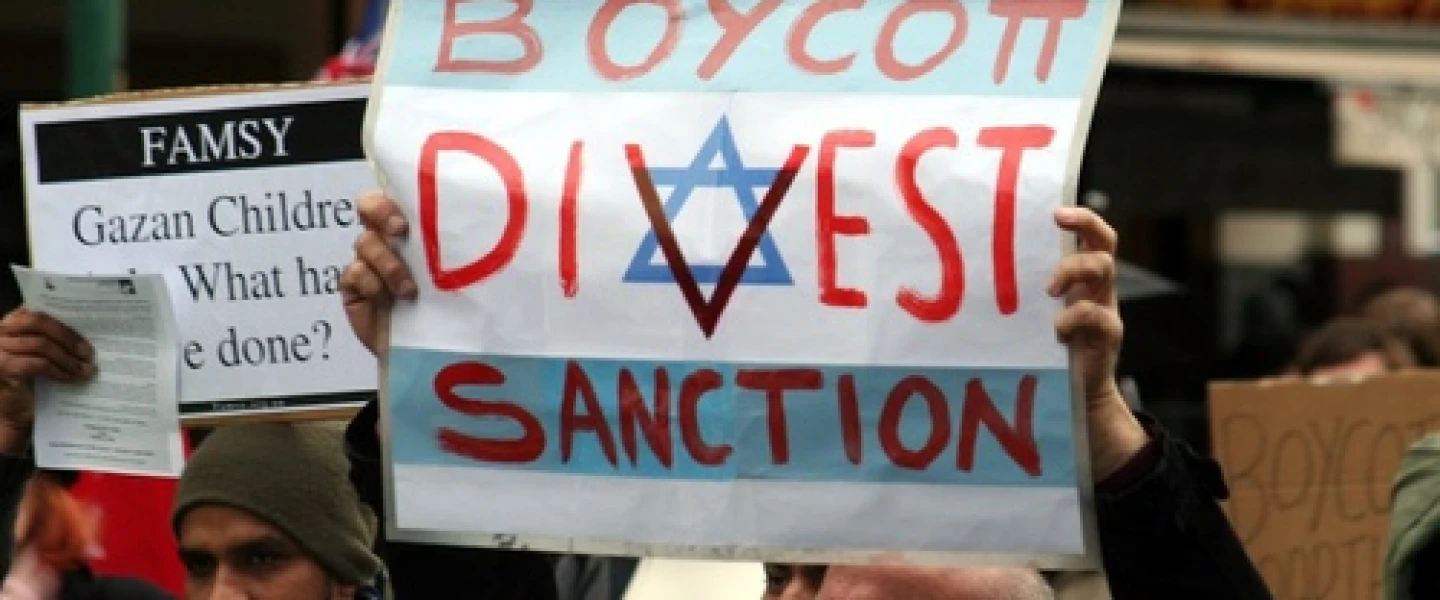
That difference matters. Words like “genocide” and “apartheid” are not neutral descriptors. They are legal claims implying criminal intent to destroy a people. When American politicians apply them to Israel while ignoring far clearer cases in Syria, Yemen, Iran or China, they feed a narrative in which Jewish power itself becomes suspect.
Likewise, refusing to adopt a modern definition of antisemitism sends a message of its own: that Jewish safety is negotiable if the language might offend ideological allies. Antisemitism becomes a “speech dispute” rather than a real-world threat.
Is this pandering for “the Jewish vote”? Often, it is the opposite. These positions usually pander to non-Jewish political constituencies—activist groups, campus networks, civil-liberties organizations and donor ecosystems that treat Israel as a moral litmus test and antisemitism definitions as political traps. Jewish politicians are then expected to prove their virtue by distancing themselves from mainstream Jewish concerns.
This creates a perverse incentive structure. A Jewish official who supports Israel plainly risks being labeled reactionary. A Jewish official who criticizes Israel in extreme terms is praised as courageous. A governor who pushes antisemitism legislation risks angering activists. A governor who lets it die can claim neutrality.
The casualty is trust.
Jewish communities do not expect unanimity on Israeli policy. But they do expect consistency, seriousness and a refusal to traffic in slogans designed for applause lines. They expect leaders to distinguish between Israel and the Israeli government, between war conduct and national legitimacy, between hatred of Jews and debate over borders or leadership.
They also expect antisemitism to be treated as a public-safety issue, not a coalition-management problem.
There are some simple rules Jewish politicians—and those who seek Jewish support—should follow.
• First, define terms or don’t use them. If “genocide” cannot be legally and factually defended, then it should not be used rhetorically.
• Second, separate Israel from Israeli government policy explicitly. Criticism of Netanyahu is not criticism of Israel’s right to exist.
• Third, be consistent across audiences. A position that changes depending on who is in the room is not leadership; it is theater.
• Fourth, do not outsource moral language to activists. Politicians are elected to make judgments, not to mirror slogans.
Scott Wiener’s resignation and Phil Murphy’s inaction are warning signs. Together, they show how easily politicians—Jewish and non-Jewish alike—can be pulled into symbolic fights that do nothing to reduce antisemitism or advance peace, and much to damage their credibility with the Jewish community.
If Jewish political leadership is to mean anything, then it must rest on the courage to resist the vocabulary tests of the moment and the clarity to say what antisemitism is, what Israel is and what neither should be.
Otherwise, the loudest voices will keep defining both.