Newsletter
Newsletter Support JNS

European Court of Justice hears case over labeling wine from West Bank and Golan

Applying the law in such a way would open a “Pandora’s Box,” requiring complex labeling for items from more than 100 different area globally where there are territorial disputes.

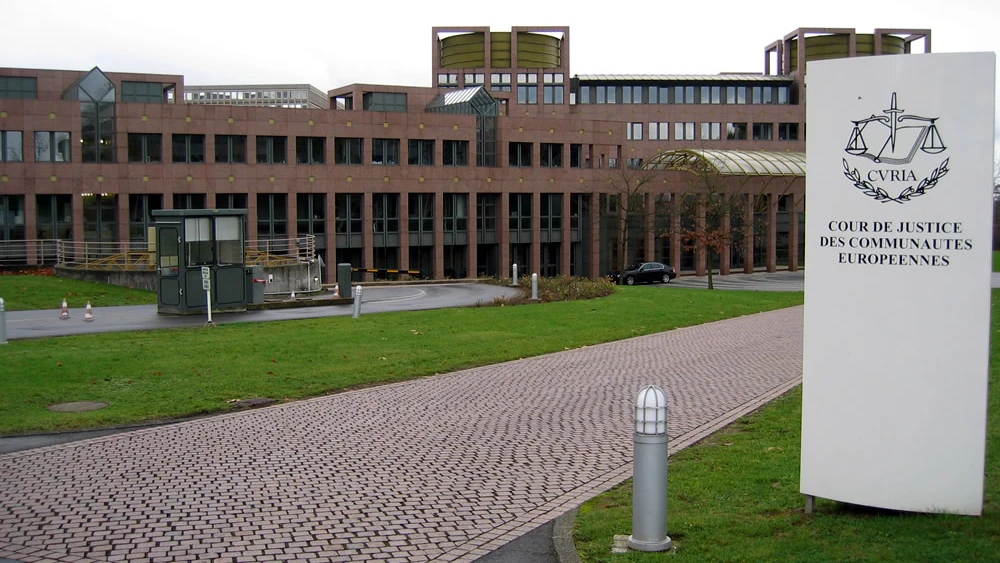
European Court of Justice (ECJ) in Luxembourg, Nov. 18, 2006. Credit: Cédric Puisney via Wikimedia Commons.

A hearing took place on Tuesday at the European Court of Justice in a major case against the discriminatory labeling of Israeli products.

The case, brought by brought by Israeli wine producer and exporter Psâgot Winery Ltd., along with the Lawfare Project, was referred to the court by the French Conseil d’État.

The plaintiffs were represented by French Supreme Court law firm Cabinet Briard, which challenged an opinion published by the French Minister of Economics and Finance in November 2016. The minister’s opinion stated that products from the Golan Heights or West Bank have to be labeled as coming from “colonies Israéliennes” (aka Israeli settlements) or equivalent terms.

At Tuesday’s hearing, counsel for Psâgot—France’s Supreme Court Attorney François-Henri Briard—argued that the insistence on applying the label violates the law.

Briard added that applying the law in such a way would open a “Pandora’s Box,” requiring complex labeling for items from more than 100 different area globally where there are territorial disputes.

Liz Berney, of ZOA, told JNS that the organization is “pleased that the Supreme Court and the appellate court properly dismissed this baseless case outright.”
“The meeting went very well,” the president wrote. “The United States is going to work with Lebanon in order to help it protect itself from Hezbollah.”
“Missouri stands with Israel and its people and we want to make sure that the world understands that,” the governor said while signing the bill.
“Academic freedom does not include platforming terrorists,” the LawFare Project stated, calling the event “institutional normalization of terrorism.”
Kimberly Richey, assistant secretary for civil rights at the U.S. Department of Education, stated that “no child should be taught by his or her teachers to hate their peers.”
After online radicalization, the man made two attempts to fly to Somalia to support ISIS, according to prosecutors.