Every spring, Jews all over the world celebrate Purim. The holiday, which takes place on the 14th of Adar on the Jewish calendar, begins this year after sundown on Monday, March 2, and lasts through Tuesday, March 3. Right before that comes the fast of Esther on the 13th of Adar, connecting the fear of Haman’s plot to annihilate the Jews in ancient Persia to the joy of salvation and the holiday celebrations.
Purim is a joyful holiday. It’s akin to a Jewish Mardi Gras—a day to pretty much “let loose.” In short, it tells the story of a king (Ahasuerus), his Jewish queen (Esther), a determined uncle (or, some say, her cousin, Mordechai) and an evil minister (Haman). There were other character actors involved as well, such as Vashti, the first wife of the king. All can be found in the Megillah—the scroll of Esther (Megillat Esther), read aloud during the course of the holiday.
Not unlike the regime of Iran today, Haman aimed to remove the kingdom of all Jews, young and old, in a single day. The death plot was foiled by Esther and Mordechai.
Haman’s downfall was, in part, brought about through the copious amounts of wine drunk at a meal hosted by Queen Esther, where she shared the machinations of Haman with King Ahasuerus. So there’s every reason to celebrate. Purim is a day of feasting, costume parades, drinking and joy. It’s even encouraged to get a bit tipsy. But at its heart, Purim is the story of courage and triumph, an inspiration to celebrate the survival of our people against all odds.

This year, Purim is especially meaningful. After 843 days, the remains of the last hostage taken during the Hamas-led terrorist attacks in Israel on Oct. 7, 2023, were brought out of the Gaza Strip and back home to Israel. The body of 24-year-old Ran Gvili, a staff sergeant in the Yasam unit of the Israel Police, was handed over to Israeli authorities on Jan. 27. And so, this Purim marks the first time since 2014 that no Israeli has been held captive by Hamas or any other terrorist organizations in Palestian enclave. Gvili’s funeral took place the next day, on Jan. 28.
On Purim, the four main commandments, or mitzvot, are Megillat Esther, hearing and/or reading the Megillah; mishloach manot, sending food gifts to friends and neighbors; matanot la’evyonim, giving charity; and seudat Purim, partaking in a festive meal (seudah), preferably shared with other people. The holiday has turned into a full-fledged carnival, of sorts, with games for children, family celebrations, funny performances called Purim shpiels—all dressed up in costumes related to the theme of the day (or any costume, really). Wine for the adults and grape juice for the kids, along with goodie bags, round out the festivities.
To avoid eating non-kosher food, Queen Esther ate only a vegetarian diet, dishes based on fresh fruits and vegetables, nuts, legumes and dairy products, all abundant in ancient Persia. To honor Queen Esther, seudat dishes are often based on vegetables. These days, we have so many choices in markets for “on the run” families. Fresh produce is prepared ready for the pot, good-quality broths are time-saving, and the variety of nuts and grains is endless.
Butternut Squash and Cashew Soup is inspired by my friend Janie, who once whipped it up using carrots for Shabbat dinner. I use pre-cubed butternut squash and spices to flavor. Armeko, a Sephardic onion tomato stew from the Greek islands, can be thinned down with broth to make a tasty soup. And Wheat Berry Salad, where the whole grains are soaked overnight, is an inexpensive source of protein. Years ago, on my first visit to Tel Aviv, I was served Stuffed Portobello Mushrooms at a Purim Seudat. I never forgot the delicious melding of textures and herb flavors. And with skyrocketing prices for brisket, consider Piquant Meat Balls. Adapted from a recipe in an old cookbook, Love and Knishes by Sarah Kasdan, this tasty dish is quick, easy and a year-round favorite.
Foods of vengeance are boundless. Haman’s Fingers, a Moroccan Purim “revenge” food, is especially easy for kids. Flattened the bread, spread it with peanut butter and jelly, and toast to “eating the enemy.”
Of course, it couldn’t be Purim without hamantaschen. Included below is the oft-requested recipe for Hasty Hamantaschen, the triangular pastries symbolic of Haman’s three-cornered hat, along with a recipe for prune filling, or lekvar. For a savory filling, think outside the box. Consider feta cheese and dill, artichoke and Swiss, or lox and tomato.
Hosting a seudah? Think potluck, where everyone can bring a favorite Purim dish to add to some of the recipes below.

Butternut Squash and Cashew Soup (Pareve)
Serves 6-8
Cook’s Tips:
*May substitute a one-pound bag of prepared baby carrots instead of butternut squash. Reduce broth to 3½ cups.
*Will have to blend this mixture in two batches.
*If too thick, add vegetable broth as desired.
Ingredients:
2 tablespoons margarine
1 (20-ounce) container of cut-up fresh butternut squash (5 cups cubed)
1 cup orange juice
4 cups vegetable stock
1 cup cashews
2 cups water
1 teaspoon cardamom
½ teaspoon curry powder
salt and white pepper to taste
Directions:
In a large pot, melt the margarine. Add the squash, orange juice and vegetable stock. Bring to a boil over medium-high heat.
Cover and reduce heat to simmer until the squash is soft, about 25 minutes. Cool slightly.
While squash is cooking place the cashews and water in a small saucepan. Bring to a boil over medium heat. Cook until cashews are soft, about 15 minutes. Drain well and stir into the squash.
Ladle cooled mixture into blender. Blend until completely smooth. Pour into a large bowl. Add the cardamom and curry powder. Mix well. Season to taste with salt and pepper.
Serve hot or at room temperature.

Armeko (Pareve)
Serves 4-6
Cook’s Tips:
*Substitute fresh parsley or dill for cilantro.
Ingredients:
2 medium onions, halved and sliced
1 large red bell pepper, cut into ½-inch dice
1 large green bell pepper, cut into ½-inch dice
1 (14½ ounce) can Italian-style stewed tomatoes
⅓ cup long-grain rice
½ cup water
1 teaspoon cumin
2 tablespoons coarsely snipped cilantro, dill or parsley
Directions:
In a medium saucepan, combine all ingredients except cilantro. Bring to a simmer over medium heat.
Reduce heat, cover and cook, stirring occasionally, until rice is tender, about 20 to 25 minutes. Stir in cilantro, dill or parsley.
Serve warm or hot.

Wheat Berry Salad (Pareve)
Serves 4-6
Cook’s Tips:
*Jicama is a brown, papery-skinned root vegetable. Crisp, sweet and crunchy, it’s a perfect addition to salads.
*Wheat berries are the unprocessed kernel of the wheat plant, a nutritious whole grain. They are available in markets like Whole Foods.
Ingredients:
½ cup wheat berries
1½ tablespoons red-wine vinegar
1 tablespoon Dijon mustard
1 tablespoon warm honey
¼ cup extra-virgin olive oil
1½ cups diced jicama
½ cup coarsely snipped cilantro or parsley
½ cup dried cranberries
salt and freshly ground pepper to taste
Ingredients:
Place the wheat berries in a bowl and add enough cold water to cover them by about an inch. Refrigerate and soak overnight. Drain the wheat berries.
Place in a saucepan with two cups of cold water. Bring to a simmer over medium heat. Cover and cook until chewy, for about 20 minutes. Drain well. Set aside.
In a large bowl, whisk together the vinegar, mustard and honey. Whisk in the oil gradually until blended.
Add the wheat berries, jicama, cilantro and cranberries. Toss to coat. Season with salt and pepper to taste.
Serve at room temperature.

Stuffed Portobello Mushrooms (Pareve)
Serves 4
Cook’s Tips:
*Clean the mushrooms with a damp paper towel or rinse quickly under cold water. Dry immediately with a paper towel.
*Za’atar is a savory Middle Eastern spice blend, usually made up of sumac, toasted sesame seeds and dried herbs like thyme. It is always good to keep some on hand.
Ingredients:
¼ cup, plus 2 tablespoons, of matzah meal
⅓ cup finely chopped cilantro or parsley
¾ cup walnuts, coarsely chopped
4 mushroom stems, diced
1 teaspoon za’atar spice
½ teaspoon cumin
2 tablespoons extra-virgin olive oil
4 to 5 tablespoons dry white wine
freshly ground pepper and salt to taste
4 Portobello mushrooms
olive oil to spray
Directions:
Preheat oven to 350 degrees.
Line a baking pan with aluminum foil and spray with nonstick baking spray.
Prepare the stuffing. In a medium bowl, combine all the ingredients except the mushrooms, adding enough wine to make the mixture come together.
With a spoon, fill the mushrooms with equal amounts of the stuffing. Press to flatten slightly. Place on the prepared baking pan.
Lightly spray with olive-oil spray. Bake in a preheated oven for 20 minutes or until golden brown.
Serve warm.
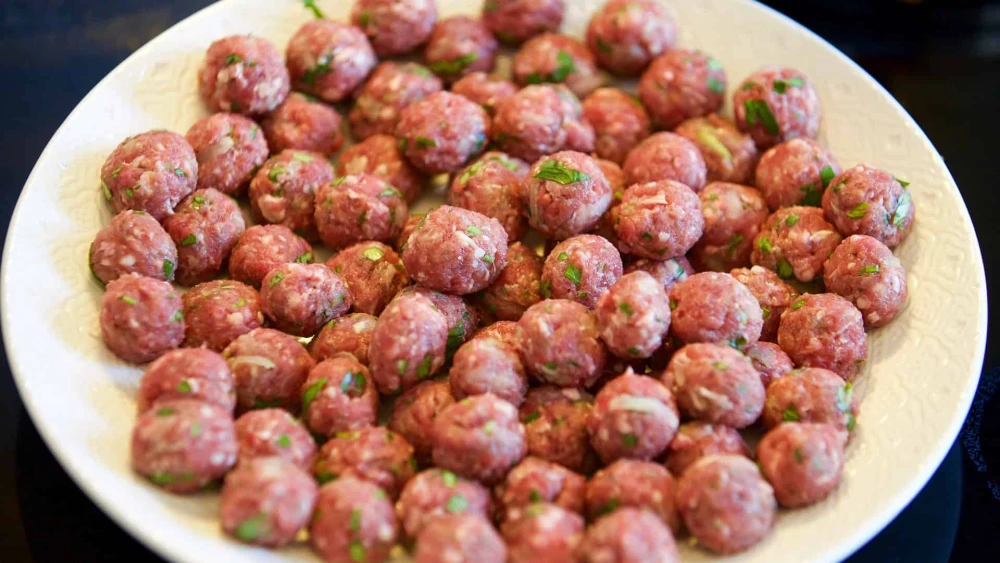
Piquant Meat Balls (Meat)
Serves 6-8
Cook’s Tips:
*May substitute ground turkey or chicken for beef.
Ingredients:
2 pounds lean ground beef
1 egg, lightly beaten
3 tablespoons matzah meal
1 teaspoon salt and ¼ teaspoon freshly ground pepper
1 (12-ounce) bottle chili sauce
½ cup grape jelly
3 tablespoons fresh-squeezed lemon juice
chopped parsley to garnish (optional)
Directions:
In a medium bowl, combine the beef, egg, matzah meal, salt and pepper. Shape into walnut-sized balls. Set aside.
In a large saucepan, heat the chili sauce, grape jelly and lemon juice, stirring to blend.
Add the meatballs. Cover and simmer for 30 minutes. Uncover and cook for 5 minutes longer, stirring often to prevent sticking.
Sprinkle with parsley (optional).
Serve hot over fluffy rice or noodles.

Haman Fingers (Dairy or pareve)
Makes 6
Cook’s Tips:
*May toast in an air fryer.
*Toast crusts, process in the food processor to make breadcrumbs. Store in a tightly covered container.
Ingredients:
6 slices of white or brown bread, crusts removed
3 tablespoons peanut butter
2 to 3 tablespoons jelly
4 tablespoons butter or margarine, melted
⅓ cup cinnamon-sugar
Ingredients:
Preheat oven to 375 degrees.
Line a baking pan with foil and spray with nonstick cooking spray.
On a board, roll bread slices to flatten. Spread each with a thin layer of peanut butter, then jelly. Roll up tightly.
Brush them with the melted butter or margarine and then roll them in cinnamon-sugar.
Bake in a preheated oven for 15 minutes or until nicely browned.

Hasty Hamantaschen (Pareve)
Makes 10
Cook’s Tips:
*Store-bought poppy seed or prune filling and refrigerated biscuits make this quick and easy.
Ingredients:
½ cup store-bought poppy seed or prune filling
1 tablespoon grated lemon zest
½ teaspoon cinnamon
1 (12-ounce) package refrigerated biscuits
2 tablespoons warm honey or confectioners’ sugar
Directions:
Preheat oven to 400 degrees.
Cover a large baking sheet with aluminum foil. Do not grease. Set aside.
In a small bowl, combine poppy seed or prune filling with lemon zest and cinnamon. Mix well and set aside.
Separate biscuits. On a lightly floured board, flatten each biscuit into a round about 2½ inches in diameter.
Place a rounded teaspoonful of filling in the center of each biscuit. Dampen edges with water.
Fold edges up over filling to form a three-sided pyramid, leaving some of the filling uncovered. Place on the prepared cookie sheet, about a half-inch apart.
Bake in preheated oven 10 to 12 minutes, or until puffed and golden.
Brush with warm honey or, when cool, dust with confectioners’ sugar.
Prune Filling (Pareve)
Makes 1½ cups
Ingredients:
1 (12-ounce) package pitted prunes
1 cup orange juice
⅓ cup sugar
1 teaspoon allspice
Directions:
Place prunes in a medium saucepan. Add the orange juice and enough water to barely cover.
Bring to a boil over medium-high heat. Reduce the heat to a simmer and cook until about one-quarter cup of liquid remains, about 10 minutes.
Stir in the sugar and allspice.
Transfer to the food processor and pulse to a coarse paste.
Cool completely before using.
Ethel G. Hofman is a widely syndicated American Jewish food and travel columnist, author and culinary consultant.