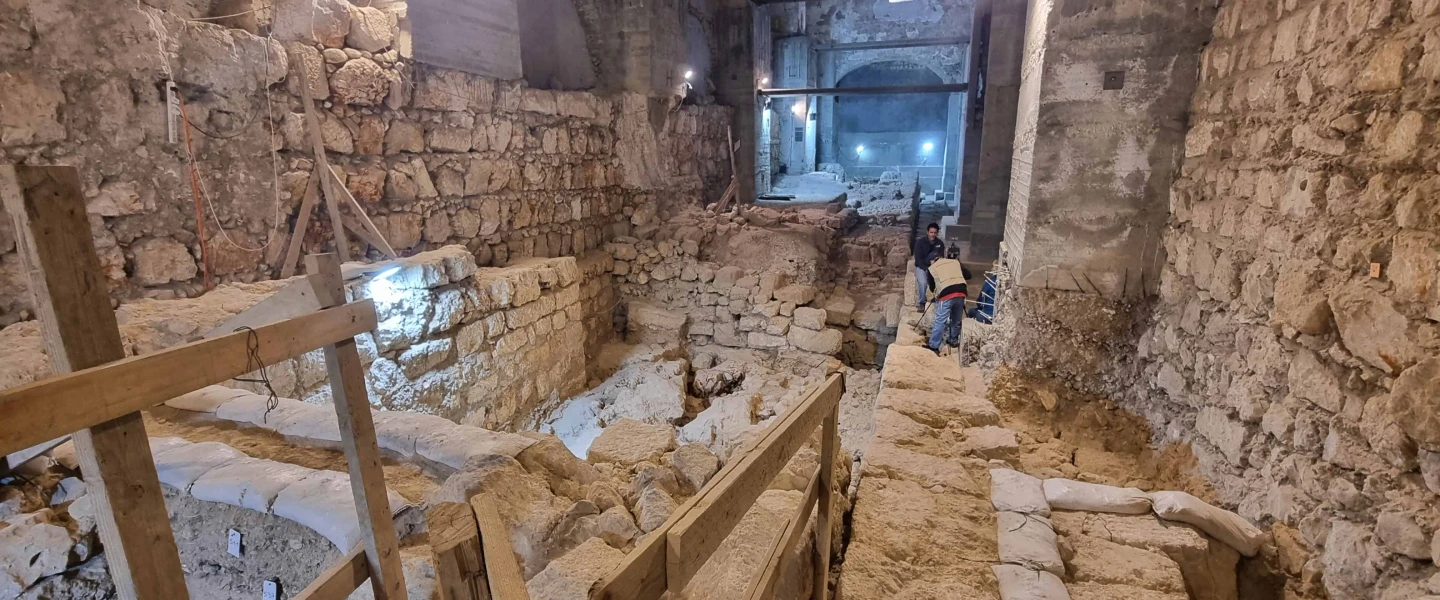
A newly discovered segment of a Hasmonean-period city wall inside the Tower of David Jerusalem’s Kishle—the historic Ottoman and later British Mandate police station on the museum grounds—has provided archaeologists with rare physical evidence of Jerusalem’s fortifications during the Maccabean era.
The discovery was made, coincidentally, ahead of the Chanukah festival during the current phase of the Tower of David Jerusalem Museum’s extensive renewal and conservation project in the Kishle, supported by the Schulich family of Canada.
The excavation is led by Dr. Amit Re’em, the Jerusalem District Archaeologist for the Israel Antiquities Authority (IAA), who began excavating the Kishle in 1999. Re’em said Hasmonean remains are scarce in this part of Jerusalem’s Old City, making the discovery particularly meaningful.
“The Kishle contains many layers—Herodian, Roman, Crusader, Ottoman, and British—but Hasmonean architecture in this area has been limited and often debated,” said Re’em. “This new wall segment corresponds to the period we expect from the second century BCE and provides solid physical confirmation of the Hasmonean fortifications on Jerusalem’s western side.”
How and why the wall was destroyed is still not clear, the museum said.
New wing
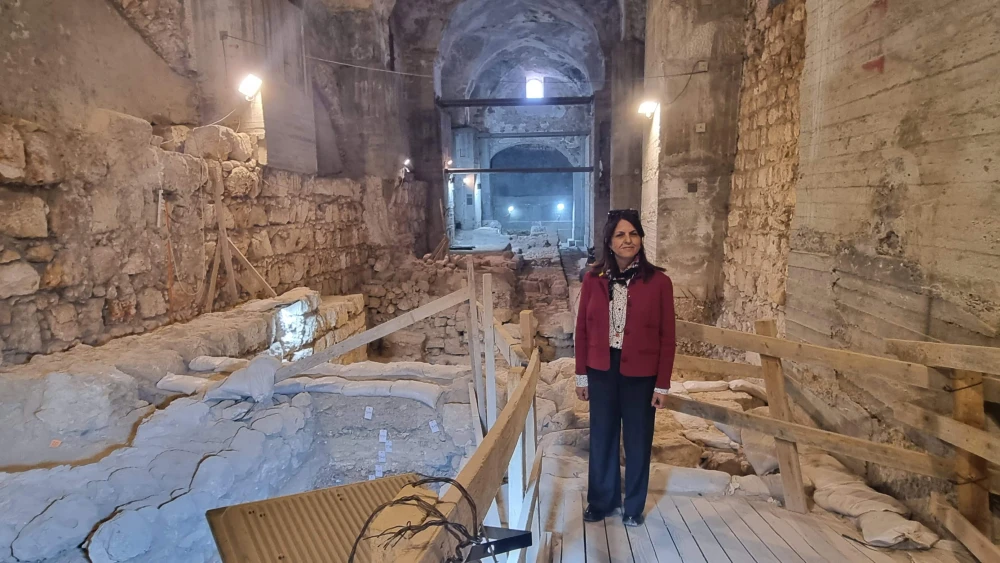
Eilat Lieber, director and chief curator of the Tower of David Jerusalem Museum, told JNS that she was excited that the archaeologists exposed the beautiful wall from the Hasmonean period. Calling it “a dream come true,” she said that the Kishle building will become a new wing of the Tower of David named the Schulich Wing for Archaeology, Art and Innovation.
Further, she said, “A week before Chanukah, it’s amazing to see. Here you can feel the history, and you can touch it in the Tower of David. Especially today, we want to engage young people. People can come and see how impressive the story is. How it happened here two thousand years ago.” The plan is for the new wing to continue telling stories of Jerusalem, where artists will make it relevant to our time. As Lieber envisions, “where visitors will learn from the past for the future.”
The newly exposed section of the wall is currently undergoing conservation, stabilization, and full scientific documentation.
Museum officials said the new wing will open to the public in approximately two years, when all preservation work is complete, and the Kishle’s interior pathways are rebuilt to safely accommodate visitors. The wall will eventually form a visible part of the Kishle’s archaeological route after careful long-term planning.
Chanukah programming highlights the story
While the Kishle itself will remain closed until conservation is completed, the Tower of David is incorporating the discovery into its “Hanukkah of Heroes” programming throughout the holiday, including guided tours and educational activities focused on Jerusalem’s heroic figures and archaeological layers.
Re’em said that the wall adds an important reference point for scholars reconstructing the story and defences of Jerusalem in the time of the Hasmoneans.
“This helps us map the city’s western boundary during a crucial period in Jewish history,” he said. “In terms of understanding the Jerusalem of the Chanukah story, this is a major and clarifying discovery.”
Full details and registration are available on the museum’s website.