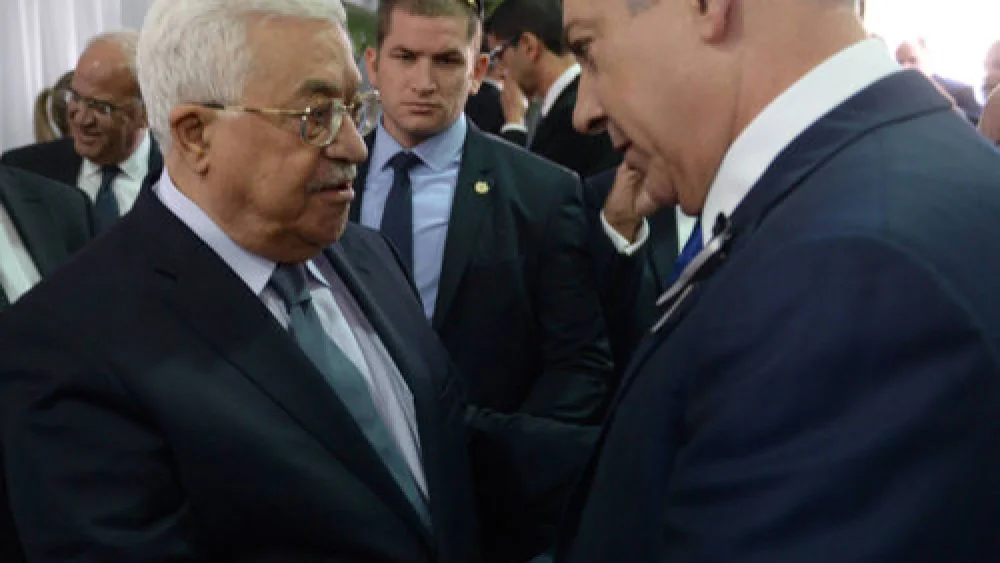
The following text reflects the Joint Communique following Sunday’s meeting in Aqaba, Jordan:
At the invitation of the Hashemite Kingdom of Jordan, Jordanian, Egyptian, Israeli, Palestinian and U.S. senior officials met in Aqaba, Jordan today, 26 February 2023.
Following comprehensive and frank discussions, the participants announced the following:
1. The two sides (Palestinian and Israeli sides) affirmed their commitment to all previous agreements between them, and to work towards a just and lasting peace. They reaffirmed the necessity of committing to de-escalation on the ground and to prevent further violence.
2. The five parties recognize the importance of upholding unchanged the historic status quo at the holy sites in Jerusalem in word and practice, and emphasizes in this regard the Hashemite Custodianship / special role of Jordan.
3. The Government of Israel and the Palestinian National Authority confirmed their joint readiness and commitment to immediately work to end unilateral measures for a period of 3-6 months. This includes an Israeli commitment to stop discussion of any new settlement units for 4 months and to stop authorization of any outposts for 6 months.
4. The five parties agreed to convene again in Sharm El Sheikh in March to achieve the goals listed above.
5. The participants also agreed to pursue confidence-building measures and strengthen mutual trust in order to address outstanding issues through direct dialogue. The two parties will work in good faith to assume responsibilities and to enhance mutual trust through this arrangement.
6. Jordan, Egypt and the United States consider these understandings as major progress towards re-establishing and deepening relations between the two sides, and commit to assisting and facilitating as appropriate their implementation.
7. The participants stressed the importance of the Aqaba meeting, the first of its kind in years. They agreed to continue meeting under this formula, maintain positive momentum and expand this agreement towards wider political process leading to a just and lasting peace.
8. The participants thanked Jordan for organizing and hosting this meeting and for its efforts to ensure it produced positive results. They also thanked Egypt for its support and essential role and active participation.
They also thanked the United States for its important role in efforts to reach understandings that led to this agreement today, emphasizing its indispensable role in efforts to prevent deterioration and find horizons for peace.