


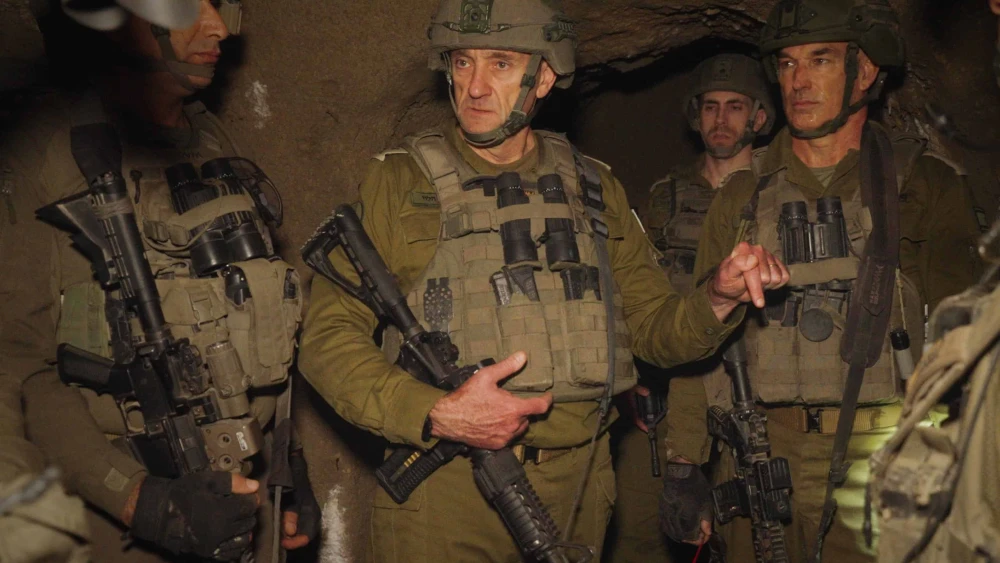
Israel Defense Forces Chief of Staff Lt. Gen. Herzi Halevi earlier this week delivered a video message from an underground Hezbollah base in Southern Lebanon, emphasizing that this sort of terrorist infrastructure cannot be allowed to return.
“We have been saying for years that Hezbollah is preparing the area of the border for war. To the countries that doubted it, to the UN, to the UNIFIL force that was [stationed] up here…We caught this in time, before it was too late, and this infrastructure must not return here… pic.twitter.com/IImuQv0sM6
— Israel Defense Forces (@IDF) October 28, 2024
“We have been saying for years that Hezbollah is preparing the area of the border for war. To the countries that doubted it, to the United Nations, to the UNIFIL [United Nations Interim Force In Lebanon] force that was [stationed] up here …We caught this in time, before it was too late, and this infrastructure must not return here in future generations,” said Halevi.
The bunker complex was destroyed shortly afterward.
Speaking to soldiers in one of the tunnels, Halevi stressed that “our task over the years to come will be to make sure that no new [infrastructure] is built.”
The IDF’s work in Lebanon now means that in the future, “you will walk around here, drive around with your grandchildren in the Hula Valley and you will know that you freed the Ramim Ridge from a great threat, a substantial threat,” he said.



