


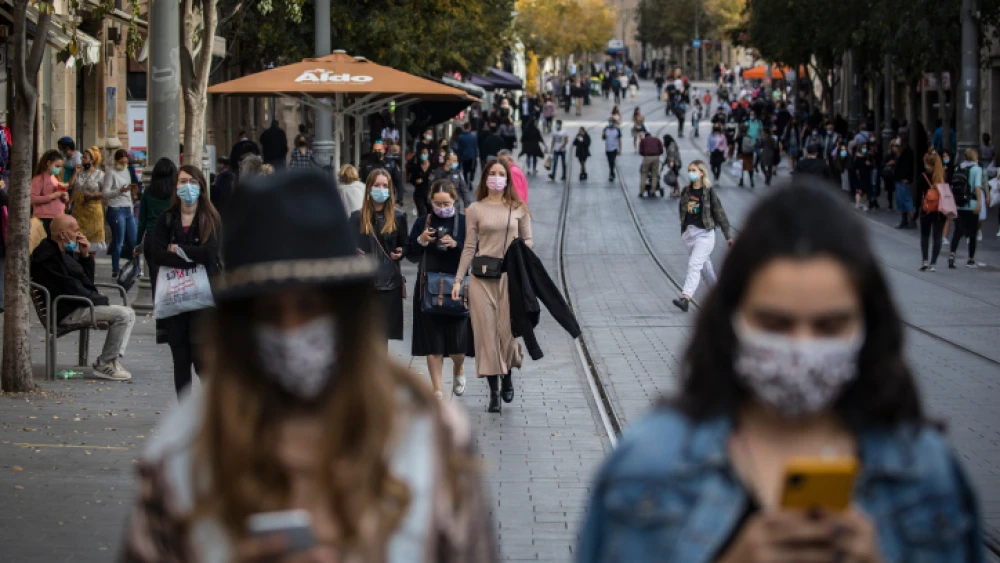
More than 2,000 new COVID-19 cases were confirmed in Israel on Monday, the highest recorded in Israel since Oct. 15. According to Israeli Health Ministry data, the coronavirus morbidity rate was 3.2 percent.
Deputy Health Ministry director Itamar Grotto told Army Radio in an interview on Tuesday that the high number of infections was a sign Israel was moving towards a third lockdown.
“We hope this was a one-time anomaly,” he said.
With regard to the pending rollout of Israel’s COVID-19 vaccination campaign, Grotto said that it would take months before the country would start to see the impact of the inoculations.
“We mustn’t become complacent. The first days of vaccination”—inoculations are planned to begin on Dec. 20—“will be chaotic, but I believe that in time it will work out,” he said.
At a government meeting last week, Health Minister Yuli Edelstein said the goal of the government’s efforts to stop the spread of the virus was to achieve a reproduction rate of one or less and to have fewer than 1,000 people diagnosed with COVID-19 per day.
“When the reproduction rate reaches 1.32, or alternatively when there are 2,500 new diagnosed [cases] a day, we will enter the ‘tightened restraint’ restrictions for a period of three weeks,” he said.
Meanwhile, Israeli Prime Minister Benjamin Netanyahu entered quarantine on Monday after coming in close contact with a coronavirus carrier. He will remain in isolation until Friday.
This article first appeared in Israel Hayom.



