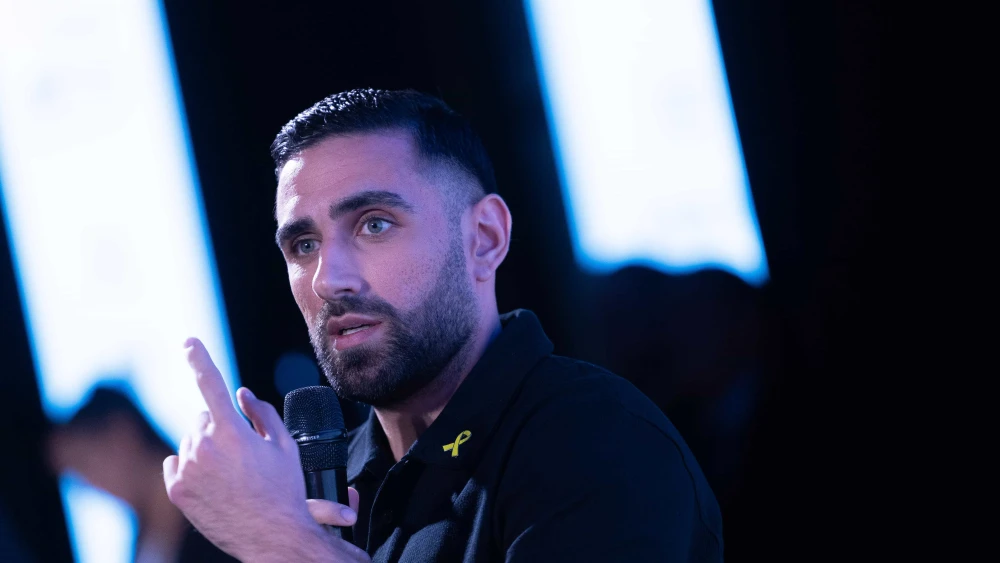
A former Israeli Hamas hostage last week said it was his faith that allowed him to survive more than two years in captivity in Gaza.
The remarks by Segev Kalfon mirrored other hostages’ experiences. Whether from secular, traditional or religious backgrounds, many have said they clung to Judaism during their captivity.
“I had one percent chance of surviving—and I did,” Kalfon, 27, said in an interview with @LouderCreators posted on X by the Israeli Embassy in the United States.
“A person in this situation has nothing around them,” he added. “All that’s left is to believe. That’s it. Faith. When you believe in something you have something to lean on.”
“I had a one-percent chance of surviving - and I did.”
— Embassy of Israel to the USA (@IsraelinUSA) November 22, 2025
In an interview with @LouderCreators, Segev Kalfon reflects on the faith that carried him through the unimaginable, and the moment he heard his mother’s voice after a year of silence. pic.twitter.com/nGtV2WFURl
Kalfon, who was released from Gaza last month as part of a ceasefire deal, said that he witnessed many miracles during his time in captivity. He said he was repeatedly beaten and tortured by his Hamas captors, who tried to convert him to Islam.
“In my darkest moments I knew I was facing a great test,” he said. “And if I survived every single day—and every day there was hell—there was a reason.”
Other former hostages have recounted how they prayed silently in captivity, recited the Sabbath benediction over water on Friday nights, tried to keep the Passover holiday and read from a book of Psalms that was found lying around.
Kalfon was among a group of former Israeli hostages who met with U.S. President Donald Trump at the White House on Thursday.
“In the most difficult moments, when hope faded away, the thought of big America and of your leadership helped me believe that one day, I will be able to leave Hamas captivity,” he wrote to Trump in a personal letter, Israel’s Channel 12 News reported on Saturday. “You, Mr. President, were the light for me in the darkest moments in the dark tunnels.”