


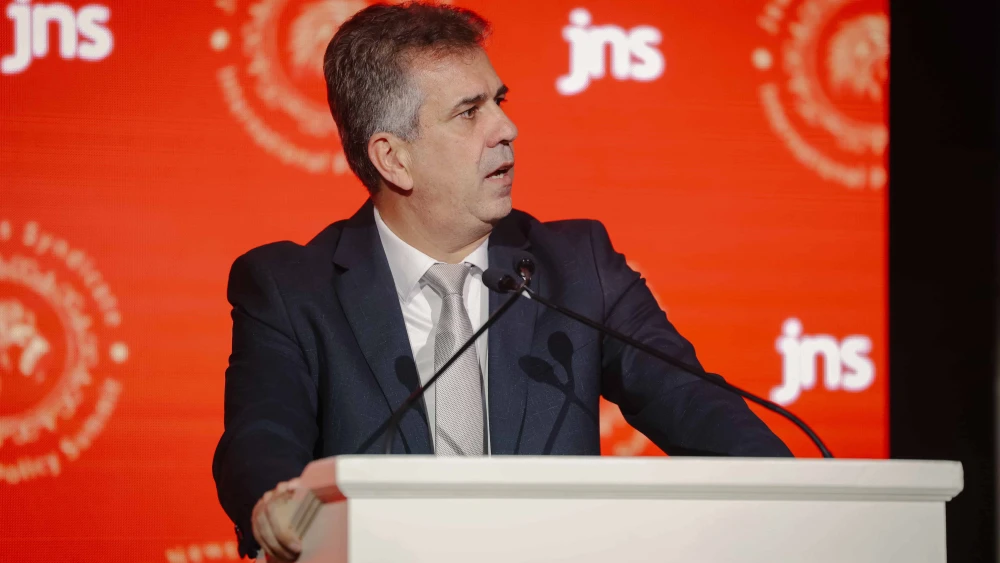
The Cabinet is considering terminating the natural gas/maritime border agreement with the Lebanese government due to the latter’s failure to thwart terrorist attacks carried out from its territory, Israeli Energy and Infrastructure Minister Eli Cohen said on Sunday.
The gas pact that now-opposition leader Yair Lapid signed as prime minister in 2022 “was born in sin on the eve of [Knesset] elections,” Cohen said in an interview with Army Radio.
“It is a terrible, illegitimate agreement; thus I maintain that we should act to cancel the gas pact,” the minister said.
“This subject is also being discussed in the Cabinet. … By the way, this was no agreement; it was a letter of surrender because, from all of the allegedly disputed territory, the State of Israel didn’t receive anything. Lebanon gained everything on a vague condition that certainly didn’t materialize, regarding enhanced security [to Israel],” Cohen said, referring to the military confrontation with Hezbollah since Oct. 8, 2023.
On Oct. 27, 2022, then-Prime Minister Lapid signed a U.S.-mediated maritime border deal with Lebanon.
“This agreement strengthens Israel’s security and our freedom of action against Hezbollah and the threats to our north,” Lapid said at the time.
“Everyone has signed off on this agreement and its contribution to Israel’s security and our operational needs,” he added.
The deal drew a border between the countries’ exclusive economic zones (EEZs) based on a boundary known as Line 23, and awarded a disputed area of around 840 square kilometers (324 square miles) to Lebanon, while recognizing Israel’s claim to the Karish gas field and to royalties from the section of the Qana field that extends into the Jewish state’s EEZ.



