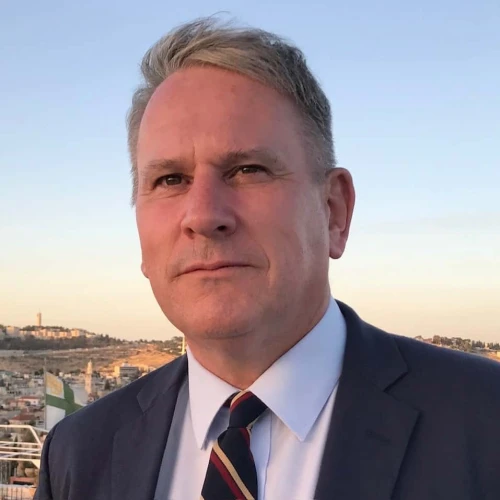
Israeli Prime Minister Yair Lapid on Thursday signed the U.S.-mediated maritime border deal with Lebanon, following its approval by the Cabinet earlier in the day.
“This is a tremendous achievement for the State of Israel and for the government of Israel,” said Lapid at the beginning of the special Cabinet meeting, according to a statement from his office.
“This agreement strengthens Israel’s security and our freedom of action against Hezbollah and the threats to our north,” he said, adding that “everyone has signed off on this agreement and its contribution to Israel’s security and our operational needs.”
Lapid also suggested that by agreeing to the deal, Lebanon, an “enemy country,” was effectively recognizing Israel, and noted that the United States was providing Jerusalem with security and economic guarantees.
Reuters reported that Lebanese President Michel Aoun on Thursday signed a separate letter approving the terms of the agreement.
A ceremony is scheduled to take place in the afternoon at the United Nations base in Naqoura, located along the Israel-Lebanon border, which will be attended by members of the Israeli, Lebanese and U.S. negotiating teams.
Israel and Lebanon remain technically at war and the delegations are not expected to appear together at the ceremony.
The deal draws a border between the two countries’ exclusive economic zones (EEZs) based on a boundary known as Line 23, and awards a disputed area of around 840 square kilometers (324 square miles) to Lebanon, while recognizing Israel’s claim to the Karish gas field and to royalties from the section of the Qana field that extends into the Jewish state’s EEZ.
British-Greek company Energean plc announced on Wednesday that it had begun extracting natural gas from the Karish platform off the northern Israeli coast.
Israel recently set up a rig at Karish, where the flow of gas was delayed in order to give the talks more time, and amid repeated threats of war by Hezbollah chief Hassan Nasrallah.
On Thursday evening, Lapid is slated to meet with American mediator Amos Hochstein, who spearheaded the indirect negotiations between Jerusalem and Beirut for more than a year.