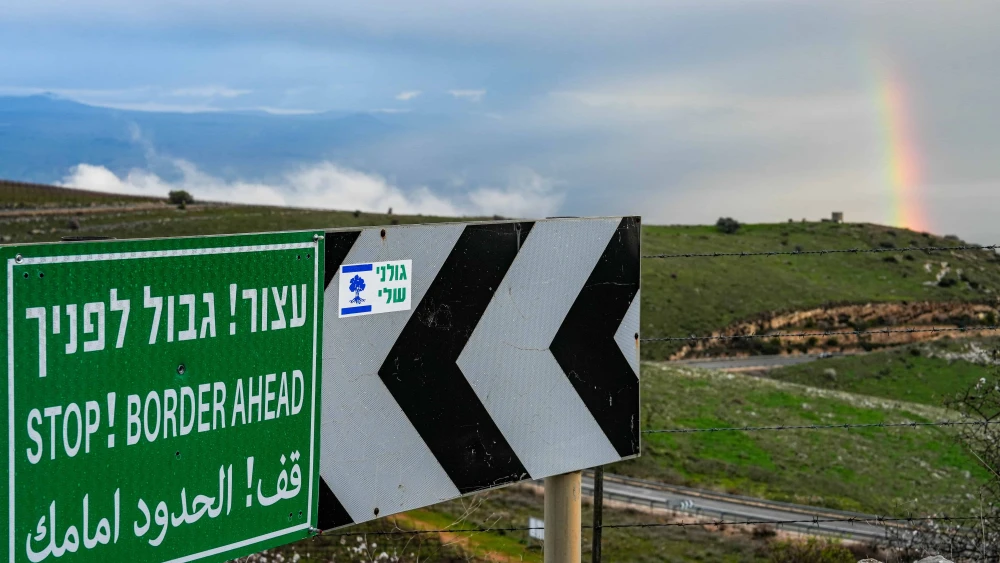
Some 800 ultra-Orthodox Jews prayed at the tomb of Rav Ashi on the U.N.-delineated Blue Line dividing Israeli and Lebanese territory overnight Thursday, with permission and under the protection of Israeli forces, JNS has learned.
Rav Ashi (352–427 C.E.)—the Babylonian sage credited with compiling the Gemara, an essential component of the Talmud—is said to be buried inside the IDF’s Tziporen outpost in Israeli territory that Beirut has said is on the Lebanese side of the Blue Line.
The rare visit came on the occasion of the 7th of the month of Adar, which according to the Hebrew calendar is the anniversary of the birth and death of Moses and on which some visit graves of tzadikim (“righteous Jews”).
Until the IDF’s withdrawal from the Southern Lebanon security zone in 2000, the tomb was under Jerusalem’s control, but it was subsequently divided between Lebanon and Israel, with a fence running through it.
The U.N. Interim Force in Lebanon, responsible for monitoring the withdrawal of Iranian-backed Hezbollah terrorists from Southern Lebanon, slammed the pilgrimage as “a violation of U.N. Security Council Resolution 1701,” Lebanon’s L’Orient Today reported.
“UNIFIL urges all actors to avoid any action that could upset the current delicate stability. We continue to urge Israeli forces to withdraw from all parts of Lebanese territory, and we continue to support the Lebanese Army in their deployment in the south,” the organization stated.
In mid-February, the Israel Police’s Northern District detained a group of some 20 ultra-Orthodox Jews for questioning after they attempted to visit the tomb of Rav Ashi without permission from authorities.
Israel Police Ch. Supt. Arik Berkowitz, commander of the Kiryat Shmona station, said at the time, “These are haredi residents from Jerusalem and other communities. They circulated information among themselves suggesting that the site was open and organized for prayer visits.
“They arrived tonight to fulfill the religious commandment. They maintain they were unaware this constituted an offense or that they were violating any laws. This is not the first time in recent months that we have encountered groups reported by the military for crossing the border. Unfortunately, we have dealt with similar groups previously.”
On Nov. 20, Ze’ev Erlich, 71, a scholar and archaeological expert on the Land of Israel, was killed during a firefight with Hezbollah terrorists after entering Southern Lebanon as a civilian alongside IDF soldiers.
Sgt. Gur Kehati, 20, a member of the Golani Brigade’s 13th Battalion from Moshav Nir Banim, was also killed in the shootout, which took place at an archeological site some four miles from the Israeli border.
Though Erlich was not an active reservist, the military’s Personnel Directorate (formerly called the Manpower Directorate and the Human Resources Directorate) decided to recognize him as a fallen IDF soldier.